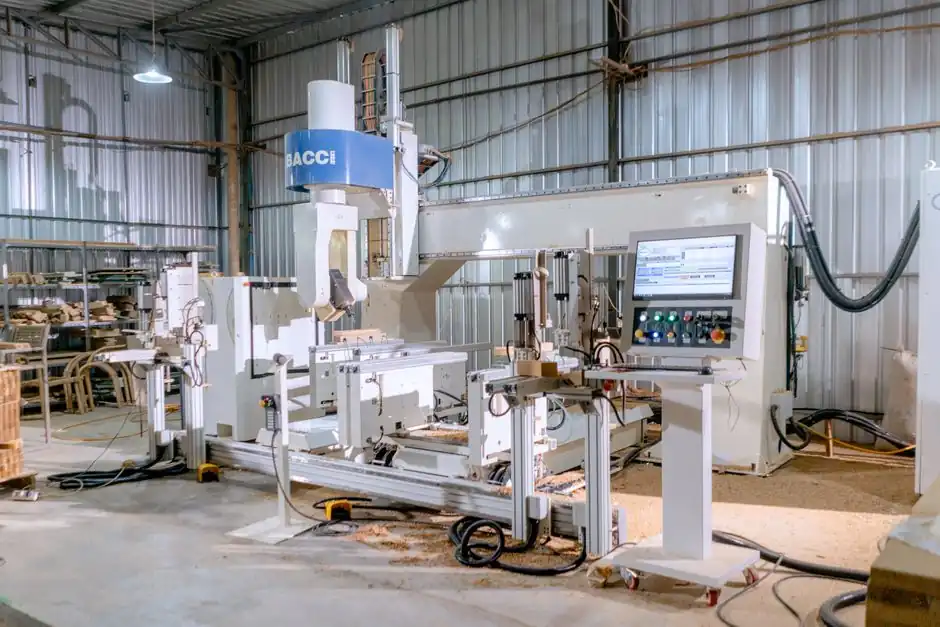
An OEM CNC supplier builds strictly to a buyer-issued drawing and spec pack, while an ODM CNC supplier owns the design, the tooling decisions, and often the underlying IP before the buyer's brand goes on the box [S2][S3].
The two models diverge on cost, lead time, IP exposure, and change-control discipline, so the choice has to be made before the RFQ, not after the quote lands [S2].
Where the two models actually split: definition and decision boundary
In a pure OEM CNC engagement, the buyer's engineering team issues a complete specification including materials, GD&T, surface finish, and approved sub-processes, and the contracted machine shop is restricted from altering that design or supplying a third party built to it [S2][S3].
In an ODM CNC engagement, the factory carries the product-design activity, may pre-build a reference design that the buyer either buys out exclusively or shares non-exclusively with other brand owners, and the visible differentiation is typically only cosmetic [S2].
The contract clause is what makes the boundary binding: pure OEM contracts forbid the contract manufacturer from producing the same design for a competitor, while ODM contracts explicitly permit it unless the design is bought out [S2].
Cost, lead time, and engineering effort: a side-by-side comparison
OEM CNC runs are cheaper per part for high-volume runs because the buyer's own engineering absorbs the NRE, but the buyer pays the full design cost upfront and carries the risk of a flawed drawing; ODM CNC looks more expensive on paper because the design fee is bundled in, yet the same model can ship a usable prototype within 1 to 3 weeks from DFM approval, as published by E-mold's rapid-tooling workflow [S1].
OEM cycle time is dominated by the buyer's engineering revision loop and supplier PPAP; ODM cycle time is dominated by the factory's DFM round and tooling lead time, with much of the engineering rework absorbed by the ODM vendor [S1][S2].
On IP, OEM keeps the design register with the buyer, ODM keeps it with the factory until a buy-out clause transfers it; on tooling ownership, OEM tooling is typically paid for and tagged to the buyer, while ODM tooling often stays on the factory floor as a reusable asset [S2][S3].
Who should pick OEM and who should pick ODM
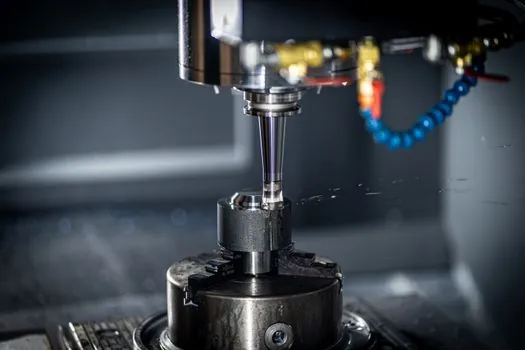
OEM is the right fit when the buyer has a locked mechanical design, regulatory files (CE, UL, ASME) tied to that exact geometry, and a volume plan that justifies paying the NRE: industrial buyers specifying legacy Fanuc spares for example, where the OEM channel sells genuine, tested modules with warranty for ageing CNC systems, are operating in this locked-spec regime [S4].
ODM is the right fit when the buyer has a market need but no in-house mechanical-design capacity, wants the factory to absorb fast DFM iteration, and accepts that the same core platform may be sold to other brand owners under different cosmetics [S2][S3].
OEM is the wrong fit for a startup that needs design help; ODM is the wrong fit for a buyer in a regulated sector (medical Class II/III, pressure-bearing PED, explosive atmosphere ATEX 2014/34/EU) where the design file must be owned and version-controlled by the certificate holder.
Real shop floors, real specs: what an OEM or ODM partner actually runs
Acumen Machine in Kamloops runs an OEM-style job shop on a 10,000 sq ft floor with HAAS, OKUMA, and Fadel CNC mills and lathes for micron-level repeatability, plus a 48 in swing / 120 in center-to-center heavy turning capacity and a MultiCam 3000 Series 6 ft x 12 ft HD plasma table, certified to CSA W47.1 for fusion welding [S5].
E-mold in China bundles the ODM-style stack: CNC machining, plastic injection molding, precision and stamping molds, and sheet-metal fabrication, with DFM consultation and in-house surface finishing covering color matching, silk screen, pad printing, painting, laser etching, polishing, sand blasting, E-coating, and anodizing [S1].
For a related sourcing question, CNC machine production line design: 2026 layout, automation, and takt spec map walks through how OEM vs ODM boundary choices cascade into cell layout, and Motion Controller Sizing and Selection: Axis Count, Loop, and Bus Tradeoffs covers the controller side of the same decision.
Risks, failure modes, and contractual traps
The most common OEM failure is a buyer who issues a drawing the supplier cannot actually hold, then eats the scrap; the most common ODM failure is a buyer who assumes exclusive design rights and discovers the same hardware is shipping under three other brand names because the buy-out clause was never triggered [S2].
A second ODM trap is the shared-tooling model: when a single ODM factory services multiple brand owners on one tool, a forecast shift by one buyer directly affects the others' lead times, and there is usually no contractual remedy [S2][S3].
For OEM contracts, the trap is geographic exclusivity creep: a CNC machine builder in one region quietly sub-supplies the same geometry to a competitor in another, and only an enforceable non-compete clause on the contracted factory catches it [S2].
Standards, sourcing, and what to put in the RFQ
An OEM RFQ should ship with a complete 2D/3D drawing pack, a material and heat-treat spec, a GD&T call-out, a surface-finish standard (e.g. ISO 1302 or ASME Y14.36M), a PPAP or First Article requirement, and an explicit non-compete clause on the contracted factory [S2][S5].
An ODM RFQ should ship with a use-case brief, target unit cost, target MOQ, regulatory target market (CE / UL / FCC / UKCA), cosmetic direction, and an explicit decision on the design buy-out clause, since that clause alone determines whether the buyer's variant is exclusive [S2][S1].
For the machining-center side of either path, the CNC cutting machine and core machine reference pages lay out the spec ranges a buyer should expect a supplier to quote against, and the coding machine page covers the downstream marking step that often sits inside the same ODM bundle.
Trackable signals to watch over the next quarter: E-mold's published 1-3 week rapid-tooling lead time as a benchmark for ODM DFM speed, and any tightening of OEM spare-part channels for legacy Fanuc amplifier, motor, and PCB stock at specialist UK distributors, which is a leading indicator of how mature CNC fleets are being kept alive rather than replaced [S1][S4].