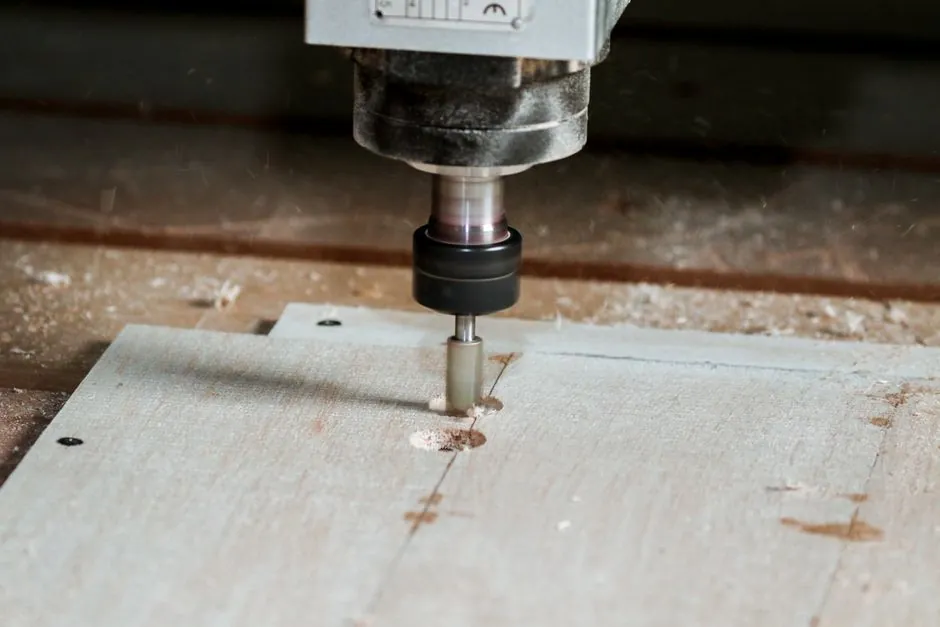
CNC Industry 4.0 retrofit kits in 2026 bundle three hardware layers: retrofitted spindle current and vibration sensors wired to an industrial edge controller, an OPC UA or MQTT gateway bridging the legacy FANUC, Siemens, or Mitsubishi CNC to a plant data lake, and a cloud analytics module running vibration FFT plus AI anomaly detection against baseline tool-life curves [S1]. The Microsoft Industry 4.0 framing defines the architecture as connecting physical machines to digital twins via IoT, cloud, and AI, and that stack is what most CNC retrofit vendors ship today [S1].
Buyers planning a 2026 retrofit should size the data layer first. A 5-axis machining centre with a 30-tool ATC typically streams 80 to 200 tags at 100 Hz, generating roughly 200 MB per shift before compression; edge buffering and 1 Gb ring topologies are the practical minimum [S3]. A spec-first approach to coding machine selection is the closest reference for how to enumerate tag lists and fieldbus requirements on a CNC retrofit bill of materials.
What Industry 4.0 actually means on a CNC shop floor
Industry 4.0 on a CNC is the integration of IoT, AI, cloud computing, and analytics into production equipment, replacing the standalone NC island model with a cyber-physical system that self-reports state [S1]. The Microsoft reference lists seven enabling technologies: cloud computing, IoT, AI and machine learning, big data analytics, cybersecurity, augmented reality, and digital twins; on a CNC retrofit, the first five are non-negotiable and AR plus digital twin are value-add [S1].
The Springer foundational review defines the same stack and flags cyber-physical production systems, the Industrial Internet of Things, and cloud manufacturing as the three pillars most CNC vendors target [S3]. Practically, that means a retrofit spec must name the protocol layer (OPC UA over TSN, MQTT/Sparkplug B, or PROFINET), the data model (UMATI or MTConnect), and the on-prem vs cloud split before any sensor is ordered.
Brownfield integration: the real adoption bottleneck
Industry 4.0 adoption challenges identified in 2024-2026 research cluster around legacy systems, skills gaps, cybersecurity, and the cost of processing high-volume machine data [S1]. On CNC fleets older than 10 years, those challenges are amplified because analog servo drives, point-to-point I/O, and proprietary Focas or Ladder Logic do not expose semantic data; retrofit integrators estimate 60 to 70 percent of project hours go to integration rather than new hardware.
The Springer SME adoption study (2024) confirms that small and medium machine shops face the steepest barrier because I4.0 SCF tooling requires both capital and digital literacy, and the systems-theory model recommends staged implementation starting with a single high-value cell before plant-wide rollout [S2]. For procurement, that translates into a pilot spec on one 5-axis machining centre or one cutting machine line, with documented MTBF and OEE deltas before scale-up.
Selection criteria: sensors, edge, and connectivity
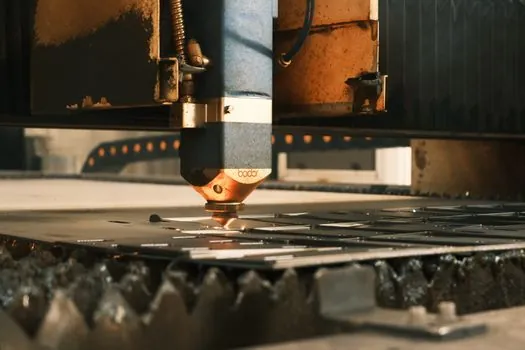
Specifying a CNC retrofit breaks into three decisions, each with hard numerical limits. Sensor layer: spindle vibration IEPE accelerometers with 10 kHz bandwidth, 100 mV/g sensitivity class, IP67 housing near the spindle nose; thermal probes PT100 Class A on each axis servo motor winding; current transducers on the spindle drive DC bus. Edge layer: industrial PC or hardened PLC with at least 4 GB ECC RAM, 32 GB industrial SSD, dual GbE, and a 2026-spec support window of at least 7 years, per the industrial PC sizing guide.
Connectivity layer: OPC UA over TSN for new Siemens and Heidenhain controllers, MTConnect over Ethernet for legacy FANUC and Mazak, and MQTT/Sparkplug B as the broker to plant historians. The Microsoft I4.0 reference frames cloud computing and IoT as the bridge between physical and digital worlds, and the UMATI companion specification is the vendor-neutral data model most 2026 CNC OEMs are aligning to [S1]. Cybersecurity is the fourth axis: IEC 62443-3-3 SL2 should be the floor for any new edge controller, with network segmentation from the corporate VLAN mandatory.
Who I4.0 CNC retrofit is for, and who should skip it
The retrofit fits plants running multi-axis CNC cells at less than 60 percent spindle utilization, where unscheduled stoppages cost more than the retrofit amortization; it also fits job shops with mixed short-run work that need real-time OEE visibility rather than monthly ERP rollups [S1]. High-volume transfer lines, manual screw machines, and standalone lathes typically fail the payback test because cycle time is already at the floor and tool wear is dominated by material lot, not machine state.
Plants that already run a wired OPC UA stack from a recent CNC purchase (Siemens SINUMERIK ONE, DMG MORI CELOS, Mazak SmoothAi) gain little from bolt-on sensors; the native controller is the Industry 4.0 node. A more productive 2026 spend in that case is process integration around core machine standardization rather than sensor retrofit.
Comparison: retrofit options on a 5-axis CNC
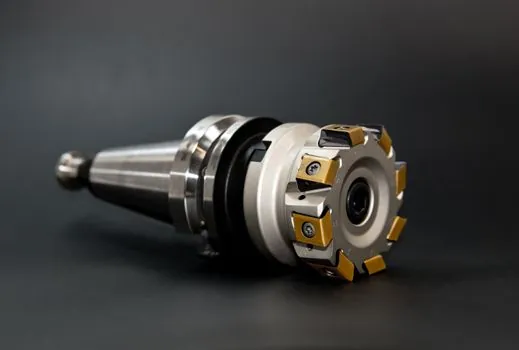
Three retrofit routes compete in 2026. Option A: vendor-supplied retrofit kit (Heidenhain, FANUC MTConnect, Siemens MindSphere) with bundled cloud; lowest integration risk, 18 to 30 percent higher capex, 2 to 4 month lead time. Option B: third-party IIoT edge plus plant historian; lower capex, integration cost moves into engineering hours, payback typically faster in plants with an existing controls team. Option C: fully in-house DIY with open-source OPC UA stacks; lowest capex, highest hidden cost in cybersecurity, supportability, and uptime risk. [S3]
On four decision criteria, vendor kits win on integration speed and support, third-party IIoT wins on cost and data ownership, DIY wins on customization but loses on machine safety compliance and lifecycle risk. The Microsoft reference explicitly lists cybersecurity and the complexity of processing large data volumes as core challenges, which tilts the choice away from DIY in regulated or high-mix production [S1].
Standards, data models, and the 2026 sourcing checklist
Buyers should anchor the spec to four standards. OPC UA Companion Specification for Machine Tools (UMATI) for semantic data, IEC 62443-3-3 for industrial cybersecurity, ISO 23247 for digital twin framework in manufacturing, and MTConnect or PROFINET for legacy protocol bridging. The Springer foundational review identifies cyber-physical systems, IIoT, and cloud manufacturing as the three pillars that drive the I4.0 technology stack, and those map directly onto the four standards above [S3].
The verifiable next node for any plant is the published UMATI part list, which by 2026 covers milling, turning, and grinding with stable information models; aligning a retrofit to UMATI before pilot deployment avoids a costly middleware rewrite in year two. A second trackable signal is the IEC 62443-3-3 SL2 certification status of the chosen edge controller, since cybersecurity audit findings are the most common cause of 2026 retrofit project delays in European and North American plants.