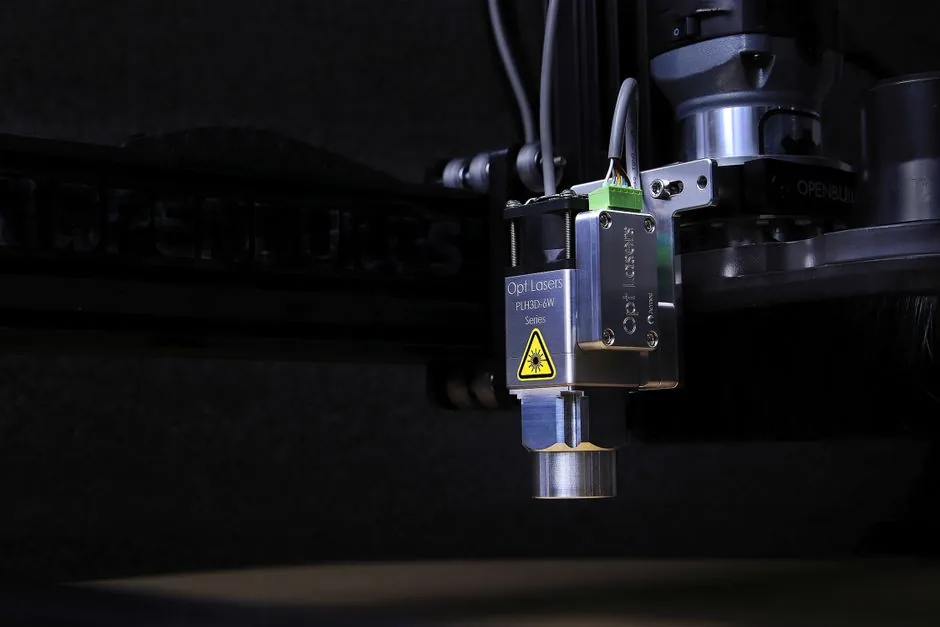
Closed-loop CNC process control in 2026 hinges on four measurable pillars: axis resolution in nanometres, real-time tool and punch monitoring, servo-loop stiffness, and modular automation interfaces, all quantified on current OEM datasheets [S1][S3].
The control stack spans CNC controllers with 1 nm linear-axis resolution, machine-learning path-correction, EtherCAT fieldbus, and in-process measurement for runout and balance correction on grinding centres, paired with hydraulic punching cells rated to 220 kN at 1,600 strokes/min and 0.3 s tool changes [S1][S3].
Axis resolution and servo-loop performance
Linear-axis resolution of 1 nm with 1 arc-second rotary resolution is now standard on premium tool and cutter grinders, delivered without cycle-time penalty through new servo control algorithms [S3]. On the MicroX ULTRA platform, the ANCA AMC5 G2 high-performance CNC runs on a high-speed SSD with an Intel processor and Windows 10, exposing EtherCAT for sub-millisecond I/O determinism in grinding cells [S3]. Closed-loop accuracy at this level is what makes D0.03 mm micro-tool production repeatable, since the cutting-edge geometry is referenced against the same frame that drives the grinding wheel [S3]. For the broader factory floor, process control on CNC assets is shifting from open-loop stepper heritage to fully closed-loop servo with glass-scale feedback on every linear axis, a change driven by cost reductions in linear encoders rather than by new standards.
Smart monitoring and in-process measurement
Smart Punch Monitoring on hydraulic CNC punching machines detects broken punches in-cycle, complementing sheet-format recognition and Smart Load/Unload routines that flag mis-picked blanks before they hit the die [S1]. On grinding platforms, in-process measurement handles balancing and runout correction automatically, so a wheel dressed off-centre is corrected before the next flute is ground rather than after a downstream inspection failure [S3]. These two patterns (predictive punch monitoring and on-machine metrology) share a control architecture: a high-speed data path from sensor to CNC, with EtherCAT and similar deterministic buses dominating new builds [S3]. Engineers specifying replacement cells should require published latency from sensor trigger to drive command, not just the existence of a "smart" label, because marketing language and control-loop behaviour still diverge widely.
Throughput, force, and the hydraulic sheet-metal benchmark

The TRUMPF TruPunch 5000 series anchors the high-rate hydraulic punching benchmark: 220,000 N (220 kN) pressing force, 9.5 kW (12.92 hp) engine power, X travel of 2,500 mm or 3,050 mm, Y travel of 1,250 mm or 1,550 mm, and 8 mm maximum plate thickness [S1]. Stroke rates reach 1,600 strokes/min for punching and 2,800 strokes/min for marking, with multiTool change time of 0.3 s and tool capacity up to 90 stations through ToolMaster Linear [S1]. The active (descending) die is a process-control feature, not a comfort option: it eliminates die-scratch on the part, so cosmetic-critical sheet components (stainless appliances, visible automotive panels) leave the cell without secondary buffing [S1]. For process engineers sizing cell capacity, this CNC capacity planning frame, expressed in spindle hours and axis count, is the cleanest way to translate stroke rate into weekly throughput.
Spindle, loader, and machine envelope on grinder-class CNC
Tool and cutter grinder envelopes are now sized for lights-out micro-tool production: dual-ended spindles with peak output of 4.5 kW (6 HP), a rigid single-column structure, dual wheel packs (one per spindle end), shank capacity to Ø6 mm (1/4 in), maximum tool length 120 mm, and a Fanuc loader holding 840 tools at Ø3 mm or 520 tools at Ø6 mm [S3]. Machine footprint of 1,930 mm wide × 1,800 mm deep × 1,810 mm tall fits a single European pallet while leaving clearance for the loader swing, a detail that matters in retrofits where floor space is fixed [S3]. Motor temperature control (MTC) and intelligent grinding-path algorithms sit on the same EtherCAT-mapped controller, so a single ANCA AMC5 G2 handles servo, I/O, and process-data logging without an external PLC layer for most cells [S3].
Control stack, PLC integration, and fieldbus choices

CNC controllers in 2026 are converging on industrial-PC hardware with real-time EtherCAT slaves, Windows or Linux HMI front-ends, and optional OPC UA publish of machine state to plant historians [S3]. The PLC layer, when present, handles safety, door interlock, and loader hand-off; an PLC sourcing map helps match controller hardware to plant-standard PLC families before a CNC purchase commits a line to a vendor. For mixed cells (punching plus grinding plus metrology), the practical rule is to standardise on one fieldbus at the cell level, with EtherCAT and PROFINET the two most common choices on new European and Asian builds respectively [S3]. Plant engineers should also confirm that the CNC exposes a documented tag list for OPC UA, since ad-hoc CSV exports remain the most common cause of stalled digital-thread projects.
Process control vs. process calibration: where each applies
Process control on CNC covers the closed-loop behaviour during the cut: servo following error, smart monitoring thresholds, and adaptive feed override. Process calibration is the upstream discipline that ties a CNC's coordinate frame to a traceable standard, typically a laser interferometer or ball-bar test, and re-establishes that tie after collision repair, axis rebuild, or annual verification. The two disciplines meet at the process calibration handshake, where a calibrated reference artefact proves the CNC's reported position matches physical reality. For cells where sub-micron grinding feeds the value chain, the calibration interval should be monthly on linear axes and quarterly on rotary axes, with a documented back-up routine using a multifunction process calibrator for the analog pressure and temperature channels that feed the CNC's environmental compensation table. [S5]
Comparison: punching cells vs. grinding cells vs. general machining
Three CNC archetypes dominate 2026 industrial buying. Hydraulic punching cells (TruPunch 5000 class) trade sub-micron resolution for high-rate tonnage: 220 kN force, 1,600 strokes/min, 8 mm plate, 0.3 s tool change [S1]. Tool and cutter grinders (MicroX ULTRA class) trade throughput for resolution: 1 nm linear, 4.5 kW dual spindle, Ø6 mm shank, 840-tool loader [S3]. General job-shop machining centres (3-axis through 5-axis) sit between the two, with 3-axis, 4-axis, and 5-axis capability routinely co-deployed in aerospace and medical cells where lot sizes are small and geometries are complex [S4]. On cost per removed cubic millimetre, the order is grinder > 5-axis mill > 3-axis mill > punching cell; on geometric tolerance achievable, the order inverts, with grinding holding nanometre-class surface finish and punching holding ±0.1 mm on contour position [S1][S3][S4]. Aerospace-tier shops, which often pair all three archetypes, source aerospace manufacturing capacity forecasts when planning spindle-hour budgets across mixed cells.
Limits, failure modes, and what the specs do not tell you
OEM datasheets understate the practical limits of CNC process control. Smart Punch Monitoring on hydraulic presses catches broken punches, but does not catch gradual punch wear below the breakage threshold, so cosmetic-critical runs still need a downstream vision gate [S1]. Grinder-class 1 nm resolution is real, but only within a thermally stable envelope, and grinder builders require ambient temperature held within ±1 K around the machine, a condition the spec sheet lists as a footnote [S3]. Closed-loop accuracy also depends on the v-process line discipline: if the upstream vacuum, compressed-air, or coolant supply drifts, the CNC's compensation table is compensating for a moving target. The dominant failure mode in 2026 field reports is not a broken drive but a drifted environmental input, which is why the calibration pass, not the servo upgrade, is the highest-ROI maintenance step on most CNC cells.
Trackable signals for the next planning cycle: published OPC UA tag lists on CNC controllers (vendor release notes), revision dates of the ISO 230 series for machine-tool test code, and any announced tightening of ±1 K thermal-stability clauses on grinder warranties. Engineers rebuilding cells in 2026 should also watch the access control layer around CNC HMI terminals, since networked CNCs are now routine OT targets and physical-plus-logical access convergence is moving from optional to standard on premium builder contracts.