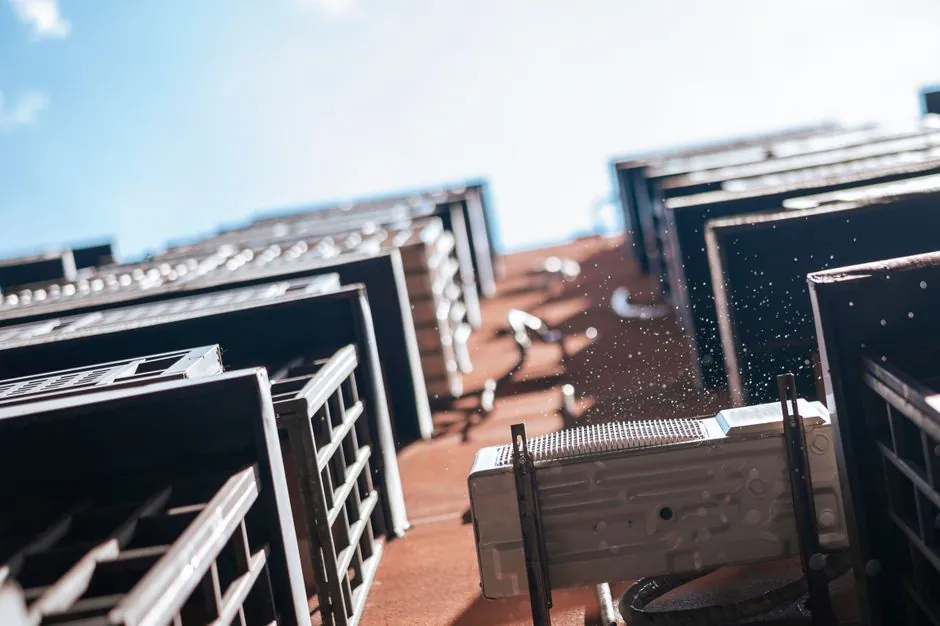
Across 2026 reference pricing, a 200-ton air-cooled chiller plant installed runs roughly $260,000 (about $1,300/ton) versus a comparable water-cooled centrifugal plant at $1,700/ton, with the gap widening once the cooling tower, condenser-water pumps and chemical treatment are counted [S2]. For a 10-ton portable air-cooled unit, the 2026 sticker sits at $16,000–$28,000 for standard models, equivalent to $1,600–$2,800/ton before installation [S1].
The decision is not sticker-versus-sticker. Air-cooled buys simplicity and zero water treatment; water-cooled buys lower kW/ton and quieter mechanical rooms. The threshold where the electricity savings repay the extra mechanical-room infrastructure is around 4,000 operating hours per year, the figure most 2026 vendor sizing tools now default to [S6][S7].
2026 Sticker Prices and $/Ton Ranges by Configuration
Packaged portable air-cooled chillers from 1/3 to 60 ton cluster in the $1,600–$2,800/ton band at standard leaving-water temperatures (40°F+), with low-temperature and sub-zero variants commanding a 30–60% adder for heavier compressors and refrigerant packages [S1]. At the upper end, custom 60-ton builds land at $85,000–$150,000 (about $1,400–$2,500/ton) for standard models and $130,000–$220,000 for low-temperature versions, before controls integration and commissioning [S1].
For central-plant equipment, the 2026 installed-cost frame is sharper: air-cooled units from 50–150 ton run $120,000–$280,000 installed ($800–$2,400/ton), and water-cooled centrifugal units from 200–500 ton run $350,000–$900,000 installed ($1,750–$1,800/ton) [S4]. Add $15,000–$40,000 for the A2L refrigerant transition surcharge if the plant is being converted from R-22, plus $8,000–$25,000 for controls integration [S4]. The 2026 lead-time penalty is real: centrifugal units sit at 28–52 weeks from order to commissioning, which alone can swing project financing [S4].
kW/Ton, IPLV, and the Operating-Cost Spread
A 300-ton air-cooled chiller with variable-speed drive (VSD) and EC fans can drop from 1.15 kW/ton to 0.85 kW/ton at peak load, an efficiency gain that recurs every hour of operation [S6]. Aged units (15+ years) routinely sit at 0.72–$0.95 kW/ton actual, while a modern VFD centrifugal reaches 0.48–0.55 kW/ton IPLV [S4]. The energy delta on a 250-ton unit at $0.11/kWh works out to $26,000–$54,000 per year, plus an $8,000–$18,000/yr maintenance delta and a $12,000–$35,000/yr modeled downtime-risk premium on the aged asset [S4].
Water-cooled chillers hold their efficiency in hot-ambient conditions where air-cooled COP degrades sharply, a stability that matters in southern U.S. and Middle East data-center builds [S7]. The Thermal Care comparison shows a high-efficiency variable-speed water-cooled centrifugal closing part of the capex gap, but the annual operating-cost penalty versus an air-cooled baseline still lands near $16,725 per year on the modeled duty cycle [S3].
Site Constraints and Mechanical-Room Reality
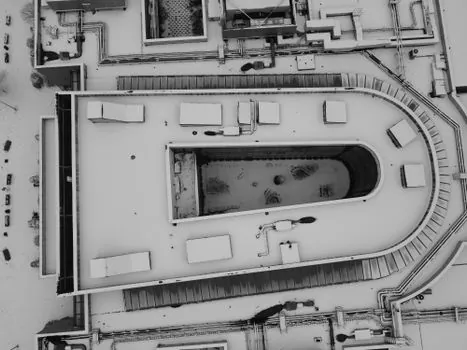
Air-cooled plants place the chiller outside, eliminating the cooling tower, condenser-water pumps, makeup-water line and chemical-treatment skid that a water-cooled plant requires indoors [S2]. Water-cooled plants need a primary/secondary pumping arrangement or a variable-primary pumping arrangement, an expansion tank, an air separator, and chemical treatment on both the chilled-water and condenser-water loops [S2]. That mechanical-room footprint is the structural reason water-cooled capex runs higher, and it is the reason retrofits in space-tight existing buildings usually default to air-cooled despite higher kW/ton [S5].
Water-cooled plants also accumulate maintenance obligations the air-cooled side never sees: condenser-tube cleaning, freeze protection, water treatment, and tower mechanical service, all of which are recurring line items rather than one-time capex [S5]. For a chiller selection, this maps to a rule of thumb: 24/7 process cooling above ~150 ton tends to favour water-cooled for TCO; intermittent duty, outdoor siting, or water-scarce sites tend to favour air-cooled regardless of efficiency tables [S5][S7].
Decision Matrix: Air-Cooled vs Water-Cooled on Four Criteria
On installed cost per ton, air-cooled wins across every capacity band in 2026: roughly $1,300–$2,000/ton installed for 50–500 ton plants versus $1,700–$1,800/ton for water-cooled centrifugal, before the cooling tower is counted [S2][S4]. On energy efficiency, water-cooled wins at 0.48–0.55 kW/ton IPLV (VFD centrifugal) versus 0.85–1.15 kW/ton for a modern air-cooled VSD unit [S4][S6]. On mechanical-room complexity, air-cooled wins because it eliminates the cooling tower, condenser-water pumps and water-treatment skid entirely [S2][S5]. On hot-ambient performance, water-cooled wins because kW/ton is stable while air-cooled COP degrades as ambient rises [S7].
The matrix maps to three use-case recommendations. For 24/7 industrial process cooling above 150 ton, especially in hot climates, water-cooled centrifugal pays back the capex premium inside 5–8 years per the 2026 TCO framework [S4]. For 50–150 ton packaged plants with intermittent duty or outdoor siting, air-cooled remains the default. For retrofit projects in buildings without cooling-tower structure or water service, air-cooled is the only practical path, and the higher kW/ton is accepted as a siting cost [S5].
Refrigerant Transition and 2026 Compliance Costs
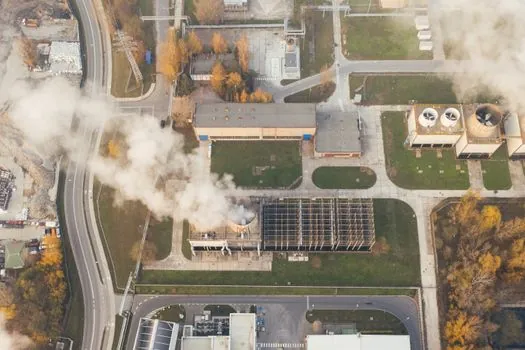
R-22 phase-out and the A2L transition are no longer side notes: they are line items in any 2026 chiller replacement budget [S4]. The refrigerant transition surcharge runs $15,000–$40,000 per unit, on top of the $6,000–$22,000 typical cost of R-22 recovery and replacement during a major repair [S4]. For owners still running R-22, the AHJ timeline and rising refrigerant costs make continued operation an arithmetic problem, not a maintenance preference.
Cooling-tower water treatment, which is mandatory on the water-cooled side, adds ongoing cost that is easy to underestimate. Treatment chemicals, blowdown metering, and corrosion-inhibitor programs typically run several thousand dollars per year on a 200-ton plant, and they scale with cycles of concentration. This is the line item that pushes life-cycle cost in the water-cooled direction on process cooling duty cycles above ~4,000 hours/year [S3][S7].
15-Year TCO Threshold and Sourcing Signals
The 2026 decision framework from facility-side capital planners is straightforward: at 4,000+ operating hours per year, the energy delta between 0.55 kW/ton (modern water-cooled VFD) and 0.95 kW/ton (aged air-cooled) repays the water-cooled capex premium inside the asset's second operating cycle [S4]. Below ~3,000 hours per year, the air-cooled capex advantage dominates and the project favours packaged air-cooled equipment, particularly for HVAC applications with seasonal swing [S4][S6].
Trackable signals for the next 90 days: 2026 centrifugal lead times (currently 28–52 weeks) and A2L refrigerant pricing, both of which set the floor on any water-cooled capex model [S4]. Spec teams should also watch ambient-design temperature assumptions in the bidding documents, because a 95°F versus 105°F design day moves kW/ton on the air-cooled side by 0.10–0.20, and that single number can flip the air-cooled vs water-cooled recommendation without any change to the equipment list [S6][S7].
The underlying component specifications are covered under ballast water treatment, and online water analyzer.
For related coverage, see AI Video Analytics for Bottleneck and Cycle Time Studies: 2026 Field Guide.