
Battery-grade cobalt sulfate heptahydrate (CoSO4·7H2O, CAS 10026-24-1, 281.10 g/mol) defines the modern competitive landscape, with merchant plants competing on impurity ceilings in the low single-digit ppm for Ni, Cu, Fe, Zn, Mn and Ca, and sub-ppm for Na and Mg, polished through chelating ion-exchange resin or D2EHPA/Cyanex 272 solvent-extraction cascades [S3].
The global market was valued at $1.8B in 2025 and is projected to reach $3.1B by 2034 at a 5.8% CAGR, with Asia Pacific holding 48.7% of revenue and battery grade accounting for 42.3% of the grade mix [S5]. Supply is concentrated: roughly 65% of global production capacity sits in China, clustered across Hunan, Guizhou and Yunnan provinces [S5].
Feedstock architecture: oxide tolling, MHP from HPAL, and black mass
The dominant industrial route remains acid digestion of cobalt(II) oxide (CoO) with dilute sulfuric acid at 60-90 °C in glass-lined or rubber-lined SS316 reactors, consuming about 0.61 t of CoO per tonne of anhydrous CoSO4 (154.996 g/mol) and holding residual free H2SO4 in a 5-15 g/L window [S3]. The leach is followed by hydrogen peroxide or sodium hypochlorite polish to oxidize Fe2+ to Fe3+, then pH adjustment with lime or NaOH to drop Fe, Al, Cu, Zn and Mn as a hydroxide cake [S3].
Feedstock flexibility is now the decisive lever. Producers pull cobalt in as metal cuttings, black mass, hydroxide, oxide or mixed Ni/Co hydroxide precipitate (MHP), the latter increasingly flushed by Indonesian high-pressure acid leaching (HPAL) operations [S3]. MHP arrives pre-dissolved, so its front end is a neutralization/iron-and-aluminum removal train rather than a leach, while the back end (impurity polishing, evaporation, crystallization) is functionally identical across feedstocks [S3]. Procurement is dominated by Co availability and Co pricing rather than acid cost, which is why most Chinese merchant plants sit on cobalt feedstock tolling arrangements with metal refineries and HPAL off-takers [S3].
Spec bands that separate battery grade from industrial grade
Battery-grade CoSO4·7H2O is sold against impurity ceilings typically in the low single-digit ppm for Ni, Cu, Fe, Zn, Mn and Ca, and sub-ppm for Na and Mg, with the final polish run through a chelating-ion-exchange resin or a solvent-extraction cascade using D2EHPA or Cyanex 272 [S3]. A canonical two-stage filter-and-purge sequence is documented in EP 4 296 236 A1: a first crystallization produces a mother-liquor purge that drags residual Ca and Mg out of the system, and a second cooling-crystallization stage yields the final salt [S3].
Catalyst-grade material tightens Fe and Cu to ≤5 ppm and Na to ≤15 ppm by ICP-OES/ICP-MS, against a chemical assay of ≥99.5% and cobalt content of ≥20.8% on the heptahydrate basis, compared to industrial-grade ceilings of ≤50 ppm Fe, ≤20 ppm Cu and ≤100 ppm Na at ≥98.0% assay [S2]. Sigma-Aldrich's trace-metals-basis battery-grade reference specifies ≥99.9% EDTA assay, ≤1,000 ppm total trace metals, nitrate and sulfate anion traces each ≤20 ppm, and individual cation ceilings at 10 ppm for Al/Ca/Cd/Cr/Cu/Fe/K/Mg/Pb/Si/Zn with Na at ≤30 ppm [S8].
Unit operations that lock in spec and yield
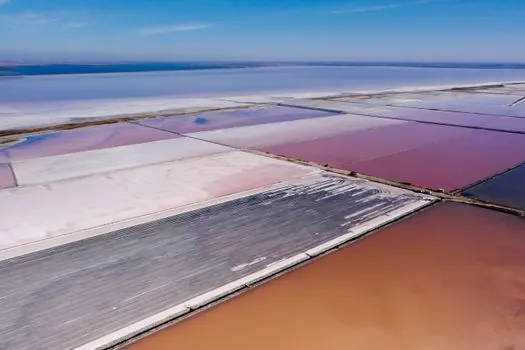
Evaporation and cooling crystallization are sized for the heptahydrate target. The clarified CoSO4 liquor is concentrated in a multi-effect evaporator to roughly 350-400 g/L Co, then transferred to a cooling crystallizer that ramps from about 60 °C down to 15-25 °C, seeding CoSO4·7H2O nuclei and producing the characteristic red monoclinic crystals [S3]. A centrifuge isolates the wet cake, which is then dried in a vacuum dryer or fluid bed to surface moisture below 0.5% while preserving the seven waters of hydration [S3].
Trace metal control is a function of reactor metallurgy and crystallization discipline. Multi-stage cooling crystallization prevents parent-liquor occlusion, guaranteeing low sodium and iron levels that would otherwise block catalytic active sites during impregnation or co-precipitation, and packaging under climate-controlled humidity maintains the seven-water stoichiometry for precise dosage in precursor synthesis [S2]. Industrial-grade anhydrous CoSO4 (CAS 10124-43-3) is specified at ≥99.0-99.99% assay with ≥37% cobalt content for technical grade, used in electronics and electroplating of components [S6].
Application segmentation: batteries lead, but pigments, feed and catalysts anchor demand
Batteries dominate the application mix, with battery grade holding 42.3% of the global grade share in 2025 and a single EV battery pack containing 8-10 kg of cobalt compounds, which translates to sustained precursor demand through the 35 million-unit annual EV sales trajectory projected by 2030 [S5]. High-nickel cathode chemistries (NCA and NCM variants) still require cobalt sulfate for blending and layering, maintaining steady demand even as cobalt content per battery decreases incrementally [S5].
Pigments and inks, electroplating, ceramics, animal feed, fertilizers, and catalysts each carry a smaller but stabilizing share. Cobalt sulfate is used as a drying agent for paints, a cobalt pigment additive, and an alkaline-battery additive in industrial grades, and as a precursor in oxidation catalysts and environmental advanced oxidation processes (AOPs) at catalyst grade [S1][S2]. In agriculture, cobalt sulfate is gaining importance as a micronutrient additive in fertilizers and animal feed as precision agriculture techniques scale [S5]. A useful cross-read on parallel battery-metal markets sits in nickel sulfate demand 2026-2030, since HPAL feed economics drive both Ni and Co sulfate precursor supply jointly.
Who it is for, and who should not specify it
Specifiers for lithium-ion cathode precursor lines, especially LCO and NCM/NCA co-precipitation trains, must use battery-grade CoSO4·7H2O with the single-digit ppm cation ceilings and sub-ppm Na/Mg, because residual sodium blocks layered-oxide crystallization and iron poisons the active surface [S3][S8]. Catalyst manufacturers running impregnation or co-precipitation routes should target the catalyst-grade sub-band at ≤5 ppm Fe/Cu and ≤15 ppm Na, with full REACH registration for EU imports and ISO 9001:2015 / ISO 14001:2015 documentation [S2].
Industrial users in pigments, drying agents, electroplating and animal feed can run on industrial-grade CoSO4 at ≥98.0% assay and 50-100 ppm Fe/Cu/Na ceilings, which is materially cheaper and is supplied in 25 kg PE moisture-proof bags or 1,000 kg UN-approved jumbo bags [S2][S6]. Agriculture and feed applications have lower purity demands but still require SDS/MSDS and COA compliance with EINECS 600-050-9 listing for the heptahydrate [S4]. Applications expecting the anhydrous form should confirm the seven waters of hydration are removed at 420 °C, since the heptahydrate loses all 7 water molecules at that temperature and the mass change must be reflected in dosage [S1].
Regional and competitive structure
Asia Pacific is the structural supply leader, with $876.6M in 2025 revenue, 48.7% global share, and roughly 65% of global cobalt sulfate production capacity concentrated in Hunan, Guizhou and Yunnan provinces, with downstream pull from CATL (over 500 GWh annual battery capacity), LG Energy Solution and Samsung SDI [S5]. The renewable energy and grid-scale storage surge adds a second demand layer that automotive alone cannot satisfy, and battery manufacturers including CATL, LG Energy Solution, and Panasonic are expanding production capacity specifically for high-performance cathode materials [S5].
Competitive leadership at the merchant-refining tier is reported to sit with Umicore, with the broader field split between Chinese merchant refiners, integrated metal houses running tolling arrangements, and HPAL off-takers in Indonesia feeding mixed Ni/Co hydroxide downstream [S3][S5]. At the merchant spot tier, Chinese suppliers including Hubei Tao Yuan Chemical offer 21% cobalt content heptahydrate at 99% purity with ISO certification, COA/MSDS/TDS, 100,000 t/y capacity, 1 t MOQ, and tiered pricing from US$5.90/kg at 1,000+ kg to US$19.90/kg at 10-999 kg, with 25 kg/50 kg/1000 kg packaging and 15-30 workday lead times [S4]. HS code 28332990 covers the heptahydrate export, and 25 kg PE bags or 1,000 kg jumbo bags are the standard packs [S2][S4].
Standards, safety, and regulatory constraints

EU REACH registration is the gating compliance line for European imports, with full REACH registration expected at the supplier level, and ISO 9001:2015 / ISO 14001:2015 the typical quality and environmental management baseline [S2]. Handling must respect the German MAK list assignments of respiratory and skin sensitization, carcinogen category 2, and germ-cell mutagen category 3A, with the R-phrase set flagging R49 (may cause cancer by inhalation), R42/43 (sensitization), R50/53 and R51/53 (aquatic toxicity), and R22 (harmful if swallowed) [S7].
For precursor buyers, the meaningful compliance trail is CAS-number accuracy (10026-24-1 for the heptahydrate, 10124-43-3 for the anhydrous), EINECS 600-050-9 for the heptahydrate in commerce, EC Number 233-334-2 at the substance level, and SDS plus ICP-MS Certificates of Analysis attached to every Lot ID traceable to raw material origin and reactor batch logs [S2][S4][S6]. Recycled cobalt sulfate is now re-entering the precursor supply chain to reduce reliance on primary mining and meet cathode-material sustainability targets, with regulatory incentives for recycled content supporting closed-loop investment specifically for high-cobalt LCO chemistries [S10].
Sourcing signals worth tracking next
Watch the HPAL MHP offtake announcements from Indonesian operations and any shift in the CoO-to-CoSO4 tolling spread, since roughly 0.61 t of CoO is consumed per tonne of anhydrous CoSO4 and Co availability, not acid cost, sets the marginal price [S3]. Monitor whether Chinese merchant refiners in Hunan/Guizhou/Yunnan push catalyst-grade sub-5 ppm Fe/Cu envelopes into industrial-grade SKUs, since the catalyst-grade premium is largely a function of impurity control, not base chemistry [S2][S5]. Track recycled-content audits for LCO precursor buyers, where closed-loop investment is concentrated and where the next spec-revision (likely on Ni/Co recovery yields from black mass) will most directly re-rank the merchant supplier map [S10].
Spec-level background on the components involved: pressure transmitter, flow meter, and industrial valve.