
Cobalt sulfate (CoSO4, CAS 10124-43-3, formula CoO4S, density d4^25 = 3.71) is the principal cobalt(II) salt feeding the lithium-ion battery cathode precursor pipeline, with monohydrate form CoH2O4S (CAS 10393-49-4, molecular weight 157.01 g/mol) the dominant commercial grade handled as red orthorhombic water-soluble crystals [S2][S3].
The supply chain runs from cobalt metal or oxide dissolution through crystallization to battery-grade CoSO4·7H2O, with industrial dosing and concentration monitoring handled by a flow meter and pressure sensor pair on the crystallizer recirculation line [S1][S2].
Upstream feedstocks and process routes for CoSO4 manufacture
Industrial cobalt(II) sulfate is made by dissolving cobalt metal, cobalt oxide, or cobalt hydroxide in hot dilute sulfuric acid, then filtering, evaporating, and cooling to crystallize the heptahydrate; vapor pressure of the anhydrous salt sits at 0 Pa at 20 °C, so drying requires elevated temperature [S2]. Oxidation to cobalt(III) sulfate Co2(SO4)3·18H2O is achieved in 8 N sulfuric acid either electrolytically or chemically with ozone or fluorine, yielding a blue hydrate that decomposes in pure water with oxygen release but stays reasonably stable in dilute sulfuric acid solution [S2]. A second route precipitates cobalt(III) alums MCo(SO4)2·12H2O (M = K, Rb, Cs, NH4) as blue crystals by cooling mixed sulfate solutions in dilute sulfuric acid; the potassium alum is diamagnetic, the rubidium salt has a magnetic moment below 1 B.M., and the ammonium alum registers 2.1 B.M. at 304 K, reflecting the [Co(H2O)6]3+ coordination believed present in all of them [S2].
Cobalt ammonium sulfate (a downstream-related double salt) is listed in supplier catalogues with three global vendors, confirming it is treated as a distinct commercial line rather than a by-product of CoSO4·7H2O [S4]. The upstream-to-downstream linkage is documented in ChemicalBook entries for both the crystalline form (CB01122549) and the monohydrate (CB51488011), where the upstream-material and downstream-product sections are populated but empty for the CAS pair cited, signalling standard reference structure rather than grade-specific data [S1][S3].
Downstream consumption: batteries, plating, pigments, and catalysts
The dominant downstream outlet is the lithium-ion battery nickel-cobalt-manganese (NCM) and nickel-cobalt-aluminum (NCA) precursor chain, where cobalt sulfate solution is co-precipitated with nickel and manganese sulfates under pH and temperature control to form the hydroxide precursor that is later lithiated. A second tier feeds electroplating baths for hard-facing and decorative cobalt coatings, cobalt blue pigments (cobalt aluminate spinel), and catalysts for hydrodesulfurization and Fischer-Tropsch synthesis. [S1]
The compound is also consumed in agriculture as a trace-mineral feed additive, in the production of cobalt oxides and other cobalt salts (cobalt nitrate, cobalt chloride, cobalt carbonate), and in the laboratory as a precursor for cobalt(III) coordination complexes. The dual nature of cobalt sulfate — water-soluble, red, orthorhombic heptahydrate versus anhydrous CoO4S — creates two distinct handling regimes: solution chemistry for downstream precipitation reactions and dry solid handling for shipping, both governed by the safety profile summarized in the next section [S2][S3].
Safety, occupational exposure, and decomposition behaviour
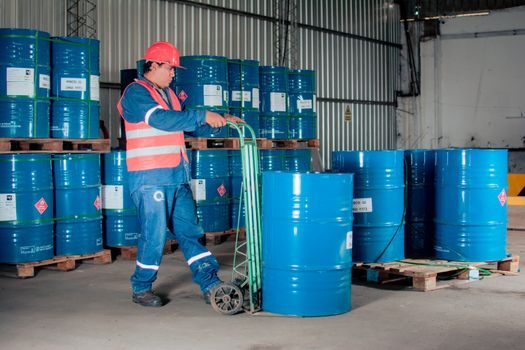
Decomposition of cobalt(II) sulfate on heating begins at 735 °C with release of toxic sulfur oxide fumes, and the dust reacts with strong oxidizers creating a fire and explosion hazard, so any dry handling section requires dust extraction rated for explosion-proof operation and continuous oxygen monitoring [S2]. The ACGIH 2005 TLV sits at 0.02 mg/m³ as an 8-h TWA with biological exposure index and confirmed animal carcinogen status (category A3); the German MAK list assigns respiratory and skin sensitization, carcinogen category 2, and germ-cell mutagen category 3A (DFG 2005) [S2].
Short-term exposure irritates eyes, skin, and respiratory tract; the R-phrase set flags R49 (may cause cancer by inhalation), R42/43 (sensitization by inhalation and skin contact), R50/53 and R51/53 (aquatic toxicity), and R22 (harmful if swallowed), with corresponding S-phrases S53, S22, S23, S36/37, S45, S60, and S61 governing exposure avoidance, PPE, medical response, and waste handling [S2]. Body uptake occurs by inhalation of aerosol and by ingestion, so dust suppression at transfer points, closed transfer via valve skids, and P3 particulate filter respirators are the engineering baseline, with leakage response requiring containment, moistening to suppress dust, and prohibition of environmental release [S2].
Specification bands and supplier landscape for the two main CAS numbers
The heptahydrate (CAS 10124-43-3) and the monohydrate (CAS 10393-49-4) are the two commercial grades carried by ChemicalBook-listed vendors, with the monohydrate entry showing three global suppliers anchored in China (Hefei TNJ Chemical Industry, Shanghai QianYan Bio-technology, Shanghai Kadel Chemical Technology) at edge ratings of 55–58 and product catalogue depths from roughly 3,460 down to 1,050 SKUs, giving a working benchmark for buyer-side due diligence on Chinese cobalt-sulfate exporters [S3]. The crystalline form (CB01122549) currently shows zero listed suppliers, so procurement runs through the two CAS-numbered entries rather than the crystalline descriptor [S1][S3].
The crystal form is red, orthorhombic, odorless, soluble in water, with the anhydrous density d4^25 = 3.71 anchoring grade identification; downstream synthesis conditions for cobalt(III) alums require dilute sulfuric acid matrix and a temperature ramp that the upstream cobalt(III) oxidation step is designed to match [S2]. When buyers compare the lithium hydroxide and nickel sulfate precursor chains, cobalt sulfate sits between them as the cobalt-bearing term that dictates cathode precursor metal ratios, and the cobalt sulfate supply chain 2026: spec map, sourcing nodes, and risk controls reference covers the operational risk picture in more depth.
Process control nodes linking upstream and downstream
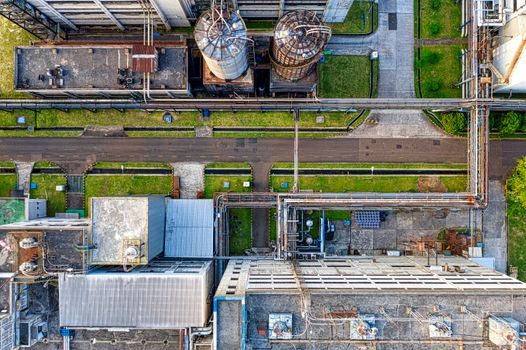
Continuous dissolution and crystallization trains need pH, temperature, conductivity, and density measurement on every reactor, with the cobalt-sulfate recirculation flow typically measured by Coriolis or magnetic flow meter because conductive sulfuric acid media interfere with electromagnetic designs above about 5 % acid strength. A feedback trim loop modulates sulfuric acid feed via a pressure sensor on the dosing line and a globe valve downstream of the acid pump, while the crystallizer level is trimmed by a differential-pressure level transmitter tied to a slurry-rated diaphragm seal.
For precursor-plant operators planning 2026 expansion, the critical control point is the cobalt-to-nickel-to-manganese molar ratio in the co-precipitation reactor, with on-line ICP sampling or XRF on the filter cake the only methods that catch ratio drift before the entire 30-tonne batch is rejected. The companion reference on hydrogen fuel cell process control: stack sensors, loop tuning, and safety covers the analogous sensor and loop-tuning discipline that operators moving from cobalt-sulfate precursor plants into adjacent chemistry can reuse. Trackable 2026 signals: the appearance of new monohydrate or heptahydrate grade listings beyond the current three-vendor Chinese base, and any revision of the ACGIH 0.02 mg/m³ TLV driven by the 2024–2025 animal-study re-evaluations.