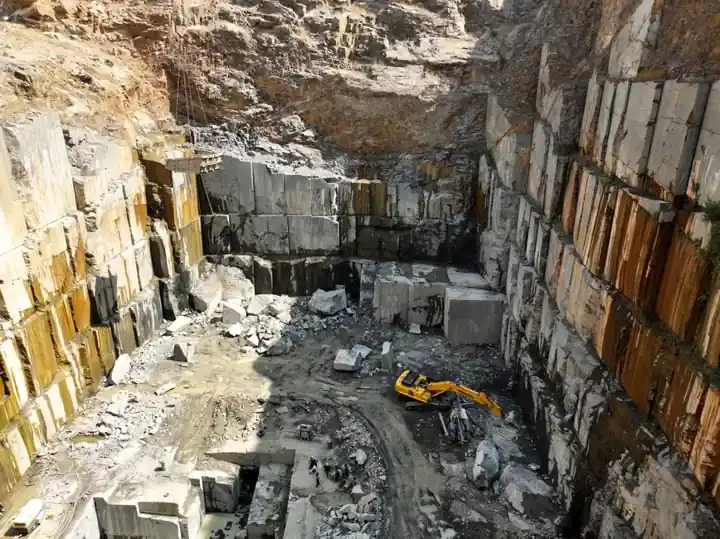
DRC cobalt output accounts for the vast majority of the global total, with China Molybdenum (CMOC) alone nearly doubling annual production in 2024 to record levels even as benchmark prices fell 59.5% from $41/lb in May 2022 to $16.62/lb in May 2025 [S4]. Between 15% and 30% of that DRC volume originates in artisanal and small-scale mining (ASM), where hand-dug shafts reach depths of roughly 100 m and chain-of-custody documentation is intermittent [S3][S9].
Procurement and specification engineers in battery cathode, superalloy, and cemented-carbide supply chains are again treating cobalt as a single-jurisdiction, ASM-laden input, with a CSIS analysis dated October 1, 2026 framing Western price support as a minerals-security question rather than a commodity question [S4]. A related piece on DRC cobalt quotas tightening 2026 supply maps how export policy and substitution interact with that same bottleneck.
Country-level concentration: HHI and the 76% figure
Country-level Herfindahl-Hirschman Index for mined cobalt reached 3082 in 2016, a value consistent with a "highly concentrated market" classification under standard competition metrics [S2].
This single-country share exceeds lithium's geographic spread (Australia, Chile, China, Argentina, and emerging African sources all producing meaningful tonnage) and is unlike the nickel laterite/sulfide split. For reference, a 2016 HHI of 3082 already crossed the 2500 threshold that the U.S. Buyers therefore price political, regulatory, and force-majeure risk into every pound of refined cobalt they procure, not as a tail event but as a base case.
Artisanal and small-scale mining share and depth
ASM contributes an estimated 15-30% of total Congolese cobalt output, equivalent to roughly 10-12% of global production, with the ASM share of total DRC cobalt cited in the 20-30% range by Pact [S5][S9]. Mechanisation is minimal: workers use hand tools for digging, crushing, washing, and transport, and shafts extend to about 100 m [S9].
Artisanal supply is the first to fragment when eastern Congo security deteriorates, removing volume with little warning and complicating any procurement assumption that cobalt risk has been "managed" through cathode-chemistry diversification alone [S3]. The same shock path also breaks traceability documentation, which is the input that OECD-aligned due-diligence schemes and downstream battery customer audits depend on. Cross-referencing the cobalt binder exposure in WC-Co cemented carbide tools piece, the same ASM fraction shows up indirectly in tungsten-cobalt scrap returns, where loose chain-of-custody lowers recycled-content credits.
Price volatility and Western-mine casualties
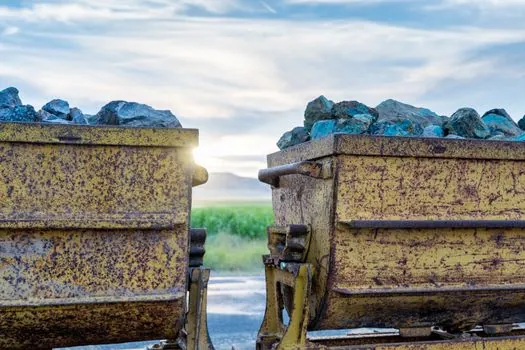
Cobalt prices fell from $41/lb in May 2022 to $16.62/lb in May 2025, a 59.5% drop, after which prices began to show upward momentum [S4]. The earlier 2016-2018 peak of $43.09/lb was followed by a March 2018 to December 2019 slump that put multiple Western projects into care and maintenance.
The 2022-2025 collapse coincided with CMOC's near-doubling of 2024 output, and Jervois' Idaho mine, the only U.S. primary cobalt operation, opened in 2022 and shuttered the following year when prices cratered [S4]. Cobalt prices fell 59.5% over the 36 months from May 2022 to May 2025, coinciding with the 2023 shuttering of Jervois's Idaho cobalt mine, the only U.S. cobalt mine, which had opened in 2022 [S4].
End-use demand: batteries vs superalloys
Over 50% of U.S. cobalt demand is driven by the superalloy sector, not batteries, for jet engines, advanced nuclear reactors, and precision-guided missiles [S4]. Battery cathode chemistries have been actively re-engineered to reduce cobalt content, including higher-nickel NCM and lithium iron phosphate (LFP) routes, but cobalt is not engineered out where high energy density and thermal stability are non-negotiable [S3].
The practical split for a specifier: cobalt in superalloy and cemented-carbide applications is functionally non-substitutable, while cobalt in entry-level or mass-market EV cells can be reduced or eliminated through LFP or high-nickel NCM/NCA cathodes. The risk profile therefore differs sharply by end-use, and "cobalt exposure" in a BOM cannot be treated as a single number.
Due-diligence and labour documentation
U.S. Department of Labor research published January 12, 2026 documents child labour in Zambia's copper and cobalt supply chain and maps risks for U.S. businesses tracing raw materials back to source [S1]. Once cobalt is smelted, origin cannot be determined analytically, so chain-of-custody documentation must be established upstream, at the miner-to-trader and trader-to-exporter handoffs, not at the refinery gate [S5].
Pact and BHR describe formalisation as a multi-layer process covering legal recognition, mining titles, chain-of-custody, health/safety/environment, security and human-rights protections, access to finance, and sound mine-life-cycle policies [S5][S9]. A Frontiers in Sustainable Cities paper dated 2026 places the DRC ASM share at 10-30%, consistent with the Pact and BHR ranges, and frames ASM communities as structurally embedded in the supply rather than as a residual externality [S7]. For procurement teams, this means OECD-aligned five-step due diligence, smelter-level disclosure through the Responsible Minerals Assurance Process (RMAP), and ASM-specific engagement with cooperatives are not optional layers; they are the only practical means of distinguishing ASM-origin cobalt from large-scale mechanised output once metal leaves the Copperbelt.
Failure modes and specification constraints
Single-jurisdiction supply above 75% removes the standard "multi-source qualification" mitigation that most reliability engineering programmes assume for conflict-mineral inputs. ASM-origin cobalt further degrades any claim that depends on isotope, lot, or refinery-level traceability, because lots are commingled at the smelter stage [S5].
Specification constraints to track: cobalt cathode-powder impurity ceilings (Ni, Cu, Fe, Mn at low-ppm levels), superalloy-grade Co minimums (typically 99.8% or 99.9% depending on AMS/spec), and WC-Co binder phase Co content (commonly 6-15% by mass in cutting-tool grades) all assume a refined-metal input, not a concentrate. When the upstream feed is unstable, the practical mitigations are forward contracts indexed to a published benchmark, recycled cobalt streams from spent batteries and cemented-carbide scrap, and qualification of secondary or "ex-China" smelters, not a relaxation of the refined-metal spec itself.
Comparison of mitigation options

Four practical levers are available to a buyer: cathode-chemistry substitution, secondary/ recycled cobalt, multi-source mine qualification, and price-floor or offtake support.
The decision matrix for a specifier: if the end-use is superalloy, defence, or aerospace, treat the cobalt spec as non-substitutable and qualify a Western or allied-sourced supply with price-floor or offtake support; if the end-use is mass-market EV cells, prefer LFP or high-nickel NCM and qualify recycled streams for residual cobalt; if the end-use is industrial-grade WC-Co tooling, prioritise recycled-cobalt binder streams and tool-life data over cathode-grade documentation. In all three cases, the binding constraint is upstream documentation quality, not the refined-metal assay, because once metal is smelted, origin can no longer be verified analytically [S5].
Trackable signals over the next reporting cycle: any DRC formal move away from the existing export ban, the next CSIS benchmark price reference beyond the $22.30/lb late-November 2025 print, and CMOC's 2025 and 2026 production disclosures relative to its 2024 record output [S4]. A continued price recovery above $25/lb combined with a maintained export framework would reduce the immediate supply-risk premium; a renewed push below $20/lb or a flood of DRC tonnage would reactivate the Jervois-Idaho shutdown pathway for any ex-China project currently being qualified [S4].
For component-level specifications, see mining dump truck, construction machinery and equipment, and lamps and light fittings.