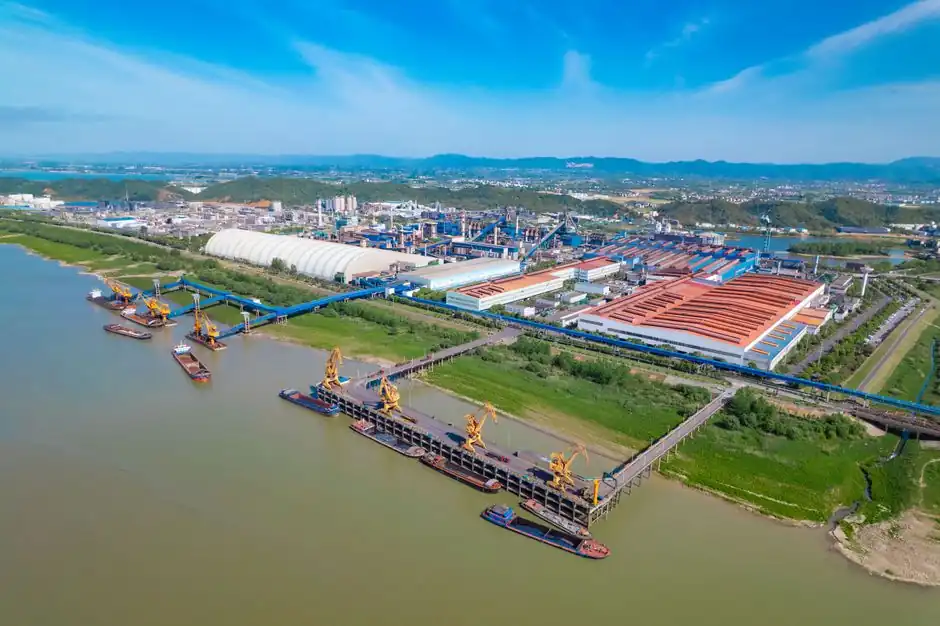
The Democratic Republic of Congo's 2026 cobalt export ceiling of 96,600 tonnes, split into an 87,000-tonne base allocation to producers and a 9,600-tonne government strategic reserve, restricts DRC-origin supply to roughly half of the country's 2024 output of approximately 220,000 tonnes [S3][S5].
The framework, administered by ARECOMS since the September 21, 2025 transition from an outright export ban, forces every tonne of mine output beyond the cap to be stockpiled in-country, while CMOC alone received 31,200 tonnes of 2026 quota against 2025 production of nearly 118,000 tonnes [S6][S3].
Quota mechanics: 10% pre-pay, liberatory receipt, use-it-or-lose-it
Each approved DRC exporter receives an annual cobalt allocation based on its 2022-2024 average production and export profile, must pre-pay a 10% mining royalty within 48 hours of filing an export declaration, and must secure a "liberatory receipt" before customs will release any shipment [S3].
Unused quota reverts to the government's 9,600-tonne strategic reserve rather than rolling forward indefinitely, which is the explicit use-it-or-lose-it lever that prevents producers from banking entitlements; that reversion mechanism was invoked in late June 2026 when Kinshasa withdrew unused allocations after prices had already rallied 160% from February 2025 to roughly $26 per pound, equivalent to $57,320 per metric ton [S4][S3].
Administrative bottlenecks compounded the constraint: no DRC cobalt exports cleared customs from June 2025 through end-2025, and Q4 2025 allocations rolled into Q1 2026 with no firm dispatch schedule, which is why Chinese cobalt stocks were projected by S&P Global to drop to operationally tight levels by early 2026 [S5].
Price response: 263% hydroxide lift, $26/lb metal, refined-product lag
Cobalt hydroxide prices jumped 263% from $4,012 per tonne in Q4 2024 to $14,560 per tonne in Q4 2025, while refined cobalt metal on European markets surged approximately 160% over the same window to about $26 per pound or $57,320 per metric ton by June 2026 [S5][S4].
The price step-change coincided with the formal quota handover, after the initial February 2025 export ban had already pushed European metal up roughly 70% to a March 2025 peak near $17.50/lb; the slower Q4 2025 transition delayed the second leg of the move, so the most aggressive appreciation landed in late 2025 and the first half of 2026 [S3].
For downstream specifiers, the practical effect is that the cobalt input line on a battery cathode precursor quote tracks the hydroxide benchmark with a 6-12 week lag, while long-term offtake contracts written against LME cobalt metal reference prices show a wider gap than the spot hydroxide-to-metal wedge would suggest [S5].
Indonesia's HPAL ramp: 38,324 t in 2025, 53,318 t projected for 2026
Indonesian cobalt output reached 38,324 tonnes in 2025 and is projected to climb 39.1% to 53,318 tonnes in 2026, all sourced from mixed hydroxide precipitate (MHP) lines using high-pressure acid leaching (HPAL) on laterite nickel ore [S5].
Cobalt has shifted from a byproduct credit to a primary margin contributor because nickel prices stagnated near $15,000 per tonne for most of 2025, while HPAL acid costs rose after Russia's sulfur export ban inflated sulfuric acid input pricing, since sulfuric acid represents roughly 25% of HPAL operating expense [S5].
Indonesia cannot overtake the DRC on tonnage in 2026, but if Kinshasa's actual 2026 shipments fall into a 70,000-80,000 tonne range because of administrative friction, Indonesian MHP's share of the marginal feedstock barrel expands materially; this is the single most credible non-DRC supply relief valve for 2026 buyers [S5].
Demand side: LFP takes >50% of EV deployments, NMC still 80-90% in EU/NA
Lithium iron phosphate (LFP) cells surpassed nickel-manganese-cobalt (NMC) chemistries in global EV battery deployments for the first time in 2025, capturing more than half of all EV batteries installed worldwide, yet NMC still dominates 80-90% of European and North American EV builds [S3].
Lithium cobalt oxide (LCO) is also growing again on the back of consumer electronics, with 2025 LCO production rising an estimated 25% year-on-year and consuming an additional 16,000 tonnes of cobalt, while the global LCO market is projected to compound at 4.3% CAGR through 2033-2035 as AI-powered devices demand higher volumetric energy density [S5].
The net effect on cobalt intensity is mixed: each GWh of LFP replaces roughly 0-5 kg of cobalt demand versus 40-60 kg for a comparable NMC pack, but every additional percentage point of NMC share in the EU/NA premium segment under the quotas translates almost directly into incremental hydroxide offtake that the 96,600-tonne cap cannot fully absorb [S3][S5].
Criteria comparison: DRC quota, Indonesian HPAL, recycled black mass
Across the three supply channels that 2026 specifiers can actually pull from, the trade-off is concrete. DRC quota material: 96,600 t/y ceiling, hydroxide at $14,560/t Q4 2025, highest political/permit risk, longest and most administratively heavy offtake process [S3][S5].
Indonesian HPAL MHP: 53,318 t projected for 2026, growing 39.1% year-on-year, exposed to sulfur-cost inflation, shorter offtake lead times, and a more diversified shipping footprint [S5].
Recycled black mass: structurally small in 2026 absolute tonnes, but it is the only supply line that is price-elastic on the upside and geopolitically neutral, which is why Western cathode-active-material producers are signing multi-year recycling tolls alongside primary offtake [S3].
For a buyer weighing these channels, the decision criteria in 2026 are: tonnage certainty (DRC > Indonesia > recycling), price volatility exposure (recycling < Indonesia < DRC), ESG/audit burden (DRC > Indonesia > recycling), and lead time (recycling < Indonesia < DRC), so most large specifiers end up running a blended three-source portfolio rather than concentrating volume on a single origin [S3][S5].
Constraints, failure modes, and what to track next
Quota execution risk is the dominant 2026 failure mode: if Kinshasa's actual 2026 shipments undershoot the 96,600-tonne cap, hydroxide can re-test the Q4 2025 highs and force substitution in cathode lines; if shipments hit the cap, the build in unsold DRC stockpiles becomes a 2027 overhang once quotas reset [S5].
HPAL sulfur-cost pass-through is the second live risk: a sustained rise in sulfur pricing would compress Indonesian output margins faster than the 39.1% growth projection, narrowing the non-DRC relief valve at exactly the wrong moment for EU/NA NMC buyers [S5].
Two trackable signals to watch in late 2026: monthly ARECOMS customs-cleared tonnage against the 96,600-tonne pro-rata schedule, and the spread between LME cobalt metal and Fastmarkets hydroxide benchmarks, which widened materially once the quota framework replaced the flat ban; both are upstream of the DC power supply and switching power supply build cycles that ultimately drive cathode demand.
For readers modelling cathode intensity into cell-level bill-of-materials, the cobalt line item now sits in the same sensitivity tier as lithium carbonate and nickel sulfate, which is a structural change from the 2022-2024 era when cobalt was treated as a relatively cheap input; downstream power supply qualification teams should expect more frequent requalification events on NMC-based packs through 2026 as hydroxide-origin shifts.
Background reading: Precious-Metal Sputtering Target Pricing: Drivers, Grades, and Reclaim Economics.