
Continuous Inkjet (CIJ) printers with IP65-rated enclosures, throughputs of 200–450 m/min, and 360° printhead orientation remain the workhorse for chemical drum, IBC, and pail lines in 2026 [S2][S7].
The shortlist almost always comes down to three technologies (CIJ, Thermal Transfer Overprinter / TTO, and laser) plus a thermal inkjet (TIJ) option for low-volume cases, with the decision driven by substrate, line speed, and the chemical-resistance of the mark [S1][S3][S6].
Why chemical shipping is a different coding problem
Chemical containers combine three stressors that consumer-goods lines rarely see together: aggressive solvent vapour, abrasive dust from powdered additives, and outdoor wash-down at the loading bay [S1][S7]. Machines with IP55 or IP66 ratings are designed to withstand dust, water, and other environmental factors common to these zones, and the code must remain legible for the full shelf life of the product, not just at the moment of print [S1].
Codes on chemical packaging carry safety payload, not just traceability: hazard symbols, UN numbers, batch IDs, and best-before dates all sit on the same surface, so a smudged character is a compliance finding rather than a cosmetic defect [S5]. This is why the regulatory compliance workload is heavier than in food or cosmetics, and why the first engineering question is always "will the mark survive the substrate plus the warehouse plus the legal minimum font height" rather than "what is the cheapest printer on the market" [S5].
Decision criteria that actually filter the shortlist
Substrate, line speed, environment, mark durability, and consumable cost are the five criteria that survive contact with procurement; everything else (GUI colour, brand heritage) is noise [S3][S6][S7]. On substrate, the chemistry plant has to cover metal drums, rigid HDPE pails, glass carboys, corrugated cartons, and flexible film pouches, often on the same site, and no single technology is best on all of them [S1][S4].
Line speed matters because chemical lines typically run 30–120 m/min on drum lines and 200+ m/min on carton erecting, while pilot or batch lines drop to 5–15 m/min; the printer's max throughput at the chosen font matrix is the binding spec, not the brochure headline speed [S1][S2]. The Leadtech LT760, for example, is rated at 450 m/min at 5×5 matrix and 1–4 lines at 7×5, with a print distance window of 2–30 mm, a useful reference point when sizing against a real conveyor [S2]. For an overview of the technology family itself, the coding machine encyclopedia entry lays out the same selection logic in a one-page format.
Environment is filtered by IP rating plus cabinet material (stainless front face preferred where vapours are present), with operating ranges of 0–45 °C and 0–95% non-condensing RH as typical published limits on industrial CIJ units [S2]. Consumable cost per 1,000 prints is the figure that gets audited after purchase: CIJ ink plus make-up, TIJ cartridges, and TTO ribbon all have to be priced against realistic annual volume, not against a single demo run [S7].
Technology comparison: CIJ vs TTO vs laser vs TIJ
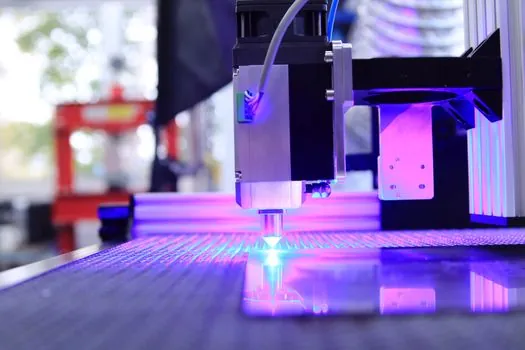
CIJ is the most substrate-tolerant option, marks metal, plastic, glass, and cardboard from a single 60-micron-class printhead, and is the only technology that prints cleanly on curved drum walls without fixturing [S1][S2]. TTO is restricted to flexible film and labels but delivers the highest resolution barcodes and crisp logos at moderate line speed, and laser is the only consumable-free option, with permanent marks on metal and hard plastic, but a higher capex and a fume-extraction requirement that often catches buyers by surprise [S3][S4]. TIJ sits in the low-volume corner: cartridge-based, clean drop-in for batch codes on cartons, but the per-print cost rises sharply above roughly 200,000 prints per month [S6].
A practical side-by-side for chemical shipping looks like this:
CIJ: substrate = any (metal, plastic, glass, cardboard, film); max line speed = 200–450 m/min depending on model and matrix; consumables = ink + make-up fluid; IP65 typical; best fit = drums, IBCs, pails, curved surfaces [S1][S2].
TTO: substrate = flexible film, labels; max line speed = up to ~600 prints/min intermittent, lower in continuous; consumables = ribbon; resolution = 300 dpi-class; best fit = sachet and pouch lines [S3][S6].
Laser: substrate = metal, glass, hard plastic, paper-laminate; consumables = none (electricity + extraction); capex = highest; best fit = permanent batch ID, anti-counterfeit marks, drum heads [S3][S4].
TIJ: substrate = coated cartons, labels, some film; consumables = cartridge; best fit = short-run batch coding, secondary packaging [S6].
Chemical-resistance and durability of the mark
Mark durability is governed by the ink chemistry for CIJ and TIJ, by the ribbon resin for TTO, and by the substrate ablation for laser, so it cannot be specified by printer type alone [S7]. For outdoor-stored drums, solvent-resistant MEK-free or ketone-free inks are typically specified; for plasticiser-rich HDPE, adhesion-promoting ink ranges are needed, and buyers should request a 9-month or longer outdoor-exposure datasheet before signing [S1][S5].
Where a permanent, tamper-proof mark is required (regulatory drums, export shipments, anti-counterfeiting), laser is the correct call: there is no ink to wipe off and no ribbon to swap, and the mark survives most chemical baths, though the mark colour is fixed by the substrate and cannot be red-on-white like a printed code [S3][S4]. Laser is also a useful contrast to inkjet where the customer specifies that "the code cannot be removed without visible damage to the container" [S5].
Line integration and data plumbing
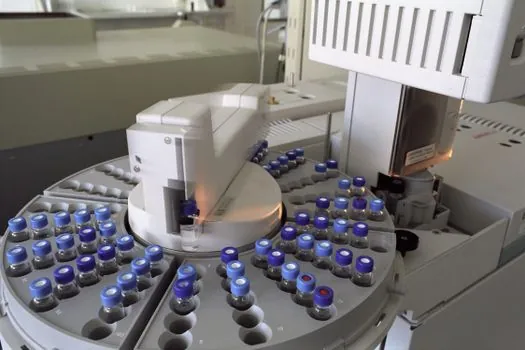
A coding machine that cannot talk to the line controller will be the bottleneck within a quarter, regardless of print quality [S7]. Buyers should confirm rotary encoder and product-detect interfaces, mounting and traverse for the printhead, conveyor speed signal, and a data interface to the ERP or line controller that supplies the variable fields and serial numbers, ideally with OPC-UA or a documented fieldbus profile [S3][S7].
Variable data fields (batch, best-before, shift code, serial) should be sourced from a single SQL or OPC-UA tag so that an audit can prove the field on the drum matches the field in the batch record, and a vision verifier is worth budgeting for on regulated lines because it catches the difference between a code that was printed and a code that can actually be read [S4][S5]. Mechanical integration is often under-scoped: printhead standoff distance, umbilical length (3 m on the LT760, for example, which constrains where the cabinet can sit relative to the conveyor), and 360° print direction for CIJ all need to be laid out on the line drawing, not on the install day [S2].
Compliance drivers specific to chemicals
GHS hazard pictograms, UN packing-group marks, REACH and CLP label content, and best-before / batch traceability under GHS hazard communication are the recurring regulatory hooks that drive coding specification in this sector, and they overlap with ERP lot genealogy rather than standing alone [S5]. Buyers should treat the printer as part of the label-content control system, not as a peripheral, and should request from the vendor the documented print height, font, and contrast evidence for each pictogram type on each substrate they will actually run [S1][S5].
In plants that also run adjacent process equipment, a similar spec-first approach pays off elsewhere: the selection logic for shell core shooter selection for pump and valve foundries follows the same "substrate plus line speed plus environment" pattern that coding machines do, and the same holds for foundries that ship castings into the same chemical end-markets covered here. Records retention also matters: a printed code that cannot be linked back to a batch record, time-stamped from a synchronised line clock, will not satisfy a Tier-1 audit, regardless of how crisp it looks on the drum [S5][S7].
Common failure modes on chemical lines
Printhead fouling from solvent vapour is the single most common field failure on CIJ units running near solvent-blending cells, and the fix is a positive-pressure printhead purge plus a ketone-free ink, not a higher IP rating on the cabinet [S1][S7]. Mis-read barcodes on HDPE pails usually trace back to a print distance outside the 2–30 mm window or to a static charge on the container repelling ink drops, both of which are tunable in commissioning but are easy to miss in a paper spec review [S2].
Laser fume extraction undersized for the actual substrate mix is the most expensive surprise: a system sized for paper-grade marking will choke on PVC-laminated labels within a shift, and the resulting downtime dwarfs the saving from choosing the smaller extraction unit [S3][S4]. TTO ribbon breaks on cold, dry winter mornings are the third classic mode, solved by cabinet conditioning rather than by a different printer model, which is why the operating envelope (0–45 °C, 0–95% RH non-condensing on most industrial CIJs) should be checked against the actual loading-bay conditions, not the controlled factory floor [S2][S7].
Track for the next 6–12 months: OPC-UA and cloud-MQTT telemetry on entry-level CIJ cabinets, currently a mid-range feature, dropping into the $15k price band; MEK-free ink ranges expanding on more vendors as European VOC rules tighten; and laser units in the 20–30 W fibre range appearing as direct replacements for TTO on film lines, though capex parity is still two to three years out.
The underlying component specifications are covered under chemical anchor, and chemical material.