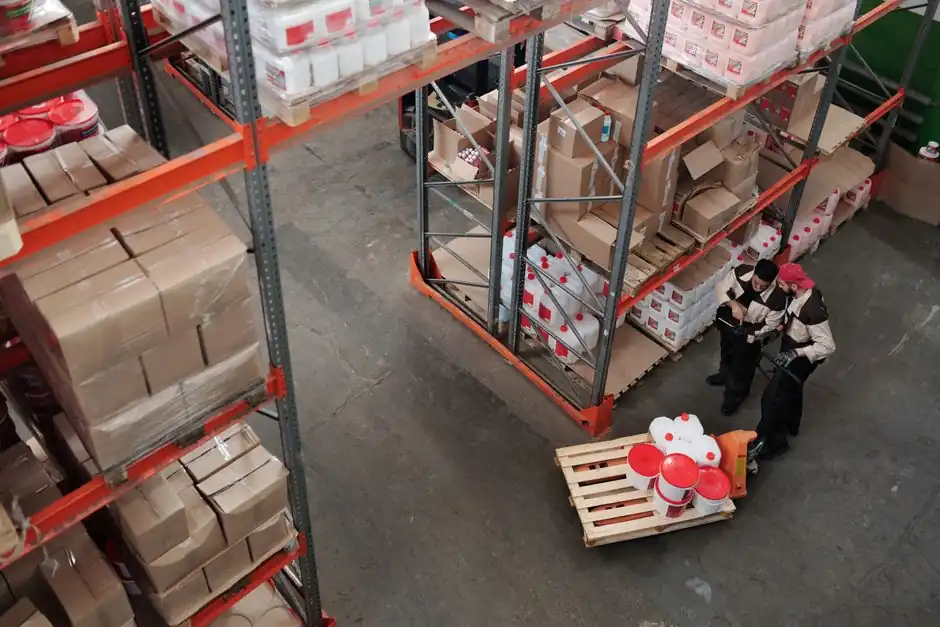
Retail distribution pallets in 2026 run on PET strap in roughly 9-19 mm widths, with the global strapping equipment market valued at $5.7 billion in 2026 and projected to reach $8.1 billion by 2033 [S2].
Selection hinges on four binding gates: palletised unit weight, mixed-SKU carton variety, retail-DC throughput target, and strap-seal compatibility with downstream recycling streams. Misreading any of these is what produces crushed carton edges, popped seals, and rejected loads at the store-receiving dock.
Why PET dominates retail pallets and where PP still earns a slot
PET (polyester) strapping retains up to 75% of steel's break strength at roughly one-sixth the weight, accepts heat-weld and friction-weld sealing, and runs cleanly through standard carton-recycling balers; that is why it is the default for retail distribution centres handling cartons in the 30-400 kg range [S4].
PP (polypropylene) strap remains a valid pick for sub-30 kg unit loads, single-SKU carton runs, and lightweight bundle work, where its lower cost and easier hand-feeding offset its lower retained tension under sustained load; it is normally not specified for mixed-SKU retail pallets because the elongation under stack-load creep exceeds what retail-DC racking tolerates over a 7-14 day dwell [S6]. Steel strapping is structurally stronger but is excluded on most retail pallets because the metal-to-carton edge contact cuts corrugated ECT ratings, creates OSHA cut-and-ergonomic exposure during breakdown, and triggers contamination flags in OCC recycling streams [S4].
For an encyclopaedic overview of the equipment class itself, see the strapping machine reference page; the band material itself is broken down separately at strapping band.
Sealing method matrix: heat-weld, friction-weld, and metal seals
Friction-weld PET seals on automatic machines typically deliver 75-90% of virgin strap tensile, while heat-weld systems land at 60-80% depending on heater-element temperature control, and metal-buckle seals stay at 50-65% even with proper crimping [S4].
Heat-weld and friction-weld are the two methods you will see most often in retail-DC semi-automatic and automatic lines. Heat-weld uses a resistance-heated element to fuse PET or PP ends, and the operator or PLC controls seal time and temperature; friction-weld uses a high-speed oscillating plate that melts PET at the interface, which gives a cleaner, higher-strength joint and is the preferred method on fully automatic PET machines in distribution centres [S4][S6]. Metal seals and buckles are still in use but mostly on portable steel strapping tools for break-bulk or repair work, not on retail palletising cells.
Sealing-temperature control is the most common failure mode on PP semi-automatic machines: too cold and the joint slips under tension, too hot and the strap melts back into the seal bar, producing a brittle pull-off. Operators on PP table-top machines are expected to verify seal temperature against a strip test every shift [S6].
Machine class by throughput band
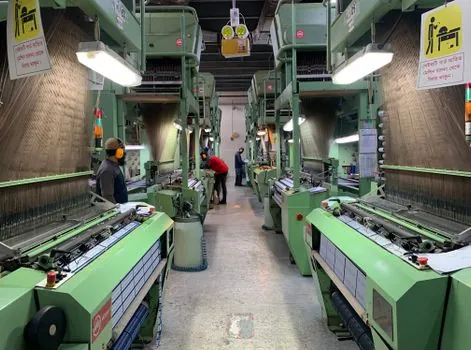
Table-top semi-automatic machines typically run 20-30 cycles per minute and are aimed at low-to-mid volume retail back-room operations, where the operator feeds the strap manually around the pallet and triggers a foot-pedal cycle [S3].
Side-seal and arch semi-automatic machines are the workhorses of mid-volume retail DCs and run 25-40 cycles per minute with automatic strap feeding, tensioning, and sealing once the operator positions the load. Fully automatic strapping systems with conveyors and indexing tables deliver 50-80 cycles per minute and are the right answer for high-mix, high-volume retail distribution where pallet pattern variety is high and labour cost per cycle is the binding constraint [S1].
For seafood, cold-chain, and washdown retail-DC cells, stainless-steel framed machines with IP54 or higher enclosures are the standard specification, because corrosion from moisture and salt residue is the dominant failure mode in those environments [S5].
Spec gate: tension range, strap width, and seal joint
Typical retail pallet tension settings land in the 200-450 N range for PET and 100-250 N for PP, with strap widths of 9-16 mm for PET and 5-12 mm for PP being the most common retail-DC specifications [S4].
Strap-width selection should be matched to the lowest-ECT carton on the pallet rather than the heaviest, because the strap's job is to hold the pallet together while the carton edges carry the stack load. PET at 12 mm with a 0.6 mm thickness paired with a friction-weld seal is a common retail-DC default that holds up under 7-14 day rack dwell and standard GMA-pallet stack heights up to 1.8 m [S1][S4].
The seal joint is the more critical variable than strap width: a friction-weld seal on 12 mm PET at proper parameters is consistently stronger than a heat-weld seal on 16 mm PET, and both are stronger than any metal-buckle joint on plastic strap. Specifying the sealing method and verifying it on a pull-test rig before the machine is accepted is the most under-used QA step in retail-DC equipment procurement.
Where this fits and where it does not

This map is built for retail distribution centres, regional grocery and general-merchandise DCs, and e-commerce fulfilment centres shipping mixed-SKU palletised loads to stores or end customers. It is not the right reference for heavy-industrial mill-product bundling, for export break-bulk where steel is mandatory, or for pharma cold-chain GDP cells where the pharma pallet strapping machine selection under GDP reference applies, since GDP adds documentation and validation layers that retail does not require. [S4]
Apparel distribution and electronics handling are adjacent retail-adjacent use cases, but they have their own binding gates: apparel favours PP at lower tension and ignores steel for the same recycling reason, as detailed in the strapping machine spec gate for apparel distribution, while electronics favours PET with controlled low-tension settings to protect ESD-packaged components, covered in the strapping machine selection for electronics handling reference.
Failure modes and operator controls to verify before acceptance
The three recurring failure modes on retail-DC strapping cells are: seal-joint slip from under-temperature heat-weld, strap edge-crush from over-tensioned PET on low-ECT cartons, and seal-bar jam from PP buildup, each of which is fully preventable with a documented parameter sheet and a 30-minute operator-side PM routine [S6].
Acceptance tests should record strap tension in N, seal time in seconds, seal temperature in °C, and pull-test result in N for the as-shipped strap, then require those four numbers to be reproducible on a 5-pack retest before the machine is signed off. Anything less leaves the retailer carrying the failure cost downstream at the store-receiving dock, where a single popped seal on a top-deck carton can trigger a chargeback that wipes out weeks of throughput savings [S3][S4].
The underlying component specifications are covered under distribution cabinet.