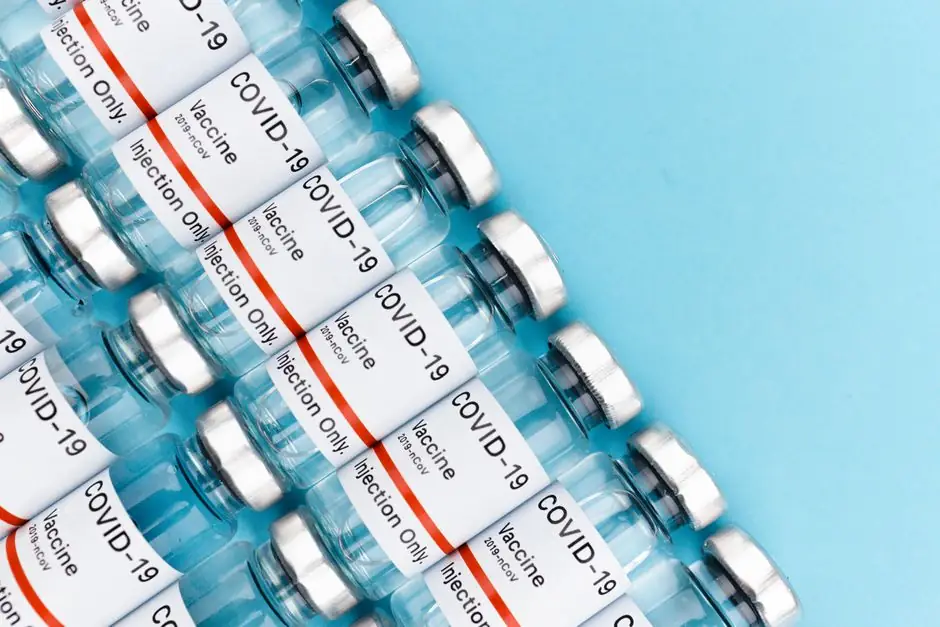
Pharmaceutical distribution lines in 2026 require coding machines that print GS1 barcodes, 2D Data Matrix codes, batch and expiry marks with audit-grade legibility, per FDA 21 CFR Part 211 and EU Falsified Medicines Directive serialization rules [S3][S5].
Open Date supplies thermal transfer overprinters and hot foil coders into Pfizer, Johnson & Johnson, Bayer, Sanofi, GSK, Allergan, and Boehringer Ingelheim packaging lines, confirming the substrate range spans paper, cardboard, flexible packaging, rigid plastic, paper-based containers, and liquid cartons [S5]. Syntegon's vial filling, capping, and coding integration covers Type I glass vials, BFS containers, and pre-sterilized syringes, where coding must survive depyrogenation tunnels and washing cycles without contrast loss [S2].
Decision Criteria: Substrate, Line Speed, Code Type, Read-Rate
Pharma coding selection starts with four binding criteria: substrate chemistry (paper, Tyvek, glass, aluminum laminate), line speed in vials or cartons per minute, code type (human-readable batch/expiry, GS1-128 linear, GS1 DataMatrix, QR), and downstream read-rate in OCV or camera-based vision systems [S1][S3].
Manual hand-held coders are confined to small-batch pharmacy compounding or clinical-trial supplies where output is below 30 units per shift, and are inappropriate for commercial distribution runs that demand audit-grade traceability [S1]. Semi-automatic coders suit short contract-manufacturing campaigns; fully automatic inline coders integrated with coding machine mounting frames and reject stations are mandatory for any line exceeding 60 units per minute [S1][S2].
Technology Comparison: CIJ, TIJ, TTO, Laser, Hot Foil
Continuous inkjet (CIJ) handles curved surfaces including glass vials and ampoules at 200-400 vials per minute, but solvent-based inks require controlled extraction in GMP cleanroom zones, and contrast on dark substrates is weaker than thermal alternatives [S1]. Thermal inkjet (TIJ) uses water- or solvent-based cartridges, prints at lower cost per mark on cartons and labels, and is favored for GS1 DataMatrix where 1.5-2.0 mm module size must resolve at line speed [S1].
Thermal transfer overprinters (TTO) dominate flexible-film and aluminum-foil blister lidding because the ribbon delivers sharp 300 dpi edges on PP, PE, PET, and Alu laminates, and survives forming-film heat-seal stations up to 200 deg C [S5]. CO2 and fiber laser coders are specified for ampoules and syringes where ink contamination is unacceptable, etching batch codes directly into glass at 10-15 characters per second; hot foil coders remain common in European OTC blister lines for batch embossing with metallic foil [S5].
The decisive trade-off table for pharmaceutical distribution:
CIJ: curved vials/ampoules, 200-400 upm, ink extraction needed, lower contrast on dark glass [S1].
TIJ: cartons and labels, GS1 DataMatrix at 1.5-2.0 mm modules, low cost per mark, cartridge change every 8-24 h depending on duty [S1].
TTO: flexible film and alu lidding, 300 dpi ribbon, survives 200 deg C seal stations, dominant for cable distribution cabinet upstream packaging [S5].
Laser: ampoules and pre-filled syringes, 10-15 chars/sec direct glass marking, zero ink, higher capex [S5].
Hot foil: OTC blister embossing, metallic finish, lower speed 30-80 cycles/min [S5].
Use Cases in Pharmaceutical Distribution

Solid-dose blister lines run 200-400 blisters per minute, with TTO printing batch, expiry, and 2D Data Matrix directly onto aluminum lidding before the sealing station; vision inspection verifies each code to ISO 15415 grade C or above and rejects unreadable blisters automatically [S3][S5].
Liquid-fill lines for vials, BFS containers, and pre-filled syringes integrate Syntegon capping and coding modules where CIJ prints onto the glass sidewall or laser etches onto ampoule shoulders, then a camera station reads the code at the rotary exit starwheel and routes rejects downstream before explosion-proof distribution carts collect quarantined stock [S2].
Cartoning and case-pack lines use TIJ for variable data on cartons and shippers, including GTIN, batch, expiry, and serial number; secondary aggregation links unit-level serial codes to case and pallet SSCC per DSCSA and EU FMD requirements [S3][S5].
Limitations, Failure Modes, and What Coding Is Not For
Coding machines do not replace primary packaging integrity tests; a perfectly printed batch number on a leaking vial still fails GMP release [S3]. Manual hand-held coders cannot deliver the read-rate consistency that 21 CFR Part 211.130 and EU GMP Annex 11 expect on commercial batches, and a coder chosen only by purchase price typically fails total-cost-of-ownership once ink or ribbon consumption, vision reject, and rework labor are added [S1].
Ink-based CIJ and TIJ are not stable on certain solvent-washed polyethylene surfaces; laser marking on tinted amber glass can drop contrast below camera-readable threshold if pulse energy drifts. For these substrates TTO or pre-printed labels are the more reliable choice, not a lower-cost inkjet variant [S1][S5].
Standards, Sourcing, and Integration Anchors

Pharmaceutical coding must satisfy FDA 21 CFR 211.130 for label control, EU Falsified Medicines Directive 2011/62/EU for serialization, GS1 General Specifications for barcode syntax and Data Matrix quality (ISO/IEC 15415), and DSCSA saleable-return verification on US distribution returns [S3][S5]. Batch number traceability is anchored to GMP batch records and EU GMP Annex 16 certification by a Qualified Person; without an audit-grade printer, that paper trail is unenforceable [S3].
For adjacent plant engineering outside the coding cell, the same audit logic applies to power distribution box and distribution cabinet selection on washdown and ATEX zones. A separate spec map on coding for e-commerce fulfillment lines is available in Coding Machine Selection for E-commerce Fulfillment: 2026 Spec Map; the coding cell differs but the read-rate and substrate criteria are the same.
Selection Workflow and Trackable 2026 Signals
A defensible selection in 2026 follows: (1) lock substrate and code standard (GS1-128, Data Matrix, human-readable); (2) match line speed in upm against coder duty cycle; (3) require ISO/IEC 15415 grade C minimum and OCV at the reject station; (4) validate ribbon or ink consumption per 1,000 marks and factor into TCO; (5) confirm cleanroom or ATEX rating on coder enclosure when power distribution feeds a solvent-laden zone [S1][S2][S5].
Trackable 2026 signals: EU FMD stability study updates under EMA Q&A guidance, DSCSA November 2023 enforcement tail-wind extending into 2026 audits, and any OEM announcement of solvent-recovery CIJ for cleanroom zones. Syntegon and Open Date both publish line-integration case studies on vial and blister coding that document read-rate results on Pfizer, GSK, and Bayer lines, useful for benchmarking before PO release [S2][S5].