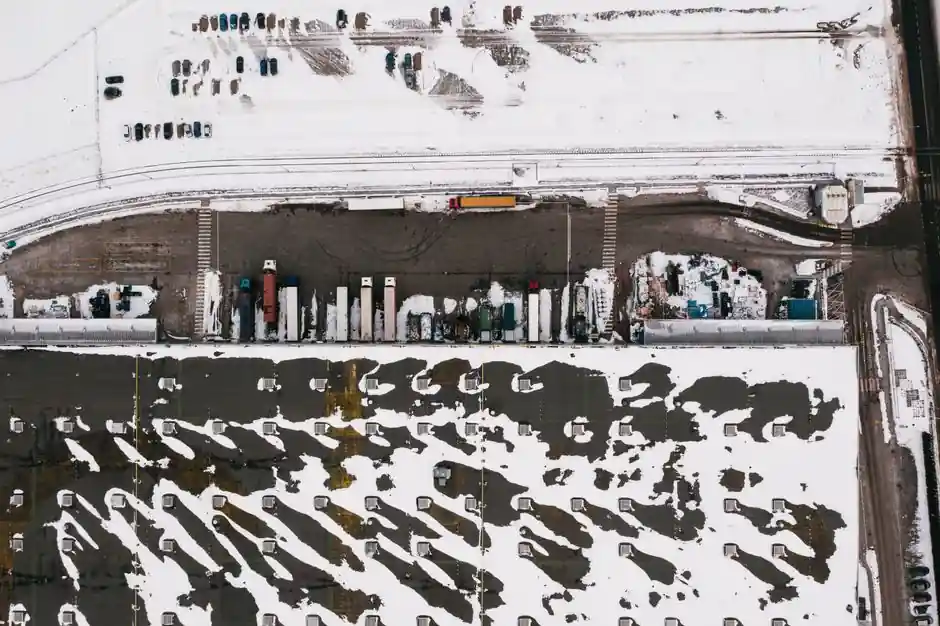
Cold chain lines code at -40°C transit temperatures, inside humid chill rooms, and under daily chemical washdown, so a coding machine spec'd for ambient dry warehouses will fail in months. The selection map below separates continuous inkjet (CIJ), thermal transfer overprinters (TTO), and laser markers against the four real constraints cold chain operators face in 2026: condensation, low-temperature ink adhesion, washdown chemistry, and continuous-monitoring data capture [S1][S5].
Cold chain logistics moved an estimated $436 billion in temperature-sensitive product in 2025 and is forecast to exceed $1.3 trillion by 2034 at a CAGR above 13%, which puts pressure on every pallet, case, and vial to carry a legible, auditable code through refrigerated warehousing, refrigerated transport, and last-mile distribution [S1]. Vaccine, biologic, and fresh-produce lanes operate in defined thermal bands: pharmaceuticals 2-8°C, fruits 0-5°C, frozen foods below -18°C, and dairy 1-3°C, with brief excursions that can still spoil a load or trigger a recall [S1][S3].
Cold-Specific Failure Modes That Drive the Coding Spec
Three failure modes dominate cold chain coding complaints, and each one maps to a discrete machine feature. Condensation forms when a case moves from a 2-8°C chill room into a warmer dock, and that water film dissolves water-based inkjet fluids before they cure, so a minimum IP54 printhead with a heated nozzle block and a positive-pressure dry-air purge is the practical floor for any line that crosses temperature zones [S5].
Low-temperature ink adhesion is the second failure mode: standard CIJ ink viscosity drifts outside its 35-45 cSt firing window below 5°C, which produces broken characters, and most dye-based inks freeze outright at -20°C, so cold-rated CIJ fluids (rated to -25°C) or solvent-based inks with low pour points are the realistic options below 0°C [S5]. Laser marking sidesteps the ink problem entirely by ablating the substrate, which is why pharmaceutical glass vials and frozen-meat film are increasingly laser-marked even though the capital cost is higher than CIJ [S3].
Washdown chemistry is the third constraint: cold chain warehouses clean with quaternary ammonium compounds, peracetic acid, or sodium hypochlorite at 200-400 ppm, and a coding head rated only IP54 will corrode the printhead nozzle plate within 6-12 months in a daily-washdown environment, so stainless 304 or 316 print heads with IP65 or IP66 ratings are the practical minimum for meat, dairy, and pharmaceutical suites [S1][S5]. A coding machine selection spec map for cold chain must therefore lead with the operating temperature band, the IP rating, the ink pour point, and the washdown chemical list, not with print speed.
Technology Comparison: CIJ, TTO, and Laser Against Four Cold Criteria
Three coding technologies cover roughly 90% of cold chain case and carton marking, and the right pick depends on four measurable criteria. Continuous inkjet (CIJ) runs non-contact at 100-600 m/min on cases and cartons, supports cold-rated ink down to -25°C, fits IP65 stainless heads, and is the workhorse for high-speed frozen-food and beverage lines above 0°C with heated printhead enclosures [S5].
Thermal transfer overprinters (TTO) print on flat packaging film and cartons via a heated ribbon, handle intermittent motion down to 0°C with cold-resistant ribbon wax-resin formulations, and dominate pharmaceutical 2-8°C secondary packaging where 300 dpi GS1-compliant barcodes are required, but TTO is contact-based and not suitable for irregular frozen-product surfaces [S3][S4]. Laser markers (CO2 10.6 µm and fiber 1064 nm) ablate ink or substrate, operate from -40°C to 45°C without ink chemistry, require zero consumables, and are specified for pharmaceutical glass vials, sterile blister film, and frozen-meat vacuum bags where ink adhesion is unreliable, at the cost of higher capital and the need for fume extraction when ablating polymer films [S3].
For cold chain selection the practical ranking is: CIJ with cold-rated ink plus IP65 head for high-speed lines above -25°C; TTO with cold-resistant ribbon for 2-8°C pharmaceutical and dairy cartons under 200 ppm/min; laser for -40°C frozen-product and sterile pharmaceutical primary packaging where any ink contact is unacceptable. The same comparison logic that drives coding machine selection for e-commerce fulfillment (see Coding Machine Selection for E-commerce Fulfillment: 2026 Spec Map) applies, but cold chain tightens every threshold by 10-15°C and adds a washdown layer that ambient e-commerce lines never see.
Regulatory and Traceability Requirements on the Code Itself

Cold chain pharmaceutical lanes are the most code-regulated of any temperature-controlled market because regulators require a GS1 DataMatrix or GS1-128 barcode that survives the entire 2-8°C distribution path and prints lot number, expiry, and serial at production-line speed. WHO PQS, EMA GDP, and FDA 21 CFR 211 all require documented temperature control plus serialization, and the coding machine must therefore support 2D DataMatrix with ECC200 error correction at grades C or above per ISO/IEC 15415 [S4][S3].
Food and dairy cold chains are moving in the same direction under FSMA 204 (FDA Food Traceability Rule) and EU Regulation 1169/2011, both of which push for lot-level traceability that a real-time IoT-monitored cold chain data log can correlate with the case barcode printed on line [S1][S5]. The 2026 trend is unified cold chain data platforms that pair a coding machine's OPC-UA or MQTT output with IoT temperature and humidity sensors and an Asset Intelligence Platform, so a single temperature excursion event can trigger an automatic recall query against the codes printed in the affected window [S1][S5].
For clinical-trial cold chains the requirement is even tighter: each kit must carry a unique code readable after -80°C storage, after re-icing, and after cross-border customs delays, which is why clinical-trial sponsors increasingly specify laser-marked glass vials plus a separate TTO-printed carton overpack [S6]. Selection rule: match the code's data density and durability to the worst thermal and mechanical event on the lane, not the average, and confirm the code survives three freeze-thaw cycles in a validation protocol before locking the spec [S6][S7].
Spec Table: CIJ, TTO, and Laser Across Cold Chain Criteria
The decision matrix below is the minimum set of selection criteria that a cold chain spec sheet should call out, with realistic operating bands drawn from current 2026 OEM documentation. [S3]
Continuous inkjet (CIJ): operating temperature -25°C to 45°C with cold-rated ink; print speed 100-600 m/min; substrate case, carton, film, glass, metal; IP rating IP54 standard, IP65 washdown option; consumables 1-2 L/month ink plus make-up; 2D code support yes (DataMatrix, QR); typical capex mid-range; best fit for high-speed frozen-food, beverage, and pharmaceutical lines above -25°C.
Thermal transfer overprinter (TTO): operating temperature 0°C to 40°C with cold-resistant ribbon; print speed 50-400 mm/s intermittent; substrate flexible film, label, carton; IP rating IP54 standard, IP65 washdown option; consumables ribbon roll change every 5,000-20,000 prints; 2D code support yes; typical capex mid-range; best fit for 2-8°C pharmaceutical and dairy carton secondary packaging, also standard in strapping-machine-secured pallet labelling operations like those covered in Strapping Machine Selection for Port Logistics: 2026 Spec Map.
Laser marker (CO2 10.6 µm or fiber 1064 nm): operating temperature -40°C to 45°C; print speed 100-2,000 characters/s; substrate film, paper, glass, coated metal, anodized aluminum; IP rating IP54 standard, IP65 with sealed optics; consumables none (electricity only); 2D code support yes; typical capex high; best fit for -40°C frozen-product vacuum bags, sterile pharmaceutical glass vials, and any line where zero ink contact is mandated [S3][S5].
Selection Rules by Cold Chain Sub-Segment
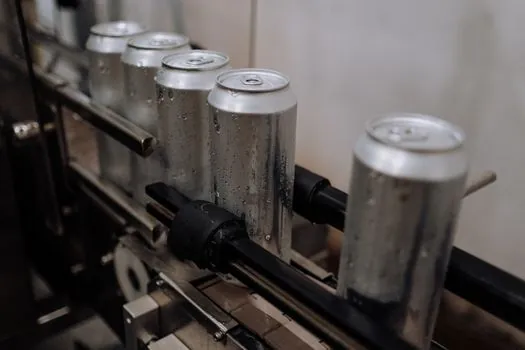
Pharmaceutical 2-8°C primary packaging (vials, syringes, ampoules): specify laser fiber 1064 nm on glass or CO2 10.6 µm on film, paired with a TTO on the secondary carton, with both machines validated per WHO PQS or EMA GDP and producing GS1 DataMatrix at ISO/IEC 15415 grade C or above [S4][S6]. Pharmaceutical 2-8°C secondary packaging (cartons, shippers): TTO with cold-resistant wax-resin ribbon, IP54 head minimum, stainless 304 housing, and 300 dpi resolution to read 1.5-2.0 mm DataMatrix modules at the line's full carton rate of 60-150 ppm [S3].
Frozen food below -18°C (meat, seafood, prepared meals): CIJ with cold-rated ink rated to -25°C and IP65 stainless 316 printhead, mounted in a heated enclosure with dry-air purge, because condensation is guaranteed on a case leaving the spiral freezer; or laser CO2 10.6 µm on vacuum-bag film if the line can justify the capex delta [S1][S3]. Fresh produce 0-5°C and dairy 1-3°C: CIJ with standard MEK-free ink on wax-treated cases, IP54 minimum, with a heated printhead to clear morning condensation, plus real-time IoT humidity sensors feeding an Asset Intelligence Platform that correlates excursion events with the codes printed in the same window [S1][S5].
Clinical trial kits and diagnostics: laser-marked glass plus TTO-printed carton, with each kit carrying a serialized 2D code that survives -80°C storage, re-icing, and three freeze-thaw cycles, validated against the trial sponsor's own stability protocol rather than only against ISO/IEC 15415 [S6]. For operations that also run ambient e-commerce lines alongside cold chain, the practical move is to share a common OEM platform with field-swappable print heads so a CIJ head can move to a washdown cold line while a TTO head serves the dry-goods line, which is the same modular logic covered in the e-commerce spec map [S1].
Integration with Cold Chain Monitoring and Coding-and-Marking Workflows
The 2026 cold chain trend is to fold the coding machine into the same data platform as the temperature and humidity sensors, so the printed code, the temperature trace, and the chain-of-custody events are timestamped on a single ledger. Asset Intelligence Platforms that ingest OPC-UA or MQTT output from the coding machine, paired with IoT sensor data on humidity, temperature, and location, are now a stated requirement in pharma GDP audits and are spreading into food traceability under FSMA 204 [S1][S5].
The practical selection consequence is that a coding machine whose firmware only exports USB stick CSV files will fail a 2026 cold chain audit, and the shortlist must include OPC-UA, MQTT, or REST API export plus a documented integration with the plant's ERP or WMS [S5]. For packaging lines that combine coding, strapping, and pallet labelling, the same Asset Intelligence Platform can track the coding machine, the strapping machine, and the IoT sensors as one equipment population, which is the architecture most 3PL cold chain providers are standardizing on in 2026 [S1][S5].
For a generalist reference on how coding, marking, and packaging machinery fit the wider cold chain spec landscape, the logistics packaging encyclopedia entry covers the adjacent equipment population, while chain belt covers the conveyor-side mechanical interface that often constrains where a cold-rated printhead can be mounted.
Watch Items and Trackable Signals Over the Next 12 Months
Two signals will reshape the cold chain coding spec over the next 12 months and are worth tracking before locking a 2026 purchase. The first is the spread of solvent-free and UV-LED-curing inks that cure inside 0.2 seconds at -20°C, which would let CIJ run on frozen lines without the heated-enclosure workaround that adds 200-400 W per printhead and is the single largest parasitic load on a refrigerated dock [S1][S5].
The second is the convergence of GS1 Digital Link (2D codes that resolve to a URL plus a GS1 element string) with cold chain traceability, which would let a single printed code carry both the GS1-128 logistics unit identifier and a temperature-excursion pointer on the manufacturer's traceability server [S3][S4]. Pilot deployments of GS1 Digital Link on 2-8°C pharmaceutical lanes were live in 2025-2026, and the question for specifiers is whether their current coding machine can be firmware-upgraded to print 2D Digital Link at line rate or whether a hardware replacement is required [S1][S3].
For operators in 2026 the safe path is to shortlist coding machines that already publish OPC-UA and MQTT, that support a cold-rated ink down to -25°C, and that ship an IP65 stainless 316 printhead option, then validate the worst-case lane (coldest temperature, harshest washdown, longest hold time) before signing the PO.
Component reference pages worth checking: coding machine.