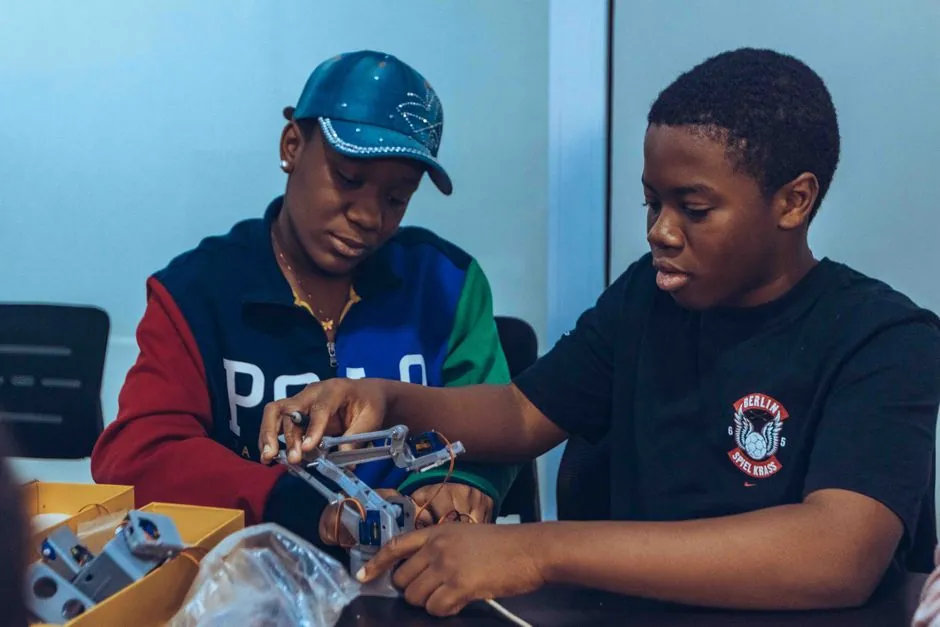
Human-robot interaction is formally split into three tiers: coexistence, cooperation, and collaboration, each defined by how much shared workspace and simultaneous tasking the cell allows [S1][S5]. The framework is anchored in ISO 10218-1 and ISO/TS 15066, which set the safety requirements for industrial robots and collaborative operation respectively [S5].
Picking the right tier is a workspace and risk question, not a marketing label. Coexistence runs with the cobot in an adjacent cell with no shared task; cooperation runs in a shared workspace but on alternating tasks; collaboration is simultaneous work on a shared workpiece with direct physical or informational contact [S2][S5]. Within the broader human-robot interaction landscape, the same proximity ladder also describes how mobile platforms and manipulators share floor space with people.
How the three tiers are defined in the standards
ISO 10218-1 and ISO/TS 15066 codify four collaborative operation methods that map onto the cooperation and collaboration tiers: safety-rated monitored stop, hand guiding, speed and separation monitoring, and power and force limiting [S5]. Coexistence is the pre-collaborative baseline: human and robot share a room but not a workspace, and the robot can run at full industrial speed behind the standard risk-assessment controls of ISO 10218-1 [S5].
Cooperation moves both parties into one workspace, but tasks alternate: the human finishes a sub-assembly, the cobot starts the next one, and no physical contact occurs. Collaboration adds simultaneity and direct contact on a shared workpiece, for example a robot handing a part to an operator or both parties torquing the same fastener [S2][S5]. The extended 5C view (Coexistence, Cooperation, Collaboration, Compassion, Coevolution) proposed in 2025 keeps the first three tiers identical and adds higher-order stages tied to multimodal large language models and embodied intelligence [S3].
Selection criteria: workspace, task, and required safety function
The decisive inputs for tier selection are workspace overlap, task simultaneity, contact expectation, and the collaborative operation method the cell must support. Coexistence is the correct choice when the application tolerates an adjacent cell, hand guiding for setup, and the cobot's collaborative features are used only for programming and re-use [S2]. Cooperation is appropriate when process flow forces a shared workspace but the parts can be sequenced so no two agents touch the workpiece at once.
Collaboration is mandatory only when simultaneity or physical handover is part of the value stream, for example a robot passing a component to an operator's gloved hand. In that case the cell must implement power and force limiting, speed and separation monitoring, or a safety-rated monitored stop, and the biomechanical limits of ISO/TS 15066 (quasi-static and transient contact thresholds) become binding [S5]. For comparison, the table below lines the three tiers against the four decision criteria that drive risk assessment and cell layout.
Tier comparison on selection criteria:
Coexistence: workspace overlap = none; task simultaneity = none; typical safety function = ISO 10218-1 risk assessment plus hand guiding for teach; contact expectation = none.
Cooperation: workspace overlap = shared; task simultaneity = alternating; typical safety function = safety-rated monitored stop plus speed and separation monitoring; contact expectation = none during run, allowed during hand-guided teach.
Collaboration: workspace overlap = shared; task simultaneity = simultaneous on same workpiece; typical safety function = power and force limiting or speed and separation monitoring per ISO/TS 15066; contact expectation = intentional, biomechanical limits apply.
Who each tier is for, and who should avoid it
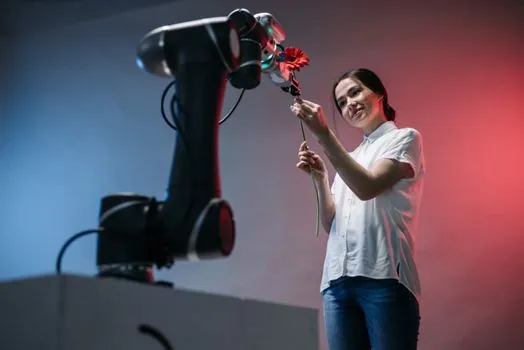
Coexistence suits high-throughput cells where the robot's value is cycle-time and repeatability rather than dexterity, and where a fence is impractical but a shared workspace adds no benefit. The cobot's collaborative sensors are used to simplify commissioning rather than to remove the cell boundary [S2].
Cooperation is the right fit for assembly lines that already alternate human and automated steps, for example electronics sub-assembly where the human inserts a connector and the cobot routes the harness. It allows one workspace without paying the cycle-time cost of a fully collaborative handover [S5].
Collaboration is reserved for tasks where the human's dexterity, sensing, or judgement must be applied at the same instant as the robot's strength or precision, such as overhead fixturing, large-part co-manipulation, or ergonomic lifting aids. Cells that cannot tolerate the speed and force derating required by ISO/TS 15066 should stay at cooperation and use fixturing or jigs to compensate. Buyers who need the cobot only for machine tending with a fixed infeed should not pay the integration cost of a collaborative cell.
Sensor and control stack behind each tier
Coexistence cells run on the cobot's joint torque sensors and the safety controller required by ISO 10218-1, with no real-time human tracking. Cooperation adds workspace surveillance, typically safety laser scanners or area scanners, to enforce speed and separation monitoring and to trigger a safety-rated monitored stop when an operator enters the shared zone [S5].
Collaboration stacks on top: force/torque sensing at the tool, compliant joints, and either a power and force limiting controller that keeps contact forces under the ISO/TS 15066 biomechanical limits, or a vision system that throttles speed as a function of operator distance. The 2026-vintage research direction couples these stacks with multimodal large language models and embodied intelligence so the cobot can interpret intent from speech, gesture, and gaze, and shift between tiers at runtime [S3]. A practical reference for how force-controlled co-manipulation is implemented today is the IIT-HRII ergonomic HRC framework, which uses wearable inertial and EMG sensors plus a whole-body digital twin of the operator to drive a cobot in collaborative lifting [S4].
Failure modes and limits to plan around
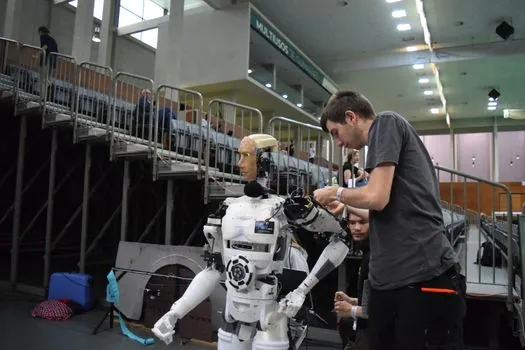
Coexistence fails when the floor layout pushes operators into the robot's swept volume during maintenance; the tier assumes the cell is large enough to keep the two workspaces disjoint. Cooperation fails when the process drifts from strict alternation into overlap, for example when a human reaches into the shared zone while the cobot is still mid-cycle; the safety function must trigger, and the cycle stalls [S5].
Collaboration fails in two well-documented ways. First, ISO/TS 15066's quasi-static and transient contact limits are derived from adult volunteer studies at defined contact areas; clamping at the operator's neck, face, or skull is not tolerated and must be excluded by design. Second, any pinch point above a few millimetres of robot free travel can exceed the transient force limit before the safety stop fires, so cell layout and tool geometry are part of the compliance story, not just the controller [S5]. Researchers also flag that human factors such as trust calibration, fatigue, and decision authority remain open problems: a 2024 review of decision making in HRC notes that current cobots reason in stable, predictable situations while humans reason in dynamic ones, so mismatched authority can degrade rather than improve performance [S5]. A 2025 warehouse-HRC review reaches the same conclusion from the logistics side: dynamic task allocation and trust-aware coordination are still research gaps in 52 representative studies [S1].
Standards, sourcing, and where to verify
ISO 10218-1 (industrial robot safety requirements) and ISO/TS 15066 (collaborative robots, including biomechanical limits and the four collaborative operation methods) are the two documents to anchor any cell specification to [S5]. For risk assessment, ISO 12100 and ISO 10218-2 (the cell-level counterpart to 10218-1) complete the picture and are referenced in the same decision-making literature [S5].
Vocabulary varies by source: the KUKA application note uses the same three-tier "C" split (Coexistence, Cooperation, Collaboration) but ties the difference to fence-less operation, hand-guided teach, and shared-workpiece simultaneity respectively [S2]. The 5C extension to Compassion and Coevolution is an academic framework from 2025 and is not yet a normative standard [S3]. For practical selection, the lighting equipment and electric lamps and lamps and light fittings references on this site cover the vision-system illumination side of any vision-based speed-and-separation-monitoring cell. For cross-industry context on how collaborative cells fit into broader factory automation, the construction machinery and equipment page covers adjacent heavy-equipment applications where the same coexistence-through-collaboration ladder applies. A 2021 sensor survey of HRC in industry lists the same sensor stack (force/torque, vision, proximity, wearable EMG/IMU) used in cooperation and collaboration cells today [S7].
Two trackable signals to watch next: any revision of ISO/TS 15066 that updates the quasi-static and transient contact thresholds, and further field data on multimodal LLM-driven runtime tier switching in the 5C framework, which the 2026 review positions as the main near-term research direction [S3]. For related coverage on adjacent industrial automation topics, see this site's notes on reading a crawler crane load chart by boom length and radius, which uses a similar workspace-and-clearance framing for a different machine class.