
An automatic carton erecting machine for cold chain duty must clear three spec gates before it touches a frozen-load line: food-grade contact components, low-temperature-rated adhesive or tape, and servo-driven format change for mixed-SKU pallets.
Cold chain erector selection sits at the intersection of logistics packaging throughput and refrigerated-environment survivability. Output rates of 15-30 cartons/min dominate the segment; sealing technology choice shifts toward hot melt glue above 80% relative humidity, and magazine/feed geometry must accept wax-coated or high-humidity-resistant corrugated blanks without misfeed.
Cold Chain Operating Envelope: What Changes vs Ambient Lines
Cold chain packaging lines run in ambient aisles of 2-8°C for chilled goods and -25°C environments for frozen, with intermittent washdown cycles that force the erector into IP65-classified zones [S1]. A standard ambient erector rated for 20-25°C operation sees accelerated pneumatic seal failure, lubricant viscosity drift, and condensation-driven electrical faults in these conditions [S1]. Pneumatic components specified for low-temperature duty (FKM seals, low-temp grease) and 304/316 stainless contact parts become baseline, not options.
Condensation is the underrated failure mode. When a -25°C frozen product enters a 15°C packing hall, moisture condenses on every cold surface. Erectors that handle pre-chilled or flash-frozen packs must specify drip-shielded photo eyes, sealed servo drives (IP65 minimum), and corrosion-resistant magazine frames, or face unplanned stoppages every shift [S1]. Cold room deployment (erector inside the freezer) further narrows the supplier list to machines tested at -10°C or below for continuous operation.
Selection Criteria: Six Gates for Cold Chain Spec
Six selection gates separate a cold-chain-qualified erector from a converted ambient unit. First, food-contact certification: 304 or 316 stainless on all blank-contact surfaces, with FDA or EU 1935/2004 food-contact documentation per component [S1]. Second, sealing technology: hot melt glue for high-humidity and low-temperature service; pressure-sensitive tape only with low-temperature adhesive grades rated to -20°C [S2].
Third, format-change mechanism: servo-driven random-size adjustment handles mixed-SKU frozen pallets in under 30 seconds per changeover, while manual hand-crank format change locks the line into long dedicated runs [S1][S2]. Fourth, magazine capacity: 100-150 blank stacks reduce operator re-load trips in cold aisles where PPE slows every intervention. Fifth, washdown rating: IP65 enclosure minimum, with sealed bearings on the forming arm pivots. Sixth, integration fit: discharge height and conveyor interface matching downstream case packer and palletizer geometry to avoid transfer dead-plate gaps that let cold air infiltrate the seal zone.
Tape vs Hot Melt Glue: Cold Chain Trade Map
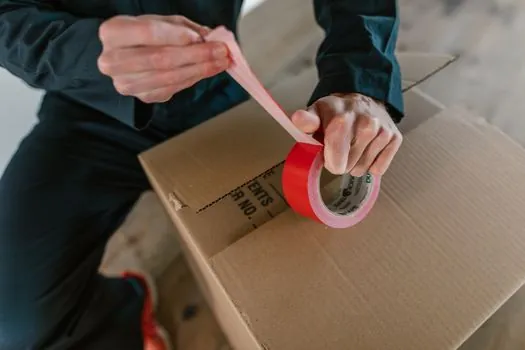
Pressure-sensitive tape loses bond strength above 80% RH without humidity-resistant grades, and standard acrylic tape fails below 0°C, so cold chain applications require specialised low-temperature tape or a switch to hot melt glue [S2]. Hot melt glue adds a glue tank and heating system, raising machine acquisition cost and energy draw, but delivers a bonded joint that survives condensation, freezer storage, and the vibration of refrigerated truck transport [S2].
The decision matrix for cold chain runs four criteria. Acquisition cost favours tape (lower machine price, no glue pot). Seal integrity in high humidity favours hot melt. Energy efficiency favours tape (no melt tank holding 160-180°C). Returns and retail re-openability favours tape, which peels without destroying the carton box [S2]. For B2B frozen pallet distribution where cartons do not return to retail, hot melt wins. For meal-kit delivery or pharma cold chain with end-customer handling, low-temp tape often wins despite the higher grade cost.
Throughput Sizing: Match the Line, Not the Catalogue
Cold chain lines typically run slower than ambient FMCG lines, because the frozen product dictates the bottleneck, not the erector. Rated 15-30 cartons/min covers the segment; anything above 40 cartons/min is over-specified for most cold chain duties and burns capital on unused capacity [S1].
Match erector output to the slowest downstream station. If the case packer runs at 18 cartons/min, a 30 cartons/min erector is correct: it provides 60% headroom for recovery from micro-stops without starving the packer. A 50 cartons/min erector on the same line is wasted spend, and the extra servo drive capacity adds heat load to the cold room. Where cold chain lines run in continuous shift patterns (16-24 hours), the erector duty cycle rating matters more than peak speed: confirm continuous-duty servo motors, not intermittent-rated units.
Integration with Sealing and Case Packing

An automatic carton erector integrated with a case packer and an automatic carton box sealer creates a three-stage cold chain cell. The erector discharges square, sealed-bottom cartons onto a conveyor that feeds the case packer, which then discharges to a uniform or random automatic sealer [S2]. Misalignment between any two of the three stages kills the throughput gain the erector was purchased to deliver.
Random-size automatic sealers use photocell or laser sensors to measure each incoming carton and adjust the sealing head before it reaches the application zone, a feature that pays back fast on cold chain lines handling multiple pack sizes per shift [S2]. On a uniform sealer, set-and-forget operation suits dedicated frozen SKU runs. For a frozen-food contract packer running 8-12 SKUs per day, the random-size sealer is the higher-ROI choice despite its higher unit cost, because changeover labour in a -25°C cold room is a known cost driver.
Failure Modes and Cold Chain Watch-Outs
Three failure modes dominate cold chain erector downtime. Pneumatic seal hardening: standard NBR seals in the suction cups and forming arms crack at sustained sub-zero exposure; spec FKM or silicone from the factory, not as a field retrofit [S1]. Condensation-induced photo-eye false triggers: standard diffuse-reflective sensors fog over when cold cartons meet warm hall air; spec drip-shielded through-beam or polarized retroreflective units with heater options.
Lubricant migration: standard lithium grease thickens below -10°C and starves the cam followers; spec synthetic PAO or PFPE grease rated for the deployment temperature. A second class of failure is the cold-soak carton blank: blanks stored in the cold room warp as they warm, causing misfeed at the vacuum pickup. The fix is a pre-heat plenum or a 2-4 hour warm-up buffer zone before the magazine, not a stronger vacuum pump, which only doubles the misfeed rate when a double-pick occurs.
Applicable Standards and Documentation

Food-contact compliance documentation is the first audit item. EU 1935/2004 for European frozen food lines, FDA 21 CFR for US-bound product, and food-grade stainless certification (304 or 316) on all blank-handling surfaces form the baseline paperwork [S1]. Machine safety follows ISO 12100 and EN 60204-1; electrical enclosure ratings follow IEC 60529 (IP code) with IP65 as the practical cold-chain minimum.
For washdown zones, NSF/ANSI 14159 covers hygienic equipment design criteria. Confirm the manufacturer can ship the declaration of conformity and material traceability documents for every contact part before purchase, not after. Cold chain auditors reject machines with generic food-grade claims and no per-component documentation.
Trackable signals to confirm a cold chain erector purchase: request a -10°C or -25°C continuous-run test certificate (not just a spec sheet rating), demand a reference site running the same machine in frozen duty for 12+ months, and verify the service network covers the deployment region with cold-chain-experienced technicians, since standard automation servicemen are not trained on freezer-environment pneumatic and lubrication issues.
See also our earlier report, Best Level Transmitter for Pharmaceutical Service: Hygienic Radar vs Hydrostatic.