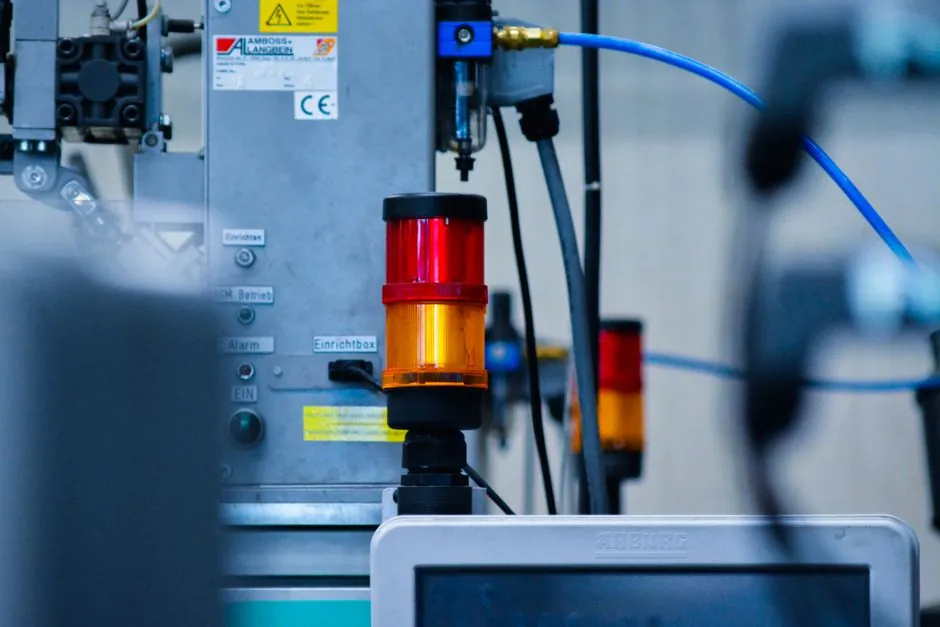
Warehouse automation lines that integrate vacuum packaging typically specify double-chamber or continuous belt sealers with seal-bar lengths from 400 to 1200 mm, pump capacities between 20 and 100 m³/h, and 304 stainless contact surfaces, with chamber units dominating below 200 packs per day and belt or thermoform architectures taking over above 500 packs per hour [S2][S4][S10].
The selection gate that breaks most warehouse pilots is throughput math: a single-chamber unit at 1 to 3 cycles per minute yields roughly 60 to 180 packs per hour, while a continuous belt sealer at 8 to 20 packs per minute reaches 480 to 1200 packs per hour, so the cutover between manual-adjacent and fully automated cells falls around 400 packs per shift [S2][S10]. For a broader primer on the equipment category, see the vacuum packaging machine overview.
Vacuum Level and Pump Capacity as the Hard Spec Gates
Chamber machines reach 99%+ vacuum versus 85% or lower on external suction units, and the working vacuum range of 0.1 to 20 mbar with pump capacity from 4 to 100 m³/h defines the operating envelope for warehouse cells [S2][S4][S6]. A 20 m³/h pump evacuates a 400 mm chamber more slowly than a 40 m³/h unit, which directly extends cycle time and reduces effective throughput on automated conveyors, and continuous-operation belt cells typically pair 60 to 100 m³/h pumps with chambers up to 1200 mm long to keep cycle time under 6 seconds per pack [S2][S10]. Oil-lubricated rotary vane pumps pull deeper vacuum and run longer between rebuilds, while oil-free dry pumps trade ultimate pressure for cleaner operation in pharmaceutical and electronics-adjacent warehouses where backstreaming into the chamber is unacceptable [S4][S5].
Chamber, External, Belt, Tray, and Thermoformer Architectures Compared
The five principal architectures in a warehouse setting diverge on cycle speed, product fit, and capital cost, and the comparison below is the quickest way to rule two of them out before deeper evaluation [S2][S4].
Single-chamber sealers at 1 to 3 cycles per minute suit small warehouses and test cells below 200 packs per day, double-chamber units at 3 to 6 cycles per minute handle 200 to 800 packs per day and are the workhorse for meat, cheese, and frozen-food cells, continuous belt sealers at 8 to 20 packs per minute cover 500 to 1200 packs per hour industrial lines, tray sealers with MAP run 5 to 15 trays per minute semi-auto and 40+ per minute fully auto, and skin packers at 3 to 8 cycles per minute serve bone-in meat and premium retail display where film cost is secondary to presentation [S2][S3][S4]. External suction sealers cap below 85% vacuum and are limited to dry, solid products in embossed or channeled bags, so they are a poor fit for warehouse automation where wet, liquid, or powder SKUs pass through the same line [S6].
For warehouse cells that need to drop finished packs straight onto a conveyor or palletizer, double-chamber and continuous-belt machines align with the wider packaging machine ecosystem, while thermoforming lines integrate inline with logistics packaging workflows including case erecting and pallet wrapping at the outbound dock.
Construction, Sealing, and Hygiene Gates for Washdown Duty
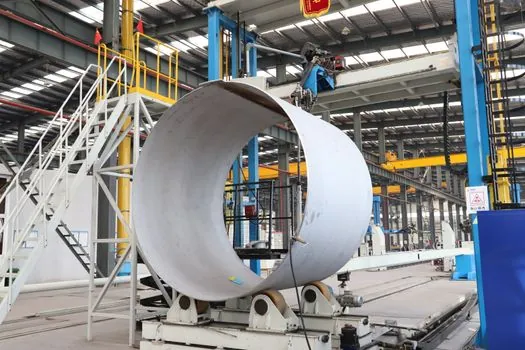
Food-grade 304 stainless steel on the chamber, lid, and seal frame is the minimum for any cell exposed to daily washdown, with 316 stainless reserved for salt, brine, or aggressive cleaning chemistry, and painted steel frames are a fast disqualifier for meat, seafood, and dairy warehouses because they corrode within months of CIP exposure [S2][S4][S5]. Sealing-bar materials split between Teflon-coated and titanium, with double seal bars the standard for liquid-prone SKUs because they add a redundant weld path, and serrated bars improving grip on wet or oily bag surfaces [S2][S4]. A digital control panel with programmable vacuum time, sealing time, and cooling time is now baseline above the 1000 USD tier; touch-key panels without set-point readback are a strong tell that a machine belongs in a small shop, not a warehouse PLC network [S7]. Soft-air or slow-air release prevents delicate SKUs such as bread, soft fruit, and ready meals from ballooning or crushing on chamber repressurization, and is a non-negotiable feature for any cell running mixed bakery-plus-protein SKUs [S3][S5].
MAP, Gas Flush, and Film Compatibility
Modified atmosphere packaging (MAP) extends shelf life 2 to 3 times longer than straight vacuum on fresh produce, bakery, and red meat, by backfilling with nitrogen or a CO₂ blend after the air is removed, and the gas-mix panel must include calibration access because drift in the mix ratio is a common cause of premature discoloration in retail-ready trays [S2][S3][S5]. Film compatibility is a separate gate: multi-layer laminates (PET/PE, NY/PE, EVOH-based) require adjustable sealing temperature, pressure, and dwell time, and the machine must support the bag thickness in your spec, with thicker 90 to 120 micron pouches used for bone-in meat and sharp-edged industrial components [S4][S5]. Warehouse cells running both retail trays and bulk pouches should standardize on a single film family where possible, because changeover between dissimilar laminates typically costs 5 to 15 minutes per shift on a thermoformer and 1 to 3 minutes on a chamber unit. For more on the materials side of the cell, see packaging material selection criteria.
PLC Integration, Footprint, and Warehouse Cell Layout

Continuous belt and thermoformer cells typically ship with PLCs that expose vacuum, sealing, and gas-flush parameters over EtherNet/IP, PROFINET, or Modbus TCP, which lets the line controller synchronize the seal cycle with the upstream filler and downstream checkweigher, and the absence of a documented register map is a warning sign for any warehouse automation supplier shortlist [S2][S5]. Floor space matters: a double-chamber unit with 600 mm seal bars fits a roughly 1.2 by 1.0 m footprint including pump, while a continuous belt cell with a 1200 mm seal bar and inline conveyor needs 3.5 to 5 m of straight run, so warehouse cells under 8 m of available length should default to double-chamber or compact thermoformer architectures [S2][S10]. Power supply is 110 V or 220 V at 50/60 Hz, and three-phase 380 to 480 V is common on continuous belt units above 60 m³/h pump capacity, so electrical infrastructure is a gate that should be checked against facility drawings before any PO [S4].
Limits, Failure Modes, and What a Warehouse Cell Cannot Tolerate
Nozzle-style external sealers cannot be used on liquids, powders, or products with sharp edges because liquid ingestion into the pump is a recurring failure mode, and chamber units are the only safe architecture for any warehouse that runs mixed SKU types on a single line [S3][S6]. Transparent lids on chamber units, useful for visual cycle monitoring as on the YS-ZS-300, must be polycarbonate rated for the chamber thermal cycle, or they craze and become a sanitation liability within 12 to 18 months [S7]. MAP backflush drift produces shelf-life claims that the line cannot meet, and the only mitigation is quarterly gas-mix verification against a reference analyzer; this is the single most common cause of customer complaints on automated retail-ready lines [S2][S5]. For context on how these gates compare against a related industrial spec, the vacuum packaging machine spec gates for chemical shipping in 2026 piece walks through the corrosion-resistance overlays that chemical warehouses stack on top of this same selection logic.
Sourcing, Standards, and Trackable Signals to Watch
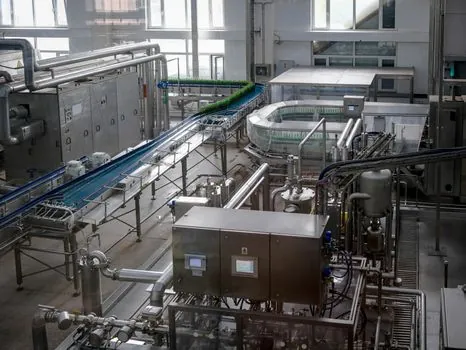
For warehouse cells in food or pharma, the relevant compliance baseline is food-grade 304 or 316 stainless on contact surfaces, hygienic seal design compatible with CIP washdown, and a documented PLC interface for the line controller; the specific standard number (for example NSF/ANSI 51 for food equipment or 3-A sanitary standards for dairy) should be confirmed with the OEM against your SKU mix, because vacuum-packaging machines cross several regulatory regimes depending on whether the load is food, medical device, or industrial component [S1][S4][S5].