Lead times for temperature-controlled capital equipment in 2026 split into three distinct bands: 8-12 weeks for standard pharmaceutical reefer units (2-8C), 16-22 weeks for ultra-low temperature (ULT) freezers rated -80C to -60C, and 18-26 weeks for prefabricated walk-in cold rooms and freezer rooms, according to fleet-side equipment sourcing data [S2][S4].
The global cold chain logistics market reached $479.54B in 2026 and is projected to grow to $1,580.92B by 2035, with cold chain equipment itself sized at $46.52B in 2026 heading toward $152.06B by 2034 [S3][S8]. That demand growth is colliding with constrained production of key components (hermetic compressors, vacuum insulation panels, cascade refrigeration skids), and the bottleneck shows up most clearly in ULT and walk-in categories, not in standard reefers.
Reefer Unit Lead Times: 8-12 Weeks for 2-8C and -25C to -18C Stock
Standard reefer units sized 100-2000 L for the 2-8C chilled band and the -25C to -18C frozen band are shipping in 8-12 weeks for common SKUs as of mid-2026, with faster turnaround on popular pharmacy-grade upright and chest configurations [S2].
The 2-8C segment remains the largest single slice of pharmaceutical cold chain, requiring Good Distribution Practice (GDP) compliant monitoring and the smallest typical excursion tolerance (a single 0C or colder exposure can destroy potency for some refrigerated vaccines) [S1][S4]. The -25C to -18C frozen band holds roughly 36% of cold chain volume, driven primarily by dairy, frozen foods, and blood products [S2]. Lead time compression here comes from mature manufacturing and standardized compressor lines; the practical constraint is logistics dock scheduling, not fabrication capacity. Buyers specifying for hospital and clinic replacement programs report 8-week delivery on in-stock 2-8C pharmacy-grade units and 10-12 weeks on -25C blood bank chest freezers, per industry sourcing guidance [S2].
ULT Freezer Lead Times: 16-22 Weeks for -80C to -60C Cryogenic Storage
ULT freezers in the -80C to -60C range, plus cryogenic -150C to -60C cascade systems, carry 16-22 week lead times in 2026, with the mRNA and cell-and-gene therapy demand surge adding 4-8 weeks beyond pre-2024 baselines [S2].
Growth in this tier is the steepest in the market: mRNA vaccine and advanced biologics logistics are described as a $65B+ pharmaceutical cold chain segment, expanding faster than the broader 13.5% CAGR logged for the overall market [S2][S4]. The bottleneck is mechanical, not electronic: cascade compressor pairs, vacuum insulation panel (VIP) procurement, and copper coil brazing capacity are the three constraints that push ULT builds past the 16-week floor. For comparison, the cryogenic tier (-150C to -60C) used for cell and gene therapies and research specimens is treated as a separate premium tier with longer lead times and a smaller supplier base [S2]. For a deeper look at how low-temperature sealing compounds behave in this service range, see the FKM TR-10 cold-limit grade comparison at FKM TR-10 grade selection for fluoroelastomer seals.
Walk-In Cold Room Lead Times: 18-26 Weeks for Modular and Freezer Rooms
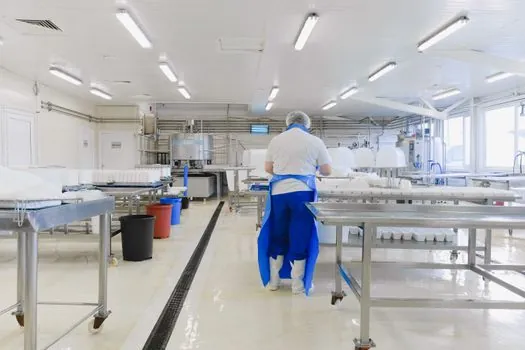
Prefabricated walk-in cold rooms and walk-in freezer rooms sized 100-10,000 m^3 carry 18-26 week lead times, dominated by insulated panel fabrication scheduling and refrigerant system integration rather than by the room enclosure itself [S2][S4].
These rooms are the structural backbone of cold chain warehousing, the layer that holds inventory between transport legs. Buyers in 2026 are reporting 18-20 weeks for modular panel rooms with off-the-shelf refrigerants (R-448A, R-449A) and 22-26 weeks for CO2 (R-744) transcritical or ammonia (R-717) systems, which require custom skid fabrication and longer regulatory sign-off [S2]. The insulated panel supply chain uses polyurethane foam injected between metal skins, with stainless steel interior options for food and pharmaceutical compliance. For operations planning throughput and dock flow around incoming cold rooms, the Autonomous vs Manual Forklift: 2026 Cost-Per-Pallet-Move Decision piece lays out the pallet-handling math that frequently drives room sizing.
Why Lead Times Stretched: Component Bottlenecks Behind the Calendar
Three specific component constraints are pushing 2026 lead times past pre-2024 norms: hermetic compressor allocation, vacuum insulation panel (VIP) supply, and cascade refrigeration skid integration capacity [S2][S4].
Vaccine-grade monitoring data loggers, IoT temperature sensors, and real-time alert systems are cited as the technology stack where fleets are reclaiming 30% of the $35B annual temperature-excursion loss, but those devices are not the gating component for lead time [S2]. The gating constraint is mechanical: a single missing compressor or VIP panel can push a 12-week reefer order to 18 weeks and a 16-week ULT order to 22 weeks. Compressors for ULT cascade pairs must hold tight tolerances for the low-stage circuit, and VIP manufacturing capacity has not kept pace with the mRNA and gene-therapy build-out that started in 2024-2025. The practical implication: procurement teams that want 2026 delivery of ULT or walk-in capacity need to place orders with a 24-28 week forward buffer, and they need to lock compressor allocation with a deposit rather than rely on quoted lead times [S2].
Selection Criteria: Matching Lead Time to Product Risk
The right cold chain equipment tier is set by product risk band, not by budget alone, and the 2026 lead-time table is structured to make that match explicit: chilled (2-8C) for most vaccines and fresh produce, frozen (-25C to -18C) for blood products and dairy, ULT (-80C to -60C) for mRNA and advanced biologics, and cryogenic (-150C to -60C) for cell and gene therapies [S1][S2][S4].
A direct comparison across the four tiers, with lead time and typical use case: | Tier | Temperature | 2026 Lead Time | Typical Cargo | |------|-------------|----------------|---------------| | Chilled | 2-8C | 8-10 weeks | Most vaccines, fresh produce, dairy | | Frozen | -25C to -18C | 10-12 weeks | Blood products, ice cream, frozen food | | ULT | -80C to -60C | 16-22 weeks | mRNA vaccines, advanced biologics | | Cryogenic | -150C to -60C | 18-26 weeks | Cell and gene therapies, research specimens | A single 0C exposure in the chilled band can destroy potency for some refrigerated vaccines, which is why 2-8C monitoring frequency is tighter than for frozen cargo and why this segment carries the largest GDP compliance overhead [S1][S2]. Operators carrying mixed cargo should not consolidate across tiers in a single unit; the cost saving evaporates the first time a 0C excursion forces revaccination of a clinic's patient panel [S1].
Compliance and Tracking Layer: FSMA 204 and Two-Year Record Retention
U.S. FSMA enforcement from January 2026 onward requires temperature tracking at every node of the cold chain and a two-year record retention period, with operators unable to produce records on demand facing enforcement action [S9].
This regulatory layer is the single largest 2026 driver behind IoT sensor adoption and real-time alert system deployment, and it falls on the same fleets that are already absorbing the $35B annual temperature-excursion loss [S2][S9]. For pharmaceutical carriers, GDP documentation adds audit overhead on top of the FSMA requirement, and the data loggers now bundled with new reefer units are typically FSMA-ready out of the box but require integration with a fleet management platform for the two-year retention to be audit-passing. Operators running legacy equipment without integrated monitoring are facing 8-12 week lead times on retrofit IoT kits, which is faster than replacing the refrigeration unit itself but slower than ordering the kit on a new build [S2][S9]. For material handling accuracy inside temperature-controlled facilities, the Industrial Barcode Scanners for Damaged and Low-Contrast Codes article covers scan reliability on condensation-fogged labels, a common cold-room failure mode.
Limitations: Where Lead-Time Guidance Breaks Down

The 8-26 week ranges above assume a standard SKU, a deposit-secured build slot, and no customs or refrigerant quota issues; outside those conditions, lead times can stretch to 30-40 weeks for ULT and walk-in capacity [S2][S4].
Custom configurations (explosion-proof interiors for solvent-handling facilities, ATEX-rated panel rooms, marine-grade reefer skids) typically add 6-10 weeks. Geopolitical disruption and tariff uncertainty, both flagged as 2026 risk factors for cold chain operators, can extend delivery by another 4-8 weeks on imported equipment [S4]. Labour shortages in refrigeration technicians, also cited as a 2026 constraint, can delay commissioning by 2-6 weeks even when the equipment is on site [S4]. Buyers should treat 8-12 weeks for chilled, 16-22 weeks for ULT, and 18-26 weeks for walk-in as the planning floor, not the planning ceiling.
Trackable signals for the next planning cycle: FSMA 204 audit enforcement actions through Q1 2027, U.S. mRNA cold chain capacity announcements, and any compressor allocation guidance from major ULT OEMs. The Bakery and Confectionery Line Automation: 2026 Equipment Stack covers adjacent cold-chain-adjacent production capacity for operations sizing end-to-line cooling buffers.
For the relevant spec sheets and selection criteria, see lead screw, time relay, and cold chamber machine.