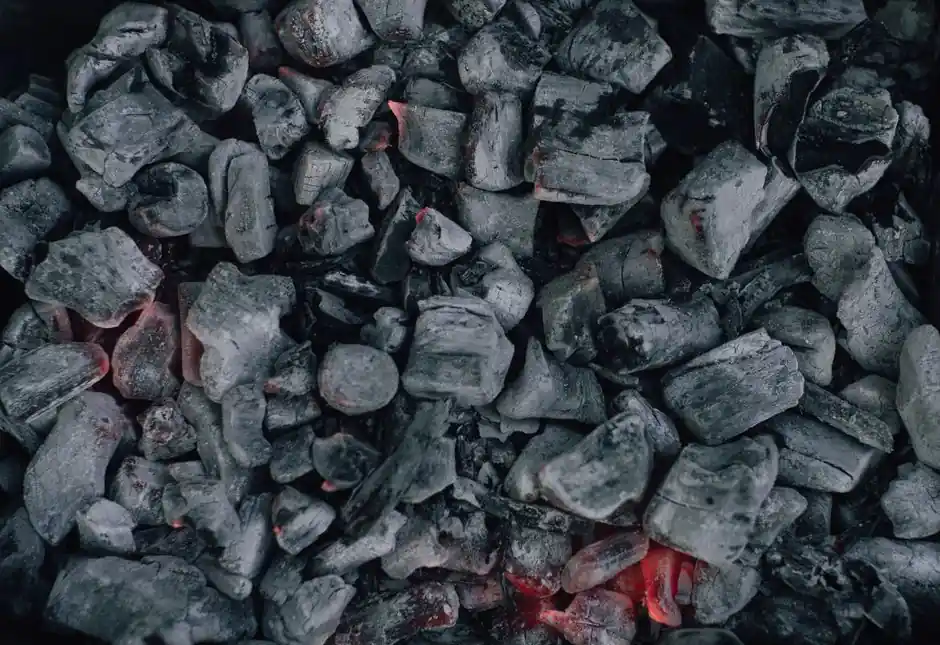
Coconut shell activated carbon carries roughly 50% more micropore volume than bituminous coal-based grades, an ASTM D3802 ball-pan hardness of 97–99%, and ash content in the 2–5% band, but trades that for an FOB price roughly 2–3× higher per ton than coal-based GAC [S1][S4][S8].
Buyers selecting between the two for 2026 projects are really choosing a pore-size distribution: coconut shell is micropore-dominant (>85% of pore volume below 2 nm), while coal-based grades run a mixed pore structure skewed to mesopores (2–50 nm) and some macropores above 50 nm, which dictates which contaminants each grade will actually hold [S3][S4].
Pore Structure and Surface Area: The Core Decision Variable
Coconut shell carbon shows over 85% of its pore volume in micropores under 2 nm, paired with a typical BET surface area of 1000–1300 m²/g and an iodine number of 900–1200 mg/g, measured per ASTM D4607 [S1][S4]. That tight pore window is the reason it captures small molecules like chlorine, chloramine, trihalomethanes (THMs), PFOS/PFOA, and the gold-cyanide complex with much higher working capacity than coal-based media [S3][S4].
Coal-based activated carbon (bituminous, sub-bituminous, or anthracite feedstock) has fewer micropores and more mesopores and macropores, with BET surface area of 850–1100 m²/g and iodine number of 800–1100 mg/g [S1][S4]. The wider pore distribution lets it adsorb medium and large organic molecules (color bodies, certain dyes, larger organics) and acts as transport highways that speed adsorption kinetics in high-flow service [S3][S4].
Hardness, Ash, and Density: Process Consequences
Coconut shell grades measure 95–99% on the ASTM D3802 ball-pan hardness test, against 85–95% for coal-based, so coconut shell resists attrition in agitated CIP/CIL gold recovery tanks and in backwashed drinking-water beds [S4][S8]. Apparent densities are similar: 0.48–0.55 g/mL for coconut shell and 0.45–0.55 g/mL for coal-based, both at ≤5% moisture [S4].
Ash content is the second hard separator: coconut shell runs 2–5%, while coal-based runs 8–15% on unwashed product, dropping to roughly 2× coconut-shell levels after acid washing, which still leaves a measurable cost penalty in POU/POE drinking-water service [S1][S2][S4]. pH also drifts: coconut shell is alkaline at 9–11, coal-based is near-neutral to slightly alkaline at 6–8, which matters where acidic leachables cannot be tolerated downstream [S4].
VOC, PFAS, and Gold: Where Coconut Shell Wins
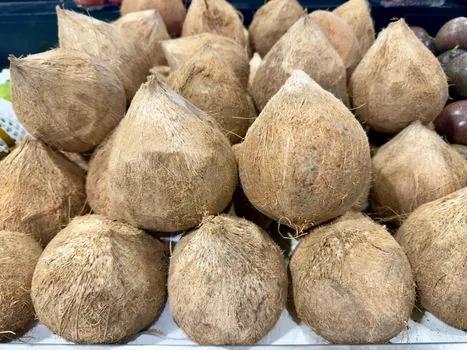
For benzene at 10 ppb in water, coconut shell GAC delivered about 11 mg/g saturation capacity versus ~6 mg/g for bituminous coal-based GAC, translating to 0.0076 lb of coconut shell carbon exhausted per 1,000 gallons treated against 0.014 lb of bituminous coal-based GAC, a near-2× usage-rate advantage [S1][S2]. Column testing on MTBE shows the same direction of travel, with coconut shell again holding more at every influent concentration tested [S1][S2].
Independent 2026 column work by A. Kumar reported coconut shell GAC reaching 154.81 h exhaustion time and 2.46 mg/g adsorption capacity against a coal-based GAC that exhausted earlier, consistent with the pore-volume argument above [S5]. PFOS and PFOA also sit in the small-molecule window that coconut shell micropores preferentially fill, and only coconut shell is taken seriously for CIP/CIL gold recovery because high hardness plus low ash minimizes both attrition losses and preg-robbing [S4]. In air-side service such as ductless fume hoods, the same small-molecule bias plus a renewable feedstock argument is why coconut shell is the default [S3].
Gas-Phase, Decolorization, and Heavy Metals: Where Coal-Based Wins
Coal-based carbon's mesopore-rich structure is the better fit for gas-phase adsorption, decolorization of sugar and chemical streams, and removal of larger organics or heavy-metal complexes that need transport pores to reach adsorption sites [S3][S4]. For high-flow industrial beds where adsorption kinetics dominate over ultimate equilibrium capacity, those mesopore transport highways cut the time to breakthrough in real-world service [S4].
Sub-bituminous and lignite feedstocks are commonly routed to liquid-phase decolorization, while harder bituminous and anthracite grades are preferred where higher hardness and abrasion resistance still matter on a coal-based budget [S3]. When a buyer is price-driven and the target molecule is in the medium-to-large range, the FOB price gap (coconut shell at roughly $2,900–$4,500/ton versus coal-based at $450–$1,550/ton for 8×30 GAC) is hard to close with coconut shell, even after the working-capacity argument [S4].
Cost, Sustainability, and Sourcing Realities
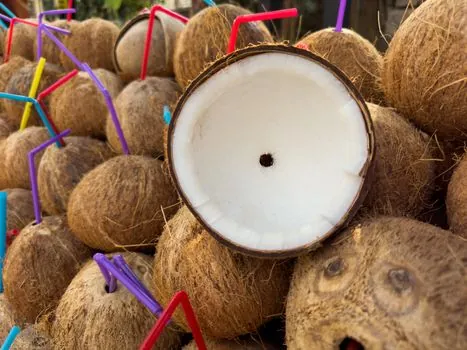
The price gap is real and persistent: as of March 2026 commercial 8×30 mesh GAC, FOB, coconut shell ran $2,900–$4,500/ton and coal-based ran $450–$1,550/ton, so coal-based is roughly one-third the cost of coconut shell on a virgin-carbon basis [S4]. That gap narrows once exhaustion-rate and acid-wash steps are added, but rarely closes [S1][S2].
On feedstock, coconut shell is a renewable agricultural byproduct, while coal-based carbon ties to fossil-fuel extraction with its associated carbon and disturbance footprint, a factor increasingly weighted in ductless-fume-hood and POU/POE procurement [S3]. For buyers who need a process-side reference on how coconut shell's pore structure is also the reason it pairs with renewable-feedstock claims, the carbon-fiber encyclopedia entry explains how a tightly controlled pore architecture can be matched to specific adsorption windows; the same pore-control logic is why carbon-steel pressure-vessel fabrication, covered in carbon-steel, is sometimes paired with coconut-shell beds in packaged POU skids.
Spec Standards and Failure Modes to Watch
The two governing ASTM methods buyers see on every COA are ASTM D4607 for iodine number (the proxy for micropore volume) and ASTM D3802 for ball-pan hardness, with both coconut shell and coal-based GAC typically supplied to one or both [S1][S4][S8]. Drinking-water grades additionally carry NSF/ANSI 61 certification, which is more commonly held by coconut shell producers because low ash simplifies the extractables test [S4].
Failure modes split along the same axis: coconut shell can underperform when the target molecule is too large to enter the micropore window, and its higher price punishes misapplication financially; coal-based can exhaust early on small-molecule VOCs and contributes more ash to leachables, so acid washing plus a downstream polishing stage is often required for POU/POE service [S1][S2][S3]. For process engineers, the right next step is to map target contaminant molecular weight and concentration against the typical 0.85–1.2 kg/L bed density and then pick the pore structure that fits, then lock the grade to the right ASTM test, and re-validate after any feedstock change.
Component reference pages worth checking: shell core machine.
Background reading: Synthetic Resin Raw Materials vs Formulated Adhesive Products: Spec Boundaries.