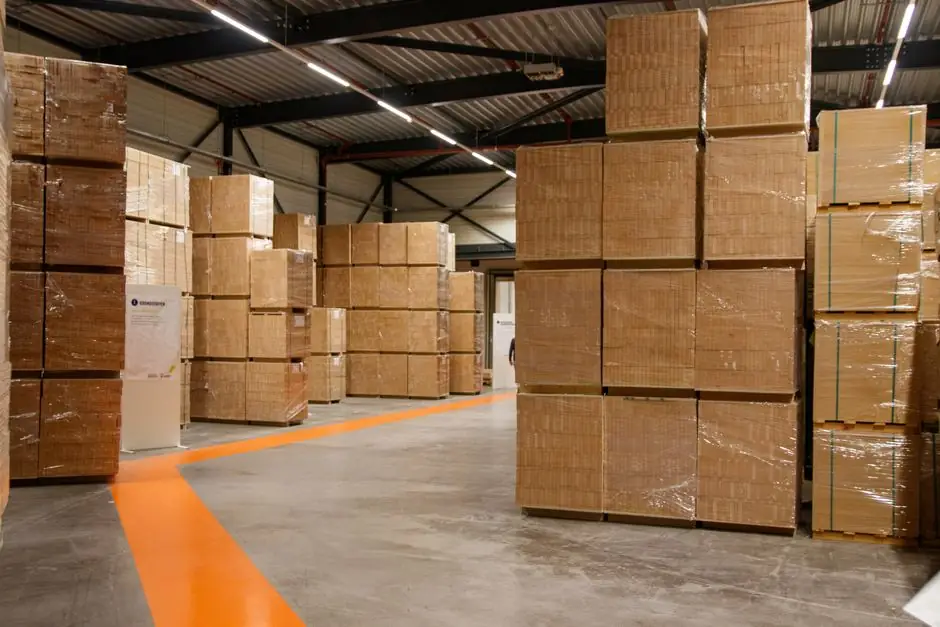
Cold storage warehouses operate at sustained ambient temperatures between roughly -25°C and +4°C, and that single envelope drives every structural and finish decision a specifier makes on the rack. Material behaviour, condensation cycles, forklift battery endurance, and worker shift length all change the rack math versus an ambient build [S1][S5].
This article walks the selection gates in the order an engineer actually works them: steel grade and finish, rack type against SKU profile, dimensional and capacity limits, then sourcing and certification. For the broader racking family see the pallet rack reference and the wider storage rack taxonomy. Where automated retrieval is on the table, the pallet stacker entry covers the MHE interface.
Steel grade, coating, and the low-temperature envelope
Cold room steel is specified for notch-toughness down to the operating temperature, and standard cold-formed Q235 frames are not the same part as low-temperature killed steels. Specifiers working below roughly -20°C should pull in fine-grain structural grades with documented Charpy V-notch values at the design metal temperature rather than rely on generic mild-steel certificates [S1][S5].
Finish selection is the second gate. Powder coating over hot-dip galvanised substrate is widely quoted for freezers down to -25°C because it tolerates the thermal-shock and condensation cycles seen during door-opening transients; bare painted frames are commonly used above 0°C, and full hot-dip galvanising is preferred in wet, high-salt, or ammonia-refrigerant rooms where coating damage accelerates [S3][S5]. A practical rule engineers use: order hot-dip galvanised floor-level base plates and painted uprights above the frost line, then tie the two with a documented coating repair kit at site.
Rack type against SKU velocity: selective vs drive-in vs shuttle
Selective pallet racking is the default low-temperature warehouse frame because every pallet position is addressable, allowing true FIFO rotation and rapid SKU swaps; it is the type listed on every major Chinese product portal as "Regular Aisle Selective Pallet Racking" with CE marking on the audited-supplier cards [S3]. A typical selective bay runs 2.7-3.0 m clear aisle and 8-10 m roof height, and the heavy-duty adjustable beam configuration dominates Chinese export lines with load capacities commonly quoted at 1,000-4,000 kg per beam level [S3][S6].
For mixed-velocity cold rooms, the 4-direction radio shuttle system decouples forklift entry from lane depth, supports roughly 1,000-1,500 kg per pallet position, and reroutes the shuttle in place for lane changes, which is the reason it shows up in the AS/RS-adjacent product list at the major Chinese rack vendors [S1][S5]. Comparison across the three options against the four main decision criteria looks like this for a typical -18°C frozen warehouse:
Selective vs drive-in vs 4-way shuttle on (1) pallet positions per m², (2) SKU rotation, (3) forklift exposure time, and (4) capex per bay. Selective wins on rotation (FIFO), loses on density (1.0x baseline). Drive-in wins on density (1.4-1.6x), loses on rotation (LIFO) and exposes forklifts to longer in-rack runs.
Capacity, beam, and frame dimensions that actually change the spec
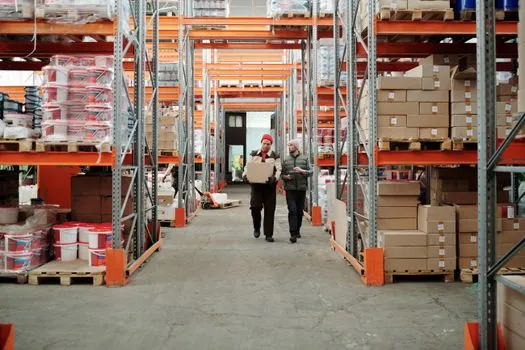
Capacity is set at three nested levels: frame load (upright + bracing), beam pair, and pallet-on-deck. Export-line selective frames from the audited Made-in-China supplier set list beam lengths of 2,400-3,600 mm and frame heights of 2,400-11,000 mm, with typical upright thicknesses of 1.5-2.5 mm and load ratings that scale with column section depth [S3][S6]. Light-duty shelving in the same supplier family, used for hand-loaded cold-room picking, is rated at 200-280 kg per shelf level, well below rack beams and useful for slow-moving dry goods at ambient above 0°C only [S1].
Beam-end connectors and locking pins are the cold-chain failure point engineers watch most closely. Standard spring-loaded beam safeties can ice up below roughly -15°C; the working practice is to specify gravity-type or pin-secured beam locks plus stainless or zinc-nickel safety pins where cycles include frequent door transients and condensate [S1][S5]. Floor anchor bolt selection also shifts: chemical anchors are typically replaced by mechanical expansion anchors on cold-room slabs because the cure profile of epoxies drifts in sub-zero pours.
Workflow, forklift, and automation interface
Cold-room throughput math is dominated by the time the door stays open, because every cycle of forklift ingress dumps humid air into the cold envelope. The structural answer is to push picking upstream: reserve high-density drive-in or shuttle lanes for bulk storage, and stage a small selective pick-face near the anteroom where order assembly takes place without a full freezer trip [S1][S5]. For new builds, 4-direction shuttle lanes are the most common way to decouple forklift travel from rack depth, and the same control plane can feed an AS/RS stacker crane when throughput justifies it [S1].
For automated cold-chain terminals the MHE side matters as much as the rack side, and a recent AGV spec guide for air-cargo terminals sets out the payload, navigation, and zone-rating gates that apply in unheated warehouses: see AGV robot selection for air cargo terminals for the parallel gate map. Battery-rated AGVs are typically de-rated by roughly 20-30% for sub-zero operation, which extends shift count and changes the bay-sizing math.
Standards, certification, and what to put on the RFQ
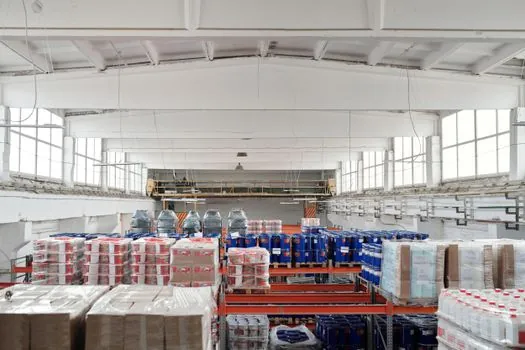
The certification floor on a Chinese export selective rack is EN 15512 for the steel design and EN 15635 for the operating and inspection regime, with CE marking on audited-supplier cards from Made-in-China verified sellers [S3]. For the operating envelope, FEM 10.2.05 and the RMI/ASME MH16.1 family govern rack design and use in North American projects, while the European cold-chain logistics and fresh e-commerce distribution literature frames throughput trade-offs in terms of cooperative distribution windows and route optimisation, not rack selection per se [S2]. A clean RFQ for a -25°C frozen warehouse therefore lists: design metal temperature with Charpy V-notch evidence, coating system by zone (galvanised floor / painted upper), rack type with bay dimensions and capacity per beam, beam-lock type, anchor type, and the FEM or EN code of record.
Sourcing gates and supplier shortlist logic
Where to buy depends on whether the spec is one bay or one hundred. For spot and small-volume orders, Made-in-China's selective-rack category surfaces multiple audited suppliers with CE marking and explicit "Heavy Duty Storage Rack" labelling; the July 2026 category page lists 60+ active SKUs with verified-supplier status and is the right starting RFQ pool [S3]. For 100+ bay programmes, the engineering team should shortlist on documented in-house R&D, owned plant, and product-line breadth across selective, drive-in, shuttle, and AS/RS, which is the filter Union and Fuyuan publish on their own product pages [S1][S5][S6].
Audit the shortlist on three artefacts before signing: a mill certificate with Charpy values at the design temperature, a third-party load test report for the heaviest beam pair, and a coating system datasheet that names the powder chemistry, the galvanising bath standard, and the repair procedure for field damage. Bidders that hand back only generic "CE / ISO 9001" certificates without those three documents should be removed from the shortlist, because the cold envelope does not forgive undocumented steel.
Two signals to track over the next two quarters: (1) whether more Chinese rack exporters add -40°C Charpy-rated frame SKUs to the Made-in-China selective category, and (2) whether radio-shuttle pricing closes within roughly 15% of drive-in pricing on export bids, which would tip the default new-build choice away from drive-in and toward shuttle lanes in -18°C frozen builds.