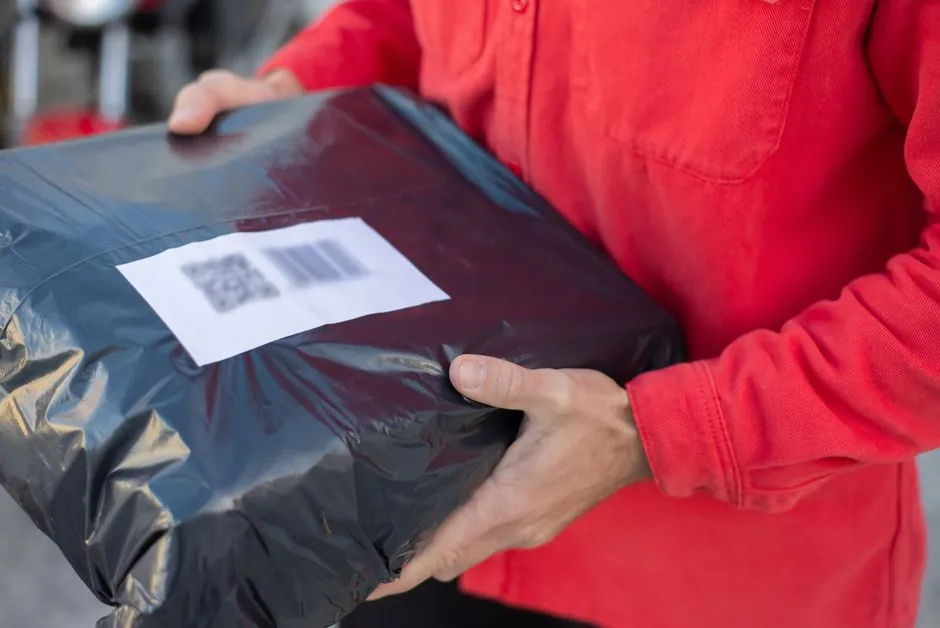
In 2026 cold chain procurement, the shrink wrapper decision is governed less by packs-per-minute than by the temperature band the film must survive, the seal-bar geometry on the line, and the validation paperwork the auditor will demand [S3].
Polyolefin (POF) film is the de facto frozen-food standard, while PVC is rejected because it cracks at freezer temperatures; PE stretch film on pallets retains only 50 to 70% of its elastic recovery below -20 °C, which is why single-temperature qualification documents are being pushed back on in 2026 RFPs [S2][S3].
Temperature Tiers the Wrapper Must Validate Against
Pharmaceutical cold chain runs across four bands: chilled (+2 to +8 °C) for vaccines, insulin, and monoclonal antibodies; frozen (-18 to -30 °C) for plasma derivatives; deep frozen (-60 °C and below) for mRNA vaccines; cryogenic (-150 °C and below) for cell and gene therapies under liquid nitrogen, while food chains overlap with fruits at 0 to 5 °C, dairy at 1 to 3 °C, and frozen foods below -18 °C [S3].
A wrapper qualified for a +4 °C dairy line will underperform on a -25 °C blast-freezer pallet if the film grade, pre-stretch ratio, and conveyor cold-rated components were not validated for that lower band, and the cryogenic -150 °C case usually bypasses the wrapper entirely because the dewar ships in a validated shipper [S3].
Film Behaviour Below -20 °C: The Elastic Recovery Problem
Standard LLDPE stretch film loses 30 to 50% of its elastic recovery below -20 °C, a regime that covers most frozen-food and biologic pallets, so film-conditioned pallet containment force is now a procurement variable rather than a fixed cost [S3].
For shrink film on retail packs, POF is the freezer-grade material because it stays flexible at freezing temperatures, is FDA-cleared for direct food contact, and provides strong low-temperature resistance; PVC is not recommended for frozen food because it becomes brittle and cracks [S2]. LDPE and POF are the two films a 2026 cold-chain audit will accept on a food-contact line, with PVC typically avoided [S5].
Seal Architecture: Bar vs Continuous Overlap on Cold Lines
Sealing-bar wrappers use a pneumatically actuated bar that hot-cuts the film inside the jaws, with bar temperature electronically controlled and the closing stroke pneumatic; this architecture suits pre-glued and wrap-around cartons because the pack is mechanically indexed through a fixed sealing station before entering the shrink tunnel [S1].
Continuous-motion overlap sealers replace the reciprocating bar with rotating sealing plates or belts, lifting throughput into the 60 to 180 packs/min band used for high-velocity bottling and distribution-centre work, but a continuous-motion plate sealer needs a physical plate change and re-thread for every format switch while a sealing-bar machine can swap pack sizes by re-indexing the bar stroke [S1]. For cold-chain food, the continuous-motion side sealer is the workhorse: Shanklin Omni-series machines handle POF and PE films, ship in USDA-approved and CE-compliant configurations, and are engineered for high-volume frozen-food bundling [S2].
Throughput Bands and Pack Envelope
Industrial shrink wrappers on the 2026 OEM market span 5 packs/min on compact semi-automatic sleeve sealers to 180 packs/min on high-end HFFS shrink lines, with most automatic bottle-and-carton packers clustering in the 30 to 100 packs/min band [S1].
Pack dimension envelopes diverge sharply across this band: Shanklin lines accept lengths from 76.2 mm to 1,219.2 mm and widths from 50.8 mm to 482.6 mm, while compact FARPLUS carton overwrappers are limited to 20 to 300 mm width and 60 to 200 mm length at 80 packs/min, and mid-range LSK/CSK ERGON-family packers such as the CSK 52 ERGON sit at 100 packs/min for bottle and cardboard-box formats [S1]. Buyers should match the dimension envelope to the largest SKU, not the median, because the upper bound is a hard mechanical stop on most side-seal frames [S1].
Tunnel Configuration and Energy Behaviour
Modern shrink tunnels are configured for airflow control, not just radiant heat: the reference 2026 architecture uses adjustable inlet holes to set tunnel airflow with extra resistors pre-installed for zero-downtime replacement, and supports one, two, or three lanes on the same tunnel body [S1].
Energy behaviour is now a procurement variable: insulated shutters at both tunnel ends lower automatically to cut heat loss between packs, and a separate cooling section at the tunnel exit freezes the shrink before the pack exits onto the takeaway conveyor; tunnels that run three lanes off one heating chamber cut kilowatt-hour consumption per pack roughly proportionally to lane count, but only if the line is consistently loaded, because a starved three-lane tunnel loses most of the energy benefit [S1]. For a cold-chain line this matters because the cell is already paying for refrigeration, so any heat that leaks into the dock raises HVAC load on the adjacent zone.
Compliance Signals a Cold-Chain Audit Will Check
For pharma, the wrapper must support qualification documentation: DQ, OQ, and PQ records plus references to FDA 21 CFR Part 211 and WHO PQS E001 cold-chain equipment standards, and the film must come with a validated conditioning procedure covering gel-pack freeze time, PCM panel pre-condition, and dry-ice mass [S3].
For food, the wrapper spec usually stops at FSMA-aligned traceability, with lot coding and barcode reading on the wrap conveyor rather than full pharma validation, and six compliance signal traits are non-negotiable on an audited line: cleanable weld seams and casings, repeatable seal profile with no drift, tamper evidence by design, POF or LDPE film support, controlled tunnel heat that does not deform the pack or generate fumes, and minimal human handling to cut cross-contamination risk [S5]. Bundlers and combo units do not qualify near primary exposure zones because bundling film, heat, and mechanical force can spread contaminants, distort containment, or produce fumes near open product, so they are restricted to secondary or outbound corridors [S5].
Wrapper Comparison: Three Options Lined Against Cold-Chain Criteria
For pallet-level cold chain, three architectures compete on a 2026 spec and the right pick depends on throughput, load weight, and ambient temperature of the wrap cell: turntable wrappers deliver up to 30 pallets/h at 150 to 300% pre-stretch with low capital cost and suit chilled-pharma DCs and dairy warehouses where the wrap cell is held at +5 to +15 °C and loads stay under 1500 kg; ring wrappers sit in the mid-throughput band for heavier frozen loads; robotic wrappers run 10 to 25 pallets/h, are mobile, and wrap any pallet size, suiting clinical-trial depots and small-batch biologic shippers running 10 to 50 different pallet sizes per week [S3].
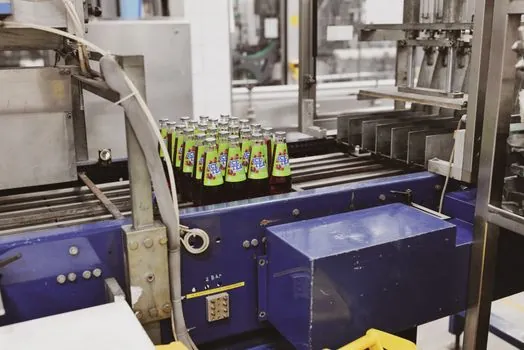
For retail-pack cold chain, the comparison is different: L-bar sealers and hood sealers handle 5 to 30 packs/min on low-to-mid output primary or secondary packs; automatic side sealers handle 30 to 100 packs/min for tray-plus-film retail meals; continuous-motion HFFS lines run 120 to 180 packs/min for high-velocity frozen multi-packs and club-store bundles, with the trade-off that a continuous-motion plate change is a real changeover cost and a sealing-bar index is a recipe change [S1][S2].
Failure Modes Specific to Cold-Chain Wrapping
Three failure modes drive most 2025 to 2026 cold chain wrapper complaints, and they map directly to the wrapper spec: first, film conditioning, where gel packs frozen inside a corrugated box expand into irregular geometry that breaks seal integrity on a wrapper calibrated for ambient loads; second, tunnel heat creep into a refrigerated dock, where a shrink tunnel exhausting above 150 °C into a +5 °C cell raises the HVAC load and pulls condensation onto the film; third, pallet containment loss below -20 °C on standard LLDPE, which is the 30 to 50% elastic-recovery loss the spec must pre-empt with a cold-rated film grade [S3].
Who the Cold-Rated Wrapper Is For, and Who It Is Not
It is justified for chilled and frozen food lines, pharmaceutical distribution at +2 to +8 °C, biologic shippers at -18 to -30 °C, and mRNA palletizers at -60 °C and below, and it is not justified for ambient dry-goods warehouses, seasonal shippers below 10 pallets/day, or short-haul moves where a hand-wrap station with cold-rated film is enough [S3].
Operations handling cryogenic cell and gene therapy payloads at -150 °C and below usually do not palletize the inner dewar in a stretch wrapper at all; the dewar ships in a validated shipper and the palletization step is limited to outer transport packaging, so a turntable or robot wrapper at the dock is the only relevant use case [S3].
Limits and Practical Boundaries
Three constraints bound the 2026 cold-chain shrink wrapper decision: film grade sets the lower temperature limit and cannot be retrofitted by changing the wrapper; tunnel heat must be contained so it does not defeat the dock refrigeration, which means insulated shutters and a dedicated cooling section are not optional; and qualification paperwork (DQ/OQ/PQ for pharma, FSMA-aligned traceability for food) is bought with the machine, not after it, because a wrapper that cannot produce the validation pack on day one is the wrong machine [S3][S5].
The 2026 RFP pattern emerging across frozen-food and biologic buyers is to reject single-temperature qualification, demand POF or PE-only film with a documented conditioning procedure, and insist on pack-envelope data for the largest SKU rather than the median, and that spec discipline is what separates a freezer-line wrapper from a general-purpose wrapper re-marketed for cold chain [S1][S3]. For a closer look at the related selection pressure on high-velocity retail and e-commerce cold packs, the shrink wrapper spec map for e-commerce fulfilment is a useful counterweight because the throughput bands overlap but the pack architecture and audit regime do not. For the broader wrapper-class mechanics that sit behind every cold-chain pallet decision, the shrink wrapping machine reference entry and the cold-chain wrapping machine entry cover the subsystem boundaries a spec writer needs before locking the quote.
For component-level specifications, see wrapping machine.