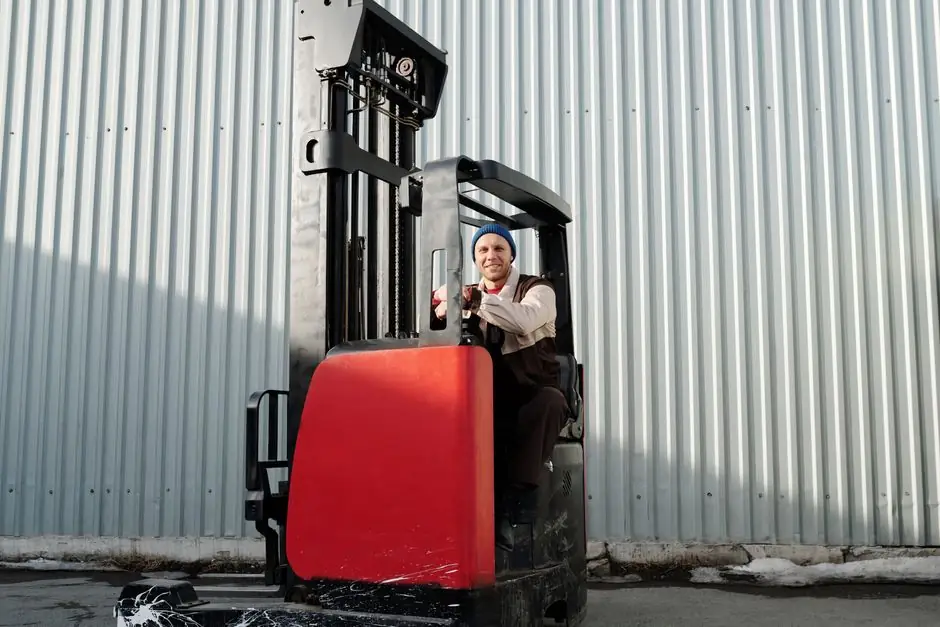
A pallet arriving at a +2 to +8 °C dock on a stretch-wrapped palletizer is still the most common unit load in pharmaceutical and food cold chains, and the wrapping machine decision is no longer just about film cost per pallet [S1][S2].
Selection in 2026 is driven by three numbers: validated temperature tier, transit duration, and required film tension at the actual operating temperature, because standard LLDPE stretch film loses 30 to 50% of its elastic recovery below -20 °C, a regime that covers most frozen-food and biologic pallets [S4][S5].
Cold Chain Temperature Tiers the Wrapper Must Hold
Pharmaceutical cold chain runs across four defined bands, and each band changes the wrapper spec [S1]. Chilled (+2 to +8 °C) covers vaccines, insulin, and monoclonal antibodies; frozen (-18 to -30 °C) covers plasma derivatives and certain drug intermediates; deep-frozen (-60 °C and below) covers mRNA vaccines and advanced biologics; cryogenic (-150 °C and below) covers cell and gene therapies stored under liquid nitrogen [S1]. Food chains use overlapping but different ranges: fruits at 0 to 5 °C, dairy at 1 to 3 °C, frozen foods below -18 °C, with regulatory pressure from FSMA in the US [S3][S4].
A wrapper specified for a +4 °C dairy line will underperform on a -25 °C blast-freezer pallet if the film grade, pre-stretch ratio, and conveyor cold-rated components were not validated for that lower band, and this is where 2026 RFPs are pushing back on single-temperature qualification documents [S5][S8].
Selection Criteria: Film, Force, Format, and Footprint
For pharma, the wrapper must support qualification documentation: DQ, OQ, and PQ records, plus references to FDA 21 CFR Part 211 and WHO PQS E001 cold-chain equipment standards where they apply, and the film must come with a validated conditioning procedure (gel-pack freeze time, PCM panel pre-condition, dry ice mass) [S5][S8]. For food, the wrapper spec usually stops at FSMA-aligned traceability, with lot coding and barcode reading on the wrap conveyor rather than full pharma validation [S3][S4].
Wrapper Type Comparison: Turntable vs Ring vs Robot
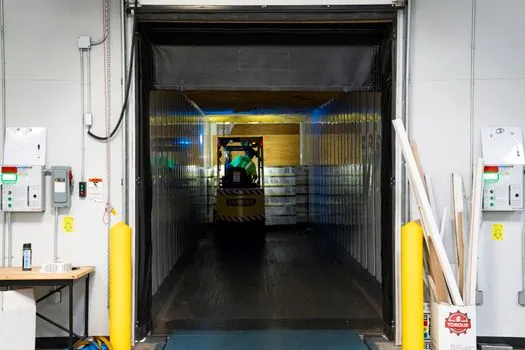
Three wrapper architectures compete on a 2026 cold chain spec, and the right pick depends on throughput, load weight, and ambient temperature of the wrap cell itself. [S4]
Turntable wrappers (up to 30 pallets/h, 150 to 300% pre-stretch, low capital cost) suit chilled-pharma distribution centers and dairy warehouses where the wrap cell is held at +5 to +15 °C and load weights stay under 1500 kg [S2][S4]. Robotic wrappers (10 to 25 pallets/h, mobile, wrap any pallet size) suit clinical-trial depots and small-batch biologic shippers that run 10 to 50 different pallet sizes per week and cannot justify a fixed-format wrapper [S6][S7].
Who the Cold-Rated Wrapper Is For (and Who It Is Not)
It is not justified for ambient dry-goods warehouses, for seasonal shippers below 10 pallets/day, or for short-haul moves where a hand-wrap station with cold-rated film is enough [S3][S4].
Operations handling cryogenic cell and gene therapy payloads at -150 °C and below usually do not palletize the inner dewar in a stretch wrapper at all; the dewar ships in a validated shipper and the palletization step is limited to outer transport packaging, so a turntable or robot wrapper at the dock is the only relevant use case [S1][S6].
Failure Modes Specific to Cold Chain Wrapping
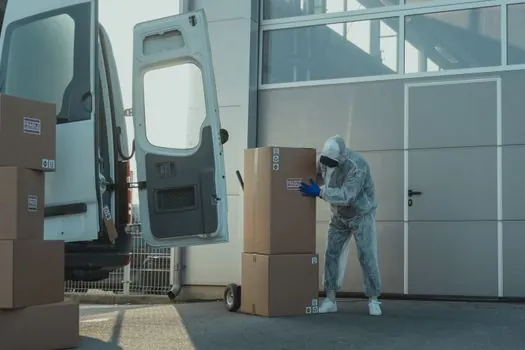
Three failure modes drive most 2025 to 2026 cold chain wrapper complaints, and they map directly to the wrapper spec [S5]. First, film conditioning: gel packs frozen inside a corrugated box expand into irregular shapes and disturb pack-out, so a wrapper that accepts pre-conditioned refrigerant in standardized positions is preferred. Second, paper-based insulated liner reuse: a liner that passed qualification on cycle 1 may fail by cycle 5 because compression and moisture change its thermal performance, and this risk is invisible at the wrapper until the pallet warms at the dock. Third, frost and condensation on the wrapper itself: standard VFDs and photoeyes ice up below -10 °C, and a cold-room wrapper needs heated enclosures, NEMA 4X or IP65 stainless components, and food-grade stainless contact points where FSMA applies [S4][S5].
A wrapper spec that does not address these three modes will pass the factory acceptance test and fail in week 2 of production, which is why 2026 RFPs increasingly require a 30-day site-acceptance trial at the actual operating temperature rather than a bench test [S5][S8].
Standards, Documentation, and Where the Wrapper Fits
The wrapper itself is not a temperature-controlled device under FDA or EMA rules, but it touches several regulated systems: FDA 21 CFR Part 211 for pharma sub-contracting, WHO PQS E001 for cold-chain equipment performance, FSMA 204 for food traceability, USP 1079 for good storage and distribution of drug products, and the parenteral-drug association technical reports (PDA TR 39 and 52) for cold chain qualification [S4][S8]. For facilities handling flammable refrigerants or dry-ice off-gassing, the wrapper room may inherit ATEX or IEC 60079 zone requirements that affect motor enclosure and panel certification, and the same spec discipline shows up in adjacent equipment families such as cold storage warehouse envelopes and the broader wrapping machine category.
For plants that also need secondary packaging of frozen or chilled retail packs, the same cold-tolerance logic drives the choice between a shrink wrapping machine and a stretch-flow wrapper, and the spec team should re-use the same cold-rated component list to avoid having two parallel failure modes in one line [S3][S7].
2026 Pricing Bands and Lead Time Signals
Entry turntable wrappers for chilled pharma start around USD 25,000 to 45,000, ring wrappers for frozen food and central pharma hubs run USD 120,000 to 280,000, and robotic wrappers for clinical-trial and CGT depots sit at USD 150,000 to 400,000 depending on integration, with 8 to 14 week lead times on the European and US builders in mid-2026 [S3][S7].
Trackable signals for the next 90 days: new EU GDP Annex 15 clarifications for cold-chain equipment qualification expected in late 2026, and FDA guidance updates on pharma warehouse temperature mapping that will tighten wrapper-room monitoring specs [S3][S8]. For spec teams also working on adjacent process lines, the same data-logger architecture that supports wrapper validation carries over to order picker battery-room monitoring in cold storage and to envelope selection in fired clay brick cold storage builds, which is the practical reason a 2026 cold chain spec map has to look at the wrapper as a node, not as an isolated machine [S5][S8].