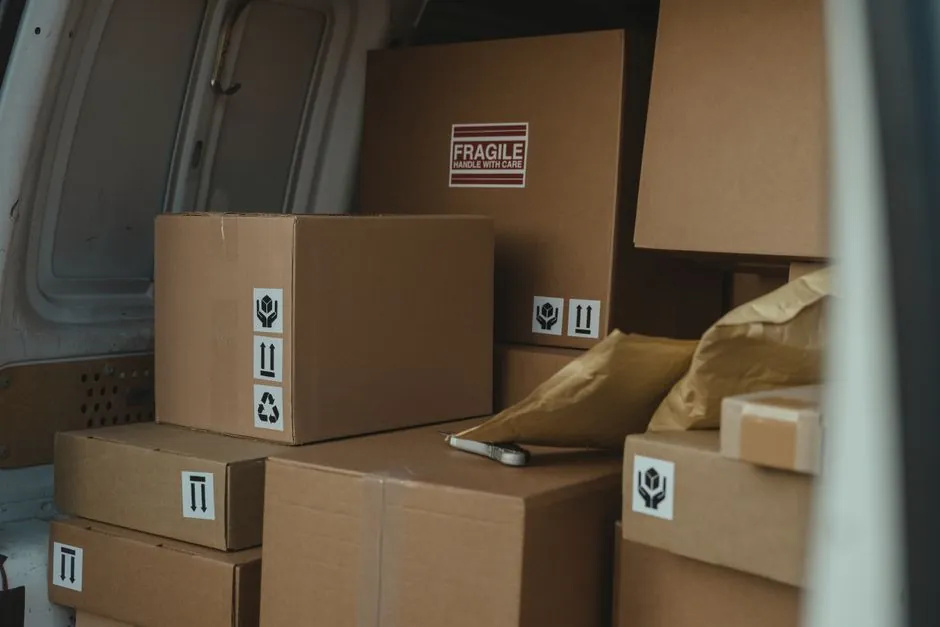
Air-cargo case packers are end-of-line cells that erect, load, and seal corrugated shippers before air waybill labeling, with sustained throughputs from 1 to 16 cartons/min on the side-load CP-S50 class and 1 to 8 cartons/min on top-load pick-and-place units such as the CP-T60 [S1][S2][S4].
Air-freight operations differ from general FMCG lines in three measurable ways: the case format skews larger (often 400-600 mm L for consolidated ULD-friendly shippers), dwell time on the packer is compressed because the next step is a flight cut-off, and utility drops on remote ramps are common, so air compressor capacity and 380V 3-phase availability become gating specs rather than background details [S2][S8]. A useful framing of the end-of-line case packer work cell and its configuration universe sits in the case packing machine reference page.
Air-Cargo Operating Envelope: Throughput, Case Size and Weight Bands
Air-cargo terminals that consolidate parcel flows need a packing capacity band of 8-16 cartons/min to keep pace with inbound sorter discharge and outbound ULD build-up, which the CP-S50 side load class covers at 1-16 cartons/min versus the CP-T60 top load class at 1-8 cartons/min [S2][S4]. The 1-16 vs 1-8 split is not a marketing range: it is a mechanical limit set by the side-push actuation cycle on the CP-S50 versus the multi-axis pick-and-place recovery stroke on the CP-T60 [S4][S8].
Case size gates for air cargo commonly fall in the 240-600 mm L band, since smaller shippers maximize cube on narrow-body lower-deck containers and larger shippers consolidate for wide-body main-deck positions. CP-S50 accepts 240-500 x 200-400 x 180-400 mm; CP-T60 accepts 300-600 x 200-400 x 150-400 mm, so the top-load unit is the only option for shippers above 500 mm L [S2][S4]. For a wider format, throughput and air-consumption comparison across configurations, the case packer spec boundaries for warehouse automation piece is a useful adjacent read.
Side Load versus Top Load: A Four-Criterion Decision
Air-cargo buyers should weigh four engineering criteria: case format, throughput, payload, and air supply. Side load (CP-S50) wins on throughput (1-16 cartons/min) and air economy (350 L/min at 0.5-0.8 MPa) but caps case length at 500 mm. Top load (CP-T60) accepts 600 mm cases and handles irregular, nested, or delicate consolidations through pick-and-place, at the cost of 450 L/min air consumption and a 1-8 cartons/min ceiling [S2][S4][S8].
Payload class matters for air cargo because dangerous goods and lithium battery consignments push shipper weights up. A six-axis bottle / hybrid class on Cybernetik's reference comparison handles up to 200 kg payload, while a SCARA pouch class caps at 6 kg, and the same vendor's hybrid configuration reaches up to 120 bottles/min on rigid formats [S6]. Air-cargo lines mixing mailers, polybagged textiles, and boxed dangerous goods normally sit closer to the SCARA pouch or hybrid envelope than to the 200 kg rigid-payload class.
Utility, Footprint and Air-Supply Gates on the Ramp
Both WIMACH classes require 380V 50/60 Hz 3-phase power, compressed air at 0.5-0.8 MPa, and a stable machine mass between 1500 and 1600 kg, with footprints of 4200 x 2300 x 1900 mm (CP-S50) and 4200 x 2600 x 2200 mm (CP-T60) [S2][S4][S8]. Power draw is 4.5 kW for the side load and 7.5 kW for the top load, so a single 16 A 3-phase circuit covers the smaller unit while the top load usually needs a 32 A feed depending on site power factor [S1][S4].
Air-supply planning is the most overlooked gate on remote air-cargo ramps: the CP-S50 draws 350 L/min and the CP-T60 draws 450 L/min, so a single CP-T60 line needs a compressor rated for at least 450 L/min continuous at 0.6 MPa, plus receiver tank volume to absorb peak demand during case erection strokes [S2][S4][S8]. For buyers comparing this against alternative end-of-line work cells, the case packing machine encyclopedia entry lays out the broader configuration map. Footprint and weight checks before quotation are detailed in the CE-certified automatic case packer specs write-up, which also flags conveyor-height interface risk for retrofit lines.
Material, Finish and Build Standards for Cargo-Hold Conditions
For ramp-side or partially sheltered installations, frame material of stainless steel or carbon steel is the standard option on both CP-S50 and CP-T60, and CE marking is the baseline cross-border compliance gate for European-export lanes [S1][S4][S8]. CE certification covers machinery safety per the EU Machinery Directive, which is the relevant compliance regime for packers exported to EU cargo hubs; IP rating for the control panel and conveyor interface should be specified separately for outdoor ramp use, since standard indoor IP54 may not cover direct weather exposure.
For shipper board quality, the Jiade selection guide frames the inputs the line designer must lock before case packer quotation: case style, board grade, dimension range, flap condition, tape specification, product dimensions, weight, orientation, count per case, layer pattern, and divider or insert requirements [S3]. Skipping any of these inputs is the most common reason an air-cargo case packer arrives on site unable to handle the actual mixed parcel stream.
Failure Modes and Limitations Buyers Hit in the Field

Three failure modes dominate air-cargo case packer retrofits. First, throughput mismatch: a CP-T60 specified at 8 cartons/min in front of a 14 cartons/min sorter discharge starves the line within one shift [S2][S4]. Second, air-starvation brown-outs on shared ramp compressors, where the packer and the ULD build-up station pull from the same receiver and starve each other during synchronized peak demand [S2][S8]. Third, case format drift: shippers outside the 240-600 mm L window, or board grades below the specified ECT, jam the magazine and stop the line, which is why a spec boundary review is mandatory before PO [S3][S7].
End-of-line case packer configurations overall, including top-load, side-load, wrap-around, and pick-and-place variants, cover roughly 90% of installed lines in food, beverage, pharma, and personal-care plants per industry write-ups [S7]. The Cybernetik side-by-side comparison reinforces this: SCARA pouch tops out at 40 pouches/min, six-axis bottle at 120 bottles/min, and the hybrid configuration scales with format rather than a single throughput number [S6].
Selection Workflow: From Carton Sample to FAT Sign-Off
A defensible air-cargo case packer selection runs in five steps. (1) Lock the case style, board grade, dimension range, and tape spec from a representative 7-day parcel sample. (2) Map upstream sorter discharge and outbound ULD build-up rate to the 1-8 or 1-16 cartons/min band. (3) Verify 380V 3-phase power, 0.5-0.8 MPa compressed air at 350-450 L/min, and a footprint envelope compatible with the existing conveyor height. (4) Match payload class to the heaviest expected shipper, with the 6 kg SCARA pouch ceiling and 200 kg six-axis rigid ceiling as the reference bookends [S6]. (5) Insist on a Factory Acceptance Test (FAT) using actual shipper samples, not standard test cartons, before release [S10].
Trackable signals for the next purchasing cycle: whether the air-cargo operator publishes actual parcel dimension distributions to the supplier (replacing the "typical carton" estimate), whether the compressor room audit is closed before PO, and whether the FAT protocol includes a sustained 4-hour run at the rated cartons/min figure rather than a 15-minute spot check [S10]. A useful adjacent perspective on this throughput and air-supply gating logic, applied to a different end-of-line problem, is the case packer advantages, disadvantages, and spec boundaries reference. Air-cargo case packer buyers who lock those five steps avoid the three most common field failure modes and protect the air-freight cut-off window that depends on them.
Spec-level background on the components involved: gland packing, and air pick.