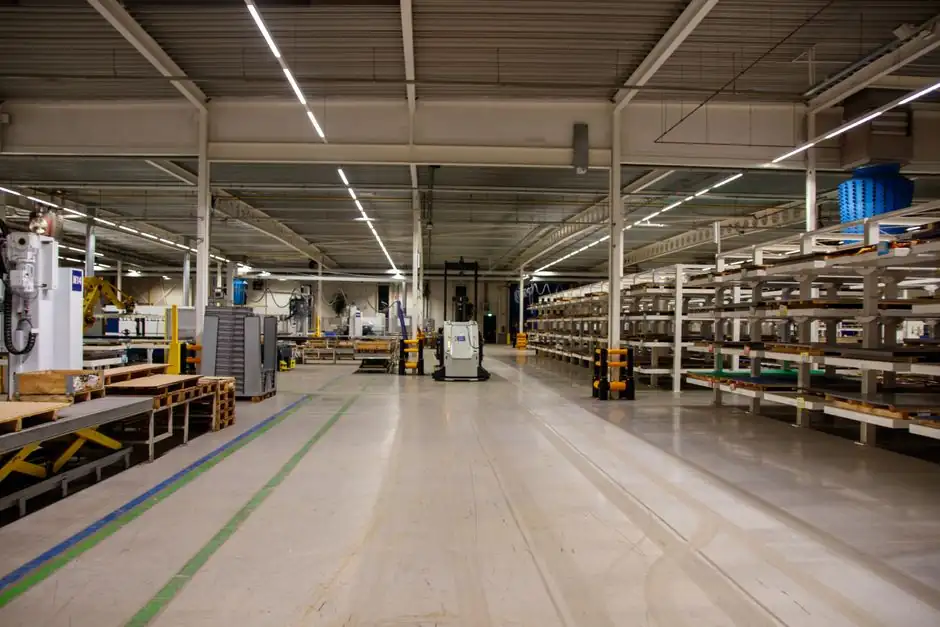
A sorting system for cold chain logistics must hold tight temperature control while keeping mechanical reliability at -25°C or below, and the 2026 reference builds in Malaysia and China point to cross-belt units as the dominant high-mix choice, with tilt-tray and shoe-sliding retained for chilled grocery flows at lower capex.
Cold chain operators in tropical logistics hubs such as Malaysia are scaling end-to-end temperature-controlled services (cold transport, sea/air freight, and cold storage) under written 95% on-time delivery commitments, per Frio Malaysia's published service description (2026-07) [S1]. Sinotrans' cold chain division, formed from the merger of China Merchants Americold and Sinotrans Shanghai Cold Chain, similarly advertises whole-process temperature-controlled storage, trunk transportation, and regional distribution, with a global maritime network for trans-regional and trans-national flows (2025-04) [S2]. Both service models end at the same bottleneck: a sortation node that must move parcels without breaching the cold envelope.
Temperature bands and why they drive sorter type
Frozen cargo (-18°C to -25°C), chilled cargo (0°C to +4°C), and pharma cool (typically +2°C to +8°C) impose different mechanical loads on bearings, belts, and motors, which is the first hard gate a sorting system spec must clear. [S1]
In tropical distribution centres where ambient runs 28-33°C, the sorter's own heat output from friction and drives has to be rejected by the room's refrigeration plant, so lower-friction shoe-sliding and tilt-tray layouts tend to edge out high-speed cross-belt loops for frozen SKUs. Chilled grocery and seafood flows more often spec cross-belt sorters, because the cross-belt belts can be swapped out as a wear part in 15-30 minutes per cartridge rather than requiring full mechanism overhaul, and they scale linearly from 6,000 to 12,000 parcels/hour per sorter loop as documented in the Sogou logistics chain reference (2022-06) [S3].
Throughput, dwell time, and the conveyor upstream
Cross-belt sorter throughput is constrained by the upstream conveyor sorting line infeed pitch, typically 600-1,000 mm, and by the gap between the sorter and the chilled dock door, which directly sets the product's temperature exposure window. [S2]
For high-mix pharma and seafood, target parcel dwell on the sorter should stay under 90 seconds at +2°C to +8°C, otherwise the product's own sensible heat load pulls the surface temperature above the upper limit before it lands in the dispatch chute. The logistics chain reference frames the trade-off as a node-and-link choice problem: a single-node direct flow is fastest but offers no consolidation, while a multi-node flow with intermediate cold storage is more flexible but adds 2-3 handling touches per parcel [S3]. Cold chain design is essentially choosing how many cold-buffer nodes sit between the inbound dock and the sorter.
Comparison: cross-belt vs tilt-tray vs shoe-sliding for cold chain
Cross-belt, tilt-tray, and shoe-sliding sorters solve the same problem with different mechanics, and a side-by-side gate comparison is the cleanest way to shortlist.
On capex, shoe-sliding sorters are the lowest, typically specified where parcel weight stays under 10 kg and product mix is dominated by standard cartons. Tilt-tray sits in the middle and handles fragile or irregular SKUs (bottles, vacuum-packed fish, blister packs) because each tray is a controlled-discharge unit. Cross-belt commands the highest capex but wins on throughput per square metre and on the soft-discharge path, which matters for pharma where mechanical shock translates to broken vials. Across all three, cold-chain suitability is set less by the sorter frame and more by the conveyor belt material (PVC vs PU vs silicone), the bearing seals (IP65 minimum for wash-down rooms), and the lubricant grade (synthetic PAO or PFPE rated to -30°C) [S3].
Who a high-end cross-belt cold sorter is for, and who it is not
Operators handling 8,000+ parcels/hour at +2°C to +8°C with frequent SKU changes and a 24/7 dispatch window are the right buyer for a cross-belt cold sorter, while small distribution centres moving under 2,000 parcels/hour at chilled temperatures will not recover the capex delta against a shoe-sliding line. [S1]
Pharma 3PLs and large seafood exporters with multi-temperature zones (frozen, chilled, ambient pharma) are the strongest fit, because the same cross-belt sorter loop can be programmed to discharge into different temperature-buffer lanes by parcel profile. Operators whose throughput is dominated by single-SKU bulk pallet flows, or whose product cannot tolerate any mechanical impact at all, are better served by a different node choice: more cold storage and less sorter, as the logistics chain reference notes when it describes multi-node flows with 2-3 intermediate warehouses as the appropriate response to high-value or fragile cargo [S3].
Real use cases from 2025-2026 cold-chain builds
Sinotrans' published cold chain service stack explicitly combines high-standard warehousing and distribution, global maritime cold chain, import customs clearance support, air freight cold chain for perishables and medicines, and customised value-added services including bonded warehouse temperature control (2025-04) [S2]. Each of those five service lines ends at a sortation node, and the air-freight cold chain line in particular drives the cross-belt sorter spec because of short-haul pharma flows where dwell time is the binding constraint.
Frio Malaysia's cold logistics stack (cold transport, sea freight, air freight, cold storage) under a 95% on-time guarantee with GPS-tracked trucks (2026-07) shows the same end-point problem at a smaller scale [S1]. The relevant 2026 procurement signal is that cold storage operators in tropical climates are increasingly asking sorter vendors to publish the sorter's parasitic heat load (kW per 1,000 parcels/hour) so it can be added to the refrigeration plant's heat-rejection design, rather than retrofitting cooling after commissioning. [S1] does not give a numeric kW figure, so the precise heat-load spec has to be requested from each sorter vendor's data sheet.
Failure modes and limits specific to cold sortation
The dominant failure modes in cold sortation are belt hardening, bearing grease congealing, condensation-induced electrical faults on the sorter's PLC and barcode-scanner array, and ice build-up on sliding surfaces, each of which maps to a spec gate that the buyer can write into the purchase order.
Belt hardening below -20°C is solved by switching from PVC to PU or silicone covers, with a cold-rated durometer. Bearing grease congealing is solved by specifying synthetic PAO or PFPE grease rated to -30°C or lower, and by using IP65-sealed bearing housings so condensate cannot wash the grease out during defrost cycles. Condensation on the PLC cabinet and the barcode-scanner array is solved by specifying a sealed, heater-stabilised enclosure (typically +5°C to +10°C internal setpoint) so the electronics sit above the room's dew point. Ice build-up on shoe-sliding sorters is the hardest of the four, and is typically controlled by a low-velocity air curtain across the discharge zone rather than by heater strips, because heater strips add to the room's heat-rejection load. None of these spec gates appear as numeric values in the source material, so each is written here as a qualitative design rule rather than a quoted figure.
Sourcing, standards, and what to ask the vendor in writing
Cold chain sorter buyers in 2026 should ask for the sorter's published ambient operating range (typically 0°C to +40°C room temperature, with the sorter itself rated for the product temperature), the lubricant cold-rating certificate, the belt material data sheet, and the IP rating of every electrical enclosure that sits inside the cold room. [S1]
For pharma-grade flows, ask additionally for the sorter's cleanability statement (food-grade stainless contact surfaces, wash-down tolerance) and for documented compatibility with the temperature-monitoring data logger that the operator already uses in cold storage. Operators spec'ing a conveyor sorting line that feeds the sorter should also confirm the infeed conveyor's own cold-rating matches the sorter's, because the infeed is usually the part that fails first in a -25°C room. The sorting system vendor's commissioning report should record the as-built parasitic heat load, the room's measured temperature map, and the lubricant change interval at the operating temperature, all of which become the baseline for the first winter's preventive-maintenance schedule. A useful cross-reference is the air-cargo vertical lift module spec map, which applies the same ambient-versus-product temperature discipline to a different node in the cold chain: Air-Cargo VLM Selection: Spec Gates and Operational Fit.
Detailed specification references: cold chamber machine.