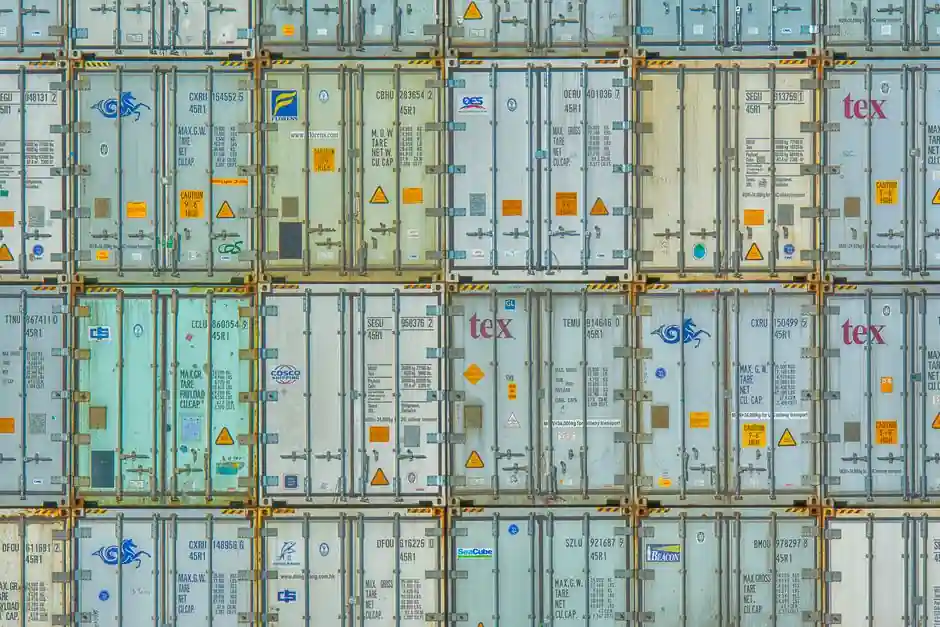
For -18°C to -25°C cold rooms, a storage cage must be hot-dip galvanized after fabrication (ISO 1461), use 304 or 316 stainless shelf contact surfaces, and carry at least 1,000 kg UDL per shelf to match EUR/CHEUR pallet footprints of 1,200x800 mm or 1,200x1,000 mm, per the OEM design guidance reflected in recent racking procurement literature [S4].
Cold-chain logistics is now a $862 billion global market by a widely cited 2032 projection, and U.S. cold storage build-out alone is expected to require up to 100 million additional square feet, with frozen food sales surpassing $72 billion [S4][S5]. The cages, racks, and storage cage families feeding those facilities are no longer commodity mesh boxes; they are specified equipment.
Material and Finish: What Survives -25°C Condensate
Cold rooms are wet rooms: every defrost cycle condenses water on steel, so cold-chain storage cages are typically specified as welded wire mesh in mild steel with a hot-dip galvanized after-weld (ISO 1461) zinc coating, or in AISI 304 / AISI 316 stainless for direct food contact zones, per logistics packaging and racking procurement guidance for cold storage [S4][S8]. Painted or pre-galvanized-only mesh is widely rejected for -18°C service because weld zones rust first and contaminate palletized loads.
For blast-freeze or -25°C long-hold rooms, floor-grade 304 stainless with 1.5 to 2.0 mm wire and 50x50 mm mesh apertures is a common spec, and trolley-cage caster rigs typically use zinc-plated or nylon wheels rated to -30°C because standard polyurethane hardens and cracks below roughly -20°C [S2][S8]. All-metal construction is also required where rack sprinklers or in-rack ESFR heads can fail; plastic bins or composite decks are excluded from most cold-chain audits [S5].
Load, Footprint, and Stacking Geometry
Standard cold-chain cage footprints cluster around 1,200x800 mm (EUR-half), 1,200x1,000 mm (EUR-full), and 800x600 mm for order-picking, with 1,000 to 1,500 kg UDL as the procurement baseline for pallet-fed cages and 200 to 400 kg for pick-face bins, per Steel King and SSI Schaefer cold-storage racking references [S4][S6]. Stack height is normally capped at 4 high static / 2 high dynamic to keep centre-of-gravity lift-truck limits under 1.6 m to the top load, which lines up with the typical reach envelope of electric pallet jacks used inside cold rooms.
Mobile or pallet-shuttle systems raise density sharply: SSI Schaefer reports up to 90% additional storage capacity and up to 45% floor-space savings versus fixed selective racking, at the cost of higher upfront capital and the need for floor-rail flatness of typically +/- 2 mm per 10 m run [S6]. For mid-volume operators, drive-in and push-back rack, paired with storage rack cages, still dominates because it cuts aisle count without the rail infrastructure, and operators must accept LIFO-versus-FIFO trade-offs based on SKU shelf life [S4].
Comparison: Fixed Selective vs. Drive-In vs. Mobile vs. Pallet Shuttle
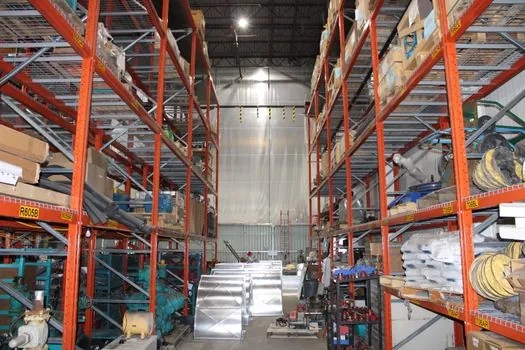
The four dominant cold-chain storage configurations compare against four decision criteria drawn from current OEM and integrator guidance: aisle efficiency, SKU selectivity, capital cost, and fit for freezable or short-shelf-life goods. [S1]
Mobile racking on floor rails compacts aisles to a single working aisle and unlocks 90% capacity gains versus fixed layouts, but only suits stable SKUs because entire rack blocks must shift to expose a target load [S6]. Semi-automated pallet shuttles (lithium-ion carts running inside deep lanes) sit between mobile and drive-in: shuttle depth is decoupled from lift-truck reach, so lanes can run 20 to 40 m deep while the lift truck only travels from dock to lane entry, dramatically cutting driver time inside cold rooms and improving both safety and energy efficiency [S4].
Temperature Tier Mapping and Product Fit
Cage and rack specification must follow the temperature tier of the room, not the corridor: chilled +2 to +8°C, frozen -18 to -30°C, deep-frozen -60°C and below, and cryogenic -150°C and below are the four tiers most cold-chain integrators design against, with vaccines, insulin, and monoclonal antibodies in the chilled band, plasma and drug intermediates in the frozen band, mRNA APIs in the deep-frozen band, and CAR-T and stem cells in the cryogenic band [S3]. Dairy curdles outside 36 to 46°F (2.2 to 7.8°C), strawberries spoil above 45°F (7.2°C), and frozen meats suffer thaw/refreeze damage above 0°F (-18°C), so tier selection for the cold chamber machine room drives which cage finish you can spec.
For -18°C and below, hot-dip galvanized (ISO 1461) cages with 304 stainless contact shelves are the typical baseline; for -60°C and below, 316 stainless becomes more common because chloride-bearing defrost water and salt tracked in from loading docks accelerate pitting on 304 [S2][S3]. For cryogenic -150°C storage, cages are usually replaced by purpose-built stainless cassettes inside vapor-phase liquid nitrogen freezers, and standard wire mesh cages are not used at all.
Operating Cost, Energy, and Compliance Constraints
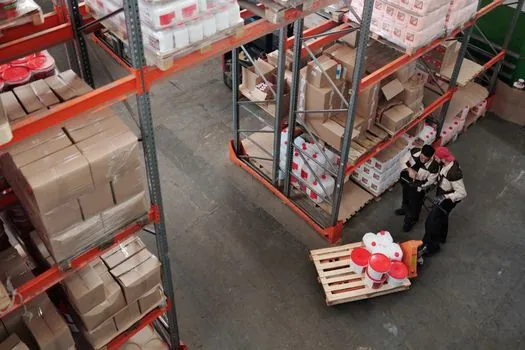
Building and running cold storage costs roughly three times the per-square-foot capex of a dry warehouse, and the cold-chain supply chain runs up to five times the cost of ambient logistics, with energy as the dominant recurring line item, per industry integration references [S4][S5]. U.S. cold-chain compliance is anchored by the Food Safety Modernization Act (FSMA), which mandates maintained temperatures during transport, monitoring devices, data loggers, and verifiable recordkeeping, while HACCP remains the operational backbone for hazard analysis across most food operators [S5].
That cost pressure is why cage and rack selection ties directly to airflow and defrost strategy: every dense rack or mobile base blocks floor channels, so freezer OEMs increasingly specify raised cage feet of 100 to 150 mm and uniform mesh with 50% open area to keep horizontal airflow from the cold milling machine evaporator coils. In practice, the difference between a poorly chosen solid-bottom tote and a mesh cold-chain cage can be several percent of compressor runtime per year, which at 24/7 operation compounds quickly into the operational budget.
Selection Workflow: From SKU Profile to Cage Spec
The reliable selection sequence in 2025 to 2026 cold-chain procurement starts with three numbers: SKU velocity (units per day), dwell time in the cold room, and temperature tier. High-velocity SKUs in a chilled +2 to +8°C band are best served by fixed selective rack with pick-face cages so every order stays accessible, while low-velocity bulk frozen loads are the natural fit for drive-in or pallet-shuttle systems where lane depth replaces aisle width [S1][S4].
Once the configuration is chosen, cages are specified on five concrete data points: footprint (typically EUR 1,200x800 or 1,200x1,000 mm), UDL (1,000 to 1,500 kg for pallets, 200 to 400 kg for pick), finish (ISO 1461 HDG or 304/316 stainless), mesh aperture (commonly 50x50 mm for food, 25x25 mm for small pharma vials), and caster or base style (nylon, zinc-plated, or static feet rated to the room's minimum temperature). Validate the storage handling workflow against the FSMA recordkeeping and HACCP monitoring requirements before signing the PO, and lock the spec against the loading-dock roller and lift-truck reach envelope to avoid retrofit cost later [S4][S5].
Trackable signals for the next planning cycle: the United States is expected to need up to 100 million additional square feet of cold storage in coming years, and frozen food sales already surpass $72 billion, so cage and rack integrators capable of HDG-plus-stainless hybrid builds with documented FSMA / HACCP fit are the suppliers most likely to clear 2026 to 2027 qualification audits [S4]. For sites adding high-density storage, monitor mobile-racking uptime data and shuttle-cart lithium-ion cycle counts as leading indicators of when the next capacity expansion will pay back.
Background reading: Snow-Removal MEWP Specs: Platform Height, Capacity, and Cold-Weather Picks.