
Thermal fatigue at the injection sleeve and plunger tip accounts for more than 40% of cold chamber die casting machine failures, a figure attributed by industry analysis to repeated cycling between molten aluminum charges (typically 600-700 degrees C) and the cold chamber wall [S4].
The second major failure cluster is gas porosity and oxide inclusion during ladling and injection, followed by die-surface defects (heat checks, soldering) and hydraulic injection drift [S1][S2][S4].
Thermal Fatigue in the Injection Sleeve and Plunger Tip
Repeated exposure to molten metal at 600-700 degrees C followed by water or oil cooling cycles drives alternating expansion and contraction at stress-raiser geometries inside the cold chamber machine, where micro-cracks initiate and propagate until the sleeve or plunger tip fractures [S4].
Three engineering controls dominate prevention. First, smooth material transitions at weld or section-change points reduce stress concentration. Second, conformal cooling channels designed to limit local temperature swings reduce the cyclic strain amplitude. Third, chromium nitride (CrN) coatings applied to the plunger tip and sleeve bore protect against thermal-shock micro-cracking [S4]. For a related machine-level walkthrough of what to inspect on these components, see this 8-system field checklist.
Gas Porosity and Oxide Inclusion During Metal Transfer
Gas porosity in cold chamber work is driven by turbulence when molten aluminum changes direction inside the shot sleeve, and by ladling practices that draw oxide films into the melt; oxide entrapment in magnesium alloys is roughly 3x faster than in aluminum because of the higher oxygen affinity [S4].
Vacuum-assisted melting or protective-atmosphere melting, combined with clean dry ingots, addresses the hydrogen-solubility root cause [S2]. On the process side, optimized gate and runner design reduces metal-front velocity peaks that fold air into the casting [S1]. The Aluminum Association has linked over 60% of inclusion defects in structural castings to poor ladling technique, especially vortex formation and splashing during transfer, which is why ladle fill height, pour rate, and skimming discipline are spec-line items in mature foundry quality plans [S4]. Magnesium die casting machine cells in particular run tighter melt-handling windows than aluminum cells for the same reason.
Die-Surface Defects: Heat Checks and Soldering
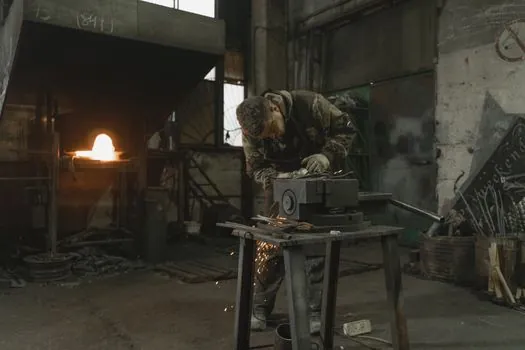
Heat checks are surface cracks on the die face caused by accumulated thermal cycling, with inadequate cooling channel placement, excessive die-lubricant overspray, and thick die sections as the dominant accelerators [S3].
Soldering is the formation of a thin alloy layer welded to the die surface, driven by local hot spots, uneven cooling, and improper metal flow; it is mitigated by rebalanced cooling circuit design, optimized part geometry, and active flow management around the gate [S3]. For aluminum die casting machine work, the typical mitigation ladder runs: conformal cooling redesign, nitrided or CrN-coated die steel (H11/H13 class), then process-window tightening of die-lubricant quantity and spray pattern. Both modes feed into each other: a heat-checked surface roughens, increases die lubricant retention, and accelerates soldering cycles.
Hydraulic Injection Drift and Cold-Shut / Misrun Formation
Cold shuts appear as seams where two metal fronts fail to fuse, driven by low injection temperature, low metal-flow velocity, and turbulence at the gate, and are prevented by raising sleeve and metal temperature, increasing phase-1 velocity, and reworking the gate for laminar entry [S1][S2].
Misrun is the failure of the metal to fully fill the cavity and shares the same root-cause family plus a slow phase-2 intensification pressure. A spec-anchored comparison of the main defect modes against prevention levers looks like this: gas porosity responds to vacuum melting plus venting; shrinkage porosity responds to gated risering plus controlled cooling; cold shuts respond to phase-1 velocity plus metal temperature; heat checks respond to CrN coating plus conformal cooling; soldering responds to gate redesign plus surface engineering; and injection drift responds to servo-valve plus transducer calibration [S1][S2][S3][S4]. For a broader machine-side view, the gravity die casting machine and vacuum die casting machine variants solve some of these defects at the cell level by reducing entrapment sources, but they do not eliminate the thermal-fatigue root cause that still lives in the cold chamber itself.
Predictive Monitoring and Failure-Mode Statistics
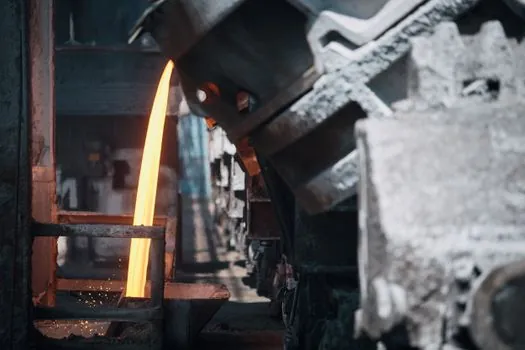
The economic weight of these four failure clusters matters: if thermal fatigue alone drives 40% of cell downtime, porosity and inclusions drive another 25-30%, and die-surface defects (heat checks plus soldering) drive roughly 20%, the remaining share is split between hydraulic injection drift and peripheral faults such as flash from poor clamp tonnage [S4][S7]. A field checklist grouping 26 common machine abnormalities into decision trees (symptom, check, action) is the standard starting point for floor-level troubleshooting, and the published taxonomies consistently map back to the same five root-cause families described above [S7].
Selection and Specification Levers by Failure Mode
For buyers specifying a new cold chamber cell or rebuilding an existing one, the spec sheet should hard-code the failure-mode mitigations rather than leave them as afterthoughts: sleeve and plunger tip in CrN-coated H13-class tool steel, conformal cooling circuits with documented flow balance, vacuum-assist or sealed-shot sleeve for high-integrity structural parts, and integrated thermocouple/IR sensor harnesses wired to a trend historian with a 15% deviation alert [S4].
Process-window specifications should likewise carry numbers rather than adjectives: phase-1 velocity envelope (typically 1.5-3.0 m/s for aluminum depending on wall thickness), intensification pressure, die-lubricant quantity per cycle in milliliters, and melt-holding temperature band tied to alloy (e.g., AlSi9Cu3 around 680 plus or minus 10 degrees C, AZ91 magnesium at lower setpoints with tighter tolerance) [S1][S2]. Magnesium cells in particular benefit from magnesium die casting machine configurations with protective-atmosphere melting and shot sleeves rated for higher oxygen-affinity alloys, because standard aluminum-side melt handling will not pass the 3x reaction-rate penalty that drives inclusion rejects [S4].
The two trackable signals for the next six months are the rollout of closed-loop thermal-control retrofits on existing cold chamber cells and the publication of NADCA-style updated cycle-life benchmarks for CrN-coated sleeves under high-Mg aluminum alloys; both will materially shift the cost-of-quality math for structural casting programs.