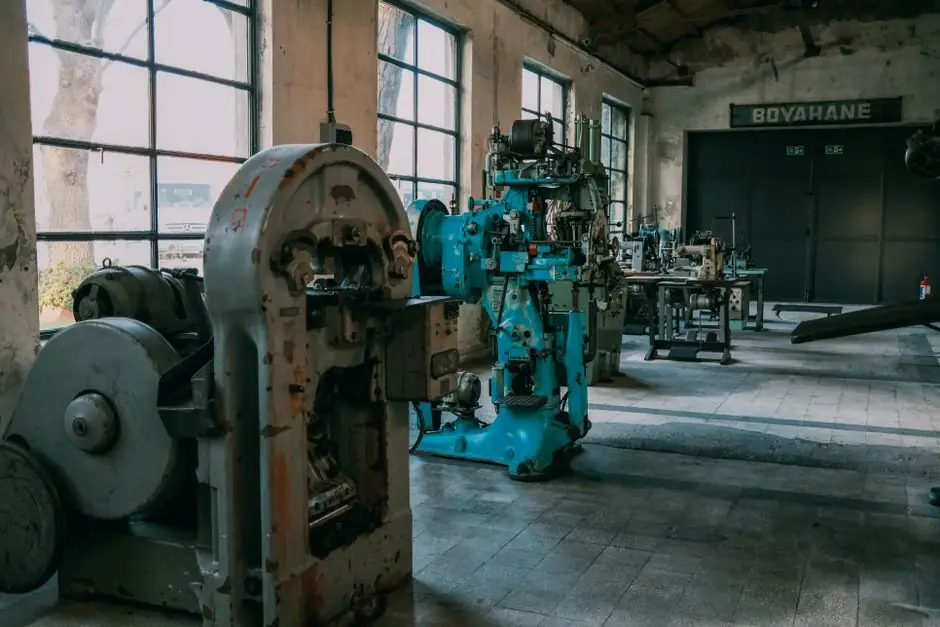
A well-maintained horizontal cold chamber die casting machine in an aluminum foundry routinely delivers 15-25 years of service life, with the shot sleeve, plunger tip, tie bars, and hydraulic pack as the wear items that drive mid-life overhaul decisions [S2][S3].
This guide walks through real service-life numbers for the cold chamber die casting machine class, the components that fail first, the overhaul tiers that buy back capacity, and the decision points where a general overhaul beats a new capital purchase [S2]. It is written for process engineers, maintenance leads, and procurement teams who need trigger-based criteria, not calendar-based guesses.
Service Life Benchmarks: How Long These Machines Actually Run
Cold chamber die casting machines built for aluminum, magnesium, and copper alloys typically run 15-25 years in two- or three-shift production when overhauls are scheduled on wear data rather than calendar age [S2]. A standard horizontal cold chamber cell in the 180-900 ton clamping range, such as the HII series platform, ships with high-tensile alloy steel guide columns specifically to extend structural life under repeated injection loading [S4].
Cycle-life data published for the die tooling (not the machine itself) shows H13 and 3Cr2W8V alloy steel molds routinely reach 100,000-500,000 cycles when preheated to 250-300 degrees C and maintained on a regular schedule; copper-alloy molds drop to a few hundred up to 10,000 cycles because of the higher melt temperature and impact loading on the cavity surface [S3]. That tooling-life ratio is the right mental model for the machine: the wear parts cycle faster than the frame, and the frame is what justifies a 20-year horizon.
Which Components Fail First: The Shot End, Tie Bars, and Hydraulics
Thermal fatigue is the dominant failure mechanism on the shot end. Molten aluminum entering the shot sleeve at roughly 600-700 degrees C creates repeated thermal cycling, and studies cited by industry sources attribute more than 40% of cold chamber equipment failures to this mechanism, with injection sleeves and plunger tips as the primary victims [S5]. Mitigation rests on three levers: smooth material transitions at stress points, designed cooling channels to limit thermal swing, and protective coatings such as chromium nitride (CrN) on vulnerable surfaces [S5].
Tie bars and the closing unit fail on a different clock. Stretch, fatigue, and bending accumulate with each shot, and once clamping force repeatability drifts, flash, dimensional drift, and parting-line defects show up on the castings. The closing unit overhaul is one of four standard reconditioning tiers offered for used and aging machines from Frech, Buhler, Idra, Italpresse, Colosio, Weingarten, and Agrati, alongside functional control, partial overhaul, and general overhaul [S2]. For an aluminum die casting machine cell running 24/7, the closing unit typically demands attention before the casting unit does.
Overhaul vs. New Purchase: The Four-Tier Decision
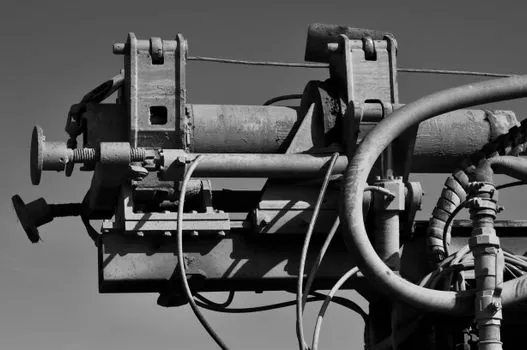
Reconditioning suppliers structure the decision into four tiers, each with a defined scope and budget profile [S2]:
1. Functional control: basic machine-function testing, condition assessment, and a written evaluation of required measures. Cheapest, fastest, and the right starting point when symptoms are vague.<br>2. Closing unit overhaul: targeted work on the closing unit and related assemblies to recover precision and availability. The right call when flash, dimensional drift, or tie-bar stretch appear but the rest of the machine is sound.<br>3. Partial overhaul: targeted repair of individual systems such as hydraulics, electrics, control system, valves, spindles, or peripherals. Used when one subsystem is clearly the bottleneck.<br>4. General overhaul: comprehensive revision including inspection, repair, modernization, documentation, and optional recommissioning with operator training. The tier that competes head-to-head with a new machine purchase.
For high-pressure cells in the 180-900 ton range, general overhaul commonly delivers 60-80% of new-machine performance at 30-50% of new-machine cost, with the closing unit, hydraulics, and control system as the three subsystems where modernization pays back fastest [S2][S7].
Predictive Maintenance: What Actually Extends the Window
Predictive maintenance on cold chamber machines leans on real-time thermal monitoring through embedded thermocouples and infrared sensors, with alert thresholds set when temperatures stay more than 15% off baseline [S5].
The technique is straightforward: build thermal baselines for every critical component, set alert levels, and correlate temperature patterns against known failure records. For a die casting machine running thin-wall structural parts, the same instrumentation also helps catch ladling-side porosity issues, which account for more than 60% of inclusion defects in structural castings when vortexing and splashing are not controlled during transfer from furnace to shot sleeve [S5].
Decision Criteria: When to Overhaul, When to Replace
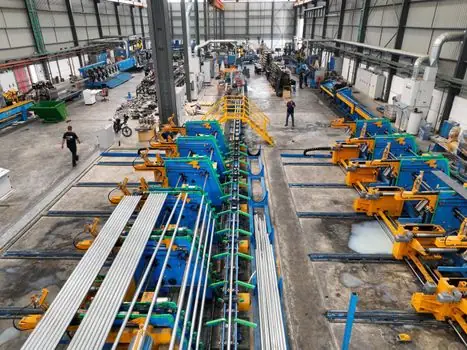
Three criteria consistently separate a justified overhaul from a justified replacement:
1. Frame and tie-bar condition. If the cast iron or steel frame is intact, tie bars are within stretch spec, and alignment is recoverable, the machine frame has another decade left and overhaul is the right call. If the frame is cracked or alignment is unrecoverable, replacement wins.<br>2. Control system generation. Machines still on relay logic or early PLCs (pre-2000) typically cannot meet modern HMI, safety, and cycle-time benchmarks, and a full control retrofit may exceed the cost of a new mid-tier machine. Machines already on modern PLCs with HMI, advanced hydraulics, and global-standard repeatability benefit more from partial overhaul than from replacement [S7].<br>3. Spare parts and OEM support. Older Frech, Buhler, and Idra units lose OEM support as the platforms age, and the used-machinery reconditioning market fills that gap with revision expertise on these specific brands [S2].
A vacuum die casting machine configuration, or a magnesium die casting machine cell, falls under the same decision tree but with stricter containment and gas-management requirements because magnesium reacts with oxygen about three times faster than aluminum under standard conditions, which raises the stakes on ladling hygiene and shot-sleeve condition [S5].
Replacement Signals: Three Trackable Triggers
Track these three signals through your maintenance system, and replacement decisions become data-driven rather than emotional: [S5]
1. Unplanned downtime trend. If monthly unplanned downtime hours trend above 8-10% of scheduled run time for two consecutive quarters, the overhaul-to-new cost curve starts to favor replacement [S2][S5].<br>2. Scrap and rework rate on critical parts. Porosity, cold shuts, and flash that trend above baseline after a partial overhaul indicate the closing unit, hydraulics, or shot end have crossed the recovery threshold [S5].<br>3. Energy per shot. A drift above 15% from the as-built baseline on kWh per cycle is a strong indicator of hydraulic internal leakage or accumulator nitrogen loss, both of which a general overhaul can address but only if caught before secondary damage occurs [S2][S7].
Foundries running 180-900 ton horizontal cold chamber cells should plan a partial overhaul at year 8-10, a closing unit overhaul at year 12-15, and a general overhaul at year 18-22, with the exact schedule set by cycle count and the three signals above rather than the calendar.