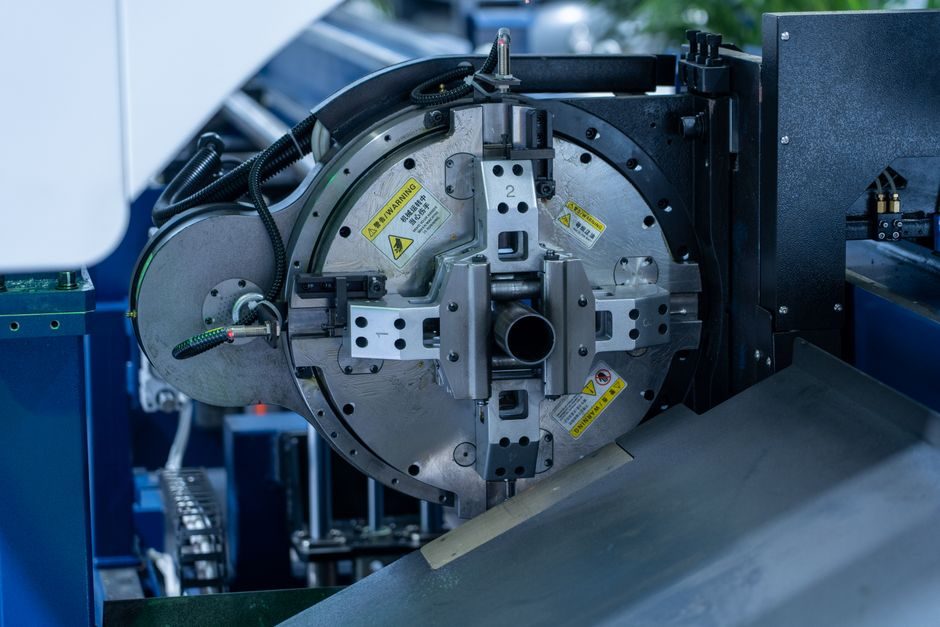
Cold chamber die casting machines rated 800-900 ton clamping force with 8-12 kg aluminum shot capacity are the practical baseline for structural rail castings such as housings, brackets, and gearbox bodies, with suppliers concentrated in Zhejiang and Ningbo districts of China [S1][S2][S3].
Rail-grade castings typically specify AlSi10Mg, AlSi7Mg, or AlSi9Cu3 aluminum alloys poured at 680-720 °C into a cold chamber shot sleeve, and intensified at 60-110 MPa to meet the radiographic and dimensional repeatability required for EN 1706 and equivalent rail OEM standards.
Why Cold Chamber, Not Hot Chamber, for Rail
Cold chamber machines are mandatory once the liquid alloy contains a high melting-point fraction or a high iron content that would attack a gooseneck in a hot chamber setup; aluminum alloys with >1% Fe or magnesium-bearing melts fall into this rule [S1]. The bath-to-sleeve transfer happens in an open ladle, so the shot sleeve and plunger see only one thermal cycle per shot and survive the 680-720 °C melt with the standard H13 tool-steel sleeve rated to roughly 700 °C surface.
Hot chamber machines, by contrast, integrate the melt pot with the gooseneck and pumping cylinder — a layout that is standard for zinc and low-melting magnesium alloys but mechanically incompatible with the higher-pouring-temperature rail alloys used in structural housings [S4]. A process engineer specifying a cold chamber machine for a rail gearbox housing or traction-motor end cover is selecting the layout that matches the alloy's melt temperature, not just the tonnage.
Clamping Force and Projected Area: The First Cut
A common starting rule is 80-100 kN of clamping force per square decimeter of projected casting area at the parting line, then doubled to a 5-8x safety factor to absorb the peak intensification spike of 60-110 MPa inside the cavity. A rail gearbox housing with a 35-45 dm² projected footprint therefore lands squarely in the 800-900 ton range, and a 60-70 dm² bogie bracket frame pushes the spec toward the 1200-1600 ton class.
Tonnage is the headline number on every Alibaba listing of 1246 die casting machine suppliers, but the engineer should also confirm the tie-bar spacing, die-height stroke envelope, and platen dimensions in millimeters before binding the machine to a specific rail part [S1]. Under-spec'd tie-bar clearance or a too-short die-height stroke has scrapped more new tooling programs than under-spec'd tonnage.
Shot System and Intensification Pressure
The shot system for a rail cold chamber is sized so the shot weight — typically 50-70% of the cold-chamber sleeve volume — covers the part weight plus biscuit plus overflow. For 8-12 kg aluminum castings, a 14-18 kg nominal shot capacity sleeve paired with a 0.5-0.7 m/s slow-shot and 3-5 m/s fast-shot profile keeps entrained-air porosity below the 0.5-1.0% threshold most rail OEMs accept in non-safety castings. [S3]
Intensification pressure, the pressure the accumulator maintains on the metal after cavity fill, is the second key parameter and is typically 60-110 MPa for rail structural parts; lower values give fill-related misruns on thin-wall ribs (commonly 3-5 mm in rail housings), higher values raise die flash and accelerate die wear. Vacuum-assisted variants of the same machine class drop cavity air to roughly 50-200 mbar absolute before injection and are the right call when the part carries leak-tight pneumatic or hydraulic passages, as many rail housings do — see the vacuum die casting machine reference for the layout.
Material and Process Windows for Rail Aluminum
AlSi10Mg(Fe) and AlSi7Mg0.3 dominate rail structural castings because they combine 7-9% silicon for fluidity with 0.3-0.5% magnesium for the Mg2Si age-hardening phase that delivers 240-310 MPa ultimate tensile strength in the T6 condition. AlSi9Cu3 appears in applications that need higher as-cast strength (up to ~240 MPa UTS) and accepts the 1-2% Cu penalty on corrosion performance.
Melt pouring at 680-720 °C, die-cavity surface temperatures held at 180-250 °C through oil-heated or electric-resistance bungs, and a cycle time of 90-180 seconds for an 8-12 kg housing are the process numbers most rail foundries converge on. A cross-spec on magnesium-bearing rail brackets, where melt temperature falls to 640-680 °C, is when an engineer should also revisit the magnesium die casting machine class for comparison because of the more aggressive steel-attack kinetics on the shot sleeve and plunger tip.
Comparison: Cold Chamber vs Vacuum Cold Chamber vs Squeeze for Rail
Three options compete for rail castings: standard cold chamber, vacuum cold chamber, and squeeze/vertical-squeeze casting. Against four decision criteria the comparison reads as follows. [S3]
On mechanical properties, standard cold chamber lands at 220-280 MPa UTS T6, vacuum cold chamber reaches 260-320 MPa UTS because porosity drops to under 0.3% volume, and squeeze casting delivers 300-380 MPa UTS but in near-net-shape gravity-fed configuration rather than high-pressure die casting. On cycle time, cold chamber runs 90-180 s per shot, vacuum cold chamber 110-200 s with the additional evacuation step, and squeeze casting 60-120 s but with thicker sections and lower design freedom. On tooling cost, cold chamber dies run $50,000-150,000, vacuum adds 15-25% for sealed die and evacuation ports, and squeeze dies are simpler but require higher-tonnage presses in the 1000-2500 ton band. On weldability and repair, standard cold chamber welds cleanly, vacuum is the most weld-friendly because of low porosity, and squeeze-cast parts are routinely used as-welded with no post-casting impregnation.
The standard aluminum die casting machine class therefore wins on cost and flexibility for non-safety rail housings, vacuum cold chamber is specified for any part that must pass a leak test at 2-5 bar, and squeeze is reserved for safety-class bogie structural nodes where fatigue life outweighs throughput.
Sourcing, Standards, and Supplier Concentration
The current supplier landscape for cold chamber rail work concentrates in two Chinese clusters: Ningbo (Zhejiang) with manufacturers such as Ningbo Sijin Machinery Co., Ltd. registered in 2014 and exporting die casting plus cold forging and cold heading machines, and Taizhou (Luqiao district, Zhejiang) with Taizhou Juda Die Casting Machine Co., Ltd. registered in 2009 and listing cold chamber die casting machines as a main product [S2][S3]. A 3C-electronics-focused case study from Lanson (Lanson-imm) illustrates how the same die-casting cold chamber platform scales between consumer and rail-adjacent industrial work, including networked die-temperature and shot-profile monitoring [S5].
Cross-reference the selection against the 2026 spec map for cold chamber die casting for aerospace where the alloy and process windows overlap heavily with rail, and against the aluminum alloy selection for rail industry reference when binding the alloy code to the machine. For pump and valve production in similar tonnage bands, the cold chamber machine selection for pump and valve production reference carries reusable tonnage-vs-projected-area logic.
Engineers specifying machines for European rail programs should require the supplier to demonstrate conformance to EN 1706 (aluminum alloy chemical composition and mechanical properties) and EN 13261 (railway axles and wheels — relevant for cast hubs), plus ISO 9001 quality-system coverage; a small set of suppliers additionally offers IRIS-rev-03 certification, which is the rail-industry-specific quality system built on ISO 9001. Final pre-purchase checks: confirm platen dimensions and tie-bar clearance in mm against the die layout, verify the hydraulic accumulator pre-charge pressure, and request a 10-shot sample report on a representative rail housing before releasing the tooling PO.