For aluminum, magnesium, and high-zinc alloy castings in the 20 g–34 kg range, cold chamber die casting is the workhorse process feeding pump housings, valve bodies, and impellers into volume production [S2].
The machine is specified separately from the alloy: a furnace melts metal, a metered shot is ladled into an unheated injection cylinder, and a hydraulic piston drives it into a water-cooled tool-steel die at pressures typically associated with high-pressure die casting [S2]. This split furnace-and-shot design is what excludes hot chamber machines from any alloy that aggressively attacks iron-bearing components above 400 °C bath temperature [S1].
Why Cold Chamber — and What It Excludes
Cold chamber die casting is required whenever the alloy attacks the gooseneck, plunger, and pot of a hot chamber machine, which covers aluminum, high-aluminum zinc alloys, magnesium, and copper alloys [S1][S2]. A horizontal cold chamber shot sleeve is unheated, so iron pickup and iron-soluble attack from molten aluminum are bounded by the short dwell time per cycle rather than by metallurgy of the machine [S2]. Hot chamber machines retain their niche in low-melting-point zinc and leaded alloys where sub-second cycles are possible and where submersion of the injection mechanism in the bath is acceptable [S1].
For pump and valve work specifically, the cold chamber route is the default because most pressure-retaining components are cast in aluminum-silicon alloys (A356/A380 family) or copper alloys (C836/C844 leaded brasses, C905 tin bronze) — none of which can be processed in a hot chamber without severe gooseneck erosion [S1][S2]. A cold chamber machine also keeps the shot sleeve out of the melt, which is the only way to hold iron contamination in aluminum below the limits most valve foundries specify for pressure-tight castings.
Shot Weight, Section Thickness, and Tolerance Envelope
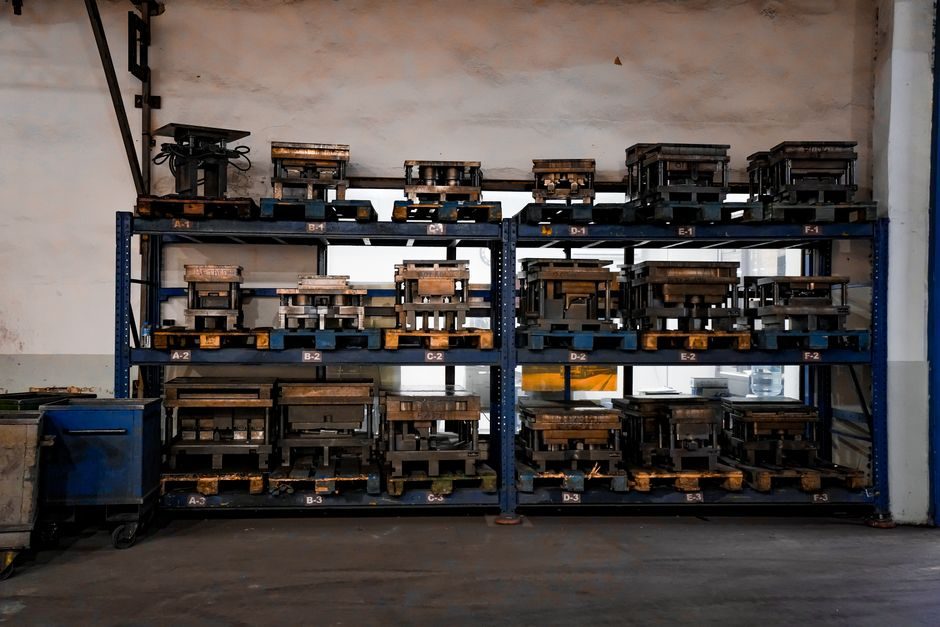
Published cold chamber design envelopes are remarkably tight: parts from 0.05 lb (20 g) to 75 lb (34 kg), section thickness 0.02"–0.5" (0.5–12 mm), and dimensional tolerance 0.01"–0.03" (0.25–0.75 mm) depending on section thickness [S2]. Parting-line allowances of 0.004"–0.01" (0.1–0.25 mm) are typical, and draft angles of roughly 1% are common, with water-cooled die stacks used to drive directional solidification [S2]. Dies are cut from tool and die steels; cores are refractory ceramic because sand cores cannot take the injection pressure [S2].
Pump and valve castings push the upper end of these envelopes. A 6" flanged ball-valve body in bronze can weigh 8–15 kg before machining, and a 4" centrifugal pump volute in aluminum typically lands in the 3–6 kg range, putting both squarely in mid-tonnage cold chamber territory (400–900 t clamping force). Impeller hubs run thinner — often 3–5 mm at the hub, 2–3 mm at the vane tips — and that is where the 0.5 mm minimum section thickness in the published envelope becomes a hard floor rather than a guideline [S2].
Alloy, Cycle Time, and the Real Cost of a Cold Chamber Line
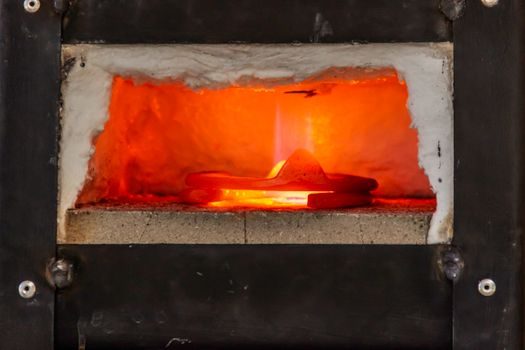
Cycle time is the trade-off: a hot chamber zinc cycle can run under one second; a cold chamber aluminum cycle on a pump body typically runs 60–180 seconds, dominated by ladling, intensification, cooling, and ejection [S1][S2]. Slower throughput is offset by the alloys available — aluminum, magnesium, and copper — and by the mechanical properties those alloys deliver in pressure-containing service.
Modern cold chamber control stacks lean on a Siemens-class PLC, proportional hydraulic valves, and large accumulators to hold pressure drop small during intensification [S3]. Non-contact injection stroke detection and high-precision electric proportional valves are now baseline on Chinese-built machines marketed for automotive, electrical, and telecommunications castings, and the same control architecture carries over to pump and valve work [S3]. Lanson, for one, advertises its cold chamber line as built to international standards with a proprietary toggle clamping unit and a thick integrated box-type platen, and lists aluminum, magnesium, and copper die casting variants in the same product family [S3]. Used-equipment channels list Buhler, Idra, Frech, HPM, and LK Machinery as established cold chamber brands alongside Italian builders (Italpresse, Triulzi) and Toshiba, KDK, and NTP from Asia [S2].
Selection Criteria: Matching the Machine to the Pump/Valve Part
For a pump or valve foundry, four numbers drive machine selection more than any other: (1) required shot weight, which sets plunger diameter and intensification pressure; (2) projected die area at 1% draft, which sets clamping tonnage; (3) section thickness profile, which sets minimum cool time and therefore cycle; and (4) alloy, which sets whether cold chamber is even the right process. Shot weight up to roughly 8 kg points at 400–600 t machines with 80–100 mm plunger diameters, while 10–25 kg pump housings need 800–1,200 t clamps with 110–140 mm plungers. Above 30 kg per shot, the field narrows to a handful of large-tonnage builders, and used-equipment lead times start to dominate procurement. [S2]
Die life is the secondary selection driver. Water-cooled H13 tool steel dies for aluminum pump bodies routinely run 80,000–150,000 shots before re-work, but copper-alloy valve bodies erode the die surface faster because of the higher pouring temperature and the abrasive behavior of the tin/lead phase. A foundry that runs both alloy families from one machine is paying a real cost in die maintenance; running them on separate cold chamber cells with matched intensification is the standard workaround. Die-steel selection, ceramic cores for internal ports, and water-line layout for directional solidification are all factors that the machine builder cannot solve for the foundry — they live in the die.
Standards, Sourcing, and Where Used Equipment Fits
Cold chamber machines are referenced in the industry against generic high-pressure die casting standards rather than a single unified specification; OEM documentation (Buhler, Idra, Frech, Italpresse, Lanson) sets tie-bar rating, platen size, and shot-end performance. Used and second-hand cold chamber machines are a mature market: established brands resold through specialist channels include Buhler, Idra, Frech, HPM, and LK Machinery, with Toshiba, KDK, and NTP as additional Asian sources [S2]. Chinese builders — Lanson among them — publish full cold chamber ranges and explicitly market the line to automotive, appliance, and high-end die casting buyers, with a Siemens PLC control platform and proportional hydraulic valve stack as standard [S3].
For pump and valve foundries weighing new versus used, the rule of thumb that comes out of the reseller literature is straightforward: a used 400–900 t cold chamber machine from a Tier-1 OEM typically delivers 70–85% of the cycle performance of a current build at 30–50% of the capital cost, with the trade-off concentrated in control-system age and hydraulic seal condition rather than in platen or shot-end geometry [S2]. For plants whose product mix already includes diaphragm pump heads or centrifugal pump volutes, the diaphragm pump selection map and the centrifugal pump sizing walk-through both touch the same wetted-material and pressure-class decisions that drive cold chamber machine selection for those components. Where the cast part is itself the pressure-containing boundary — valve bodies, bonnets, and covers — the same smart valve positioner spec map that covers pneumatic actuators also constrains the casting tolerance envelope the machine has to hold.
Limits, Failure Modes, and What the Machine Cannot Fix
The published cold chamber envelope — 20 g to 34 kg, 0.5–12 mm wall, 0.25–0.75 mm tolerance, 1% draft, parting-line allowance 0.1–0.25 mm [S2] — is not a marketing range, it is a process-physics range. Wall thickness below 0.5 mm misruns in aluminum except in very narrow features; above 12 mm the cooling time stretches and shrinkage porosity starts to dominate in the thick sections typical of valve body flanges. The 0.25–0.75 mm tolerance band assumes a single-cavity die on a machine in good hydraulic condition; multi-cavity dies and worn intensifiers blow that out fast.
Cycle time is bounded by physics, not by the control system. A cold chamber aluminum cycle cannot approach the sub-second hot chamber zinc cycle, and any vendor claim to the contrary should be rejected on the spot [S1][S2].
Detailed specification references: cold chamber machine, die casting machine, and aluminum die casting machine.