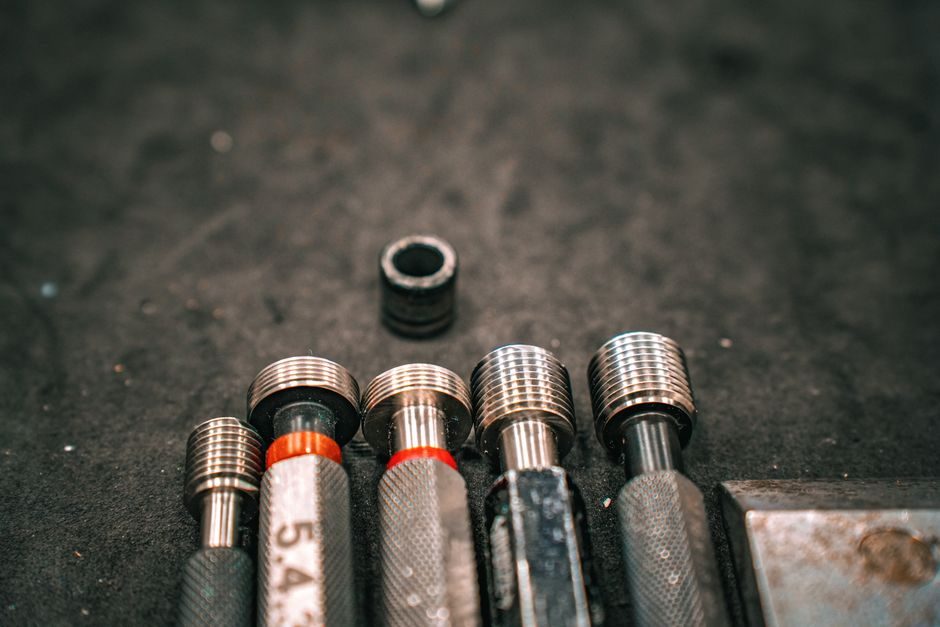
Cold chamber die casting machines dominate hardware manufacturing where molten aluminum, magnesium, and copper alloys are processed, with current offerings spanning 25-ton to 900 kN clamping classes on the supply market [S2][S4].
Selection for a hardware plant is governed by alloy chemistry, shot weight, platen dimensions, and PLC control architecture rather than by brand loyalty [S1][S2]. Buyers balancing new and used equipment should anchor every quote against four spec axes: clamping force (kN or tons), shot weight (g or kg), platen size (mm), and the die thickness stroke window.
Process Boundary: When Cold Chamber Becomes Mandatory
Cold chamber machines are specified whenever the casting alloy cannot be processed in a hot-chamber setup, with the canonical list covering aluminum, high-aluminum zinc alloys, magnesium, and copper [S1].
The defining mechanism is a separate furnace feeding an unheated shot chamber (injection cylinder), where a hydraulic or mechanical plunger drives the molten charge into the die [S1]. Cycle time is therefore longer than hot-chamber equivalents because the metal ladle step sits outside the machine, but this trade-off buys compatibility with high-melting-point alloys and avoids the iron-pickup problems that plague hot-chamber zinc and magnesium machines [S1]. For hardware foundries running ADC12, A383, AZ91D, or yellow brass, this is the only viable pressure-casting route at production volumes.
Specification Envelope: Tonnage, Shot Weight, Tolerances
Hardware-class cold chamber machines on the 2026 market are concentrated between 25T (≈220 kN) and 80T (≈900 kN) clamping force, with 25T mini units listed at $10,000-11,000 and 80T (900 kN) aluminum injection machines at $17,000-22,000 per set [S4].
Process capability data for the broader cold-chamber family places part weight from 0.05 lb (20 g) up to 75 lb (34 kg) per shot, with section thickness between 0.02-0.5 in (0.5-12 mm) and dimensional tolerances of 0.01-0.03 in (0.25-0.75 mm) depending on section thickness [S1]. Across the mold parting line, dimensional allowances of 0.004-0.01 in (0.1-0.25 mm) and draft angles near 1% are the standard starting points for tool designers [S1]. Hardware buyers who need to cast thin-wall enclosures, heatsink bodies, or door-hardware brackets should lock platen size and tie-bar spacing before pricing, because platen geometry — not locking force alone — decides the maximum die footprint you can run.
Comparison of Main Cold Chamber Classes
Three tonnage tiers cover the bulk of hardware procurement: 25T mini machines for small zinc-aluminum brackets and connectors, 80T (900 kN) mid-range presses for general aluminum hardware, and 160T+ large machines for structural castings and automotive-adjacent hardware [S2][S4].
Lining these up on the four decision criteria: mini 25T presses win on price ($10,000-11,000) and floor space but cap shot weight around 1-2 kg of aluminum; 80T 900 kN units double the shot envelope and remain under $22,000 per set with Mitsubishi-class PLC control as quoted on 2026 listings [S2][S4]; 160T+ presses go beyond the standard hardware catalog into transmission housings and large pump bodies, and require correspondingly larger foundries. For most hardware plants running ADC12 or A380, the 80T class hits the cost-throughput sweet spot.
Control Architecture and Auxiliary Specs
Modern cold chamber machines in 2026 are quoted with Mitsubishi-class PLCs as a baseline, with 60 sets/month supply capability reported for mainstream Chinese OEM offerings [S2].
Buyers should also verify hydraulic versus mechanical drive configuration, because hydraulic presses dominate the 25T-160T hardware range and offer better shot-speed profiling for thin-wall parts [S1]. Die-life expectations are tied to tool-steel grade selection — dies are fabricated from tool and die steels rated for repeated thermal fatigue, with cores made of refractory ceramic materials rather than sand (sand cores lack the strength to survive injection pressure) [S1]. Water-cooled die circuits should be specified for any hardware part with section thickness below 3 mm, because the cold-chamber process cannot rely on the rapid natural solidification of hot-chamber zinc work [S1]. A more detailed walkthrough of how alloy selection drives the downstream casting geometry is covered in the aluminum alloy spec map for construction applications.
New vs Used Sourcing Channels
Used cold chamber machines flow onto the secondary market in step with high-volume production-line upgrades, and 2026 listings cluster around Buhler, Idra, Frech, and HPM legacy brands [S1].
For a hardware plant weighing new against used, the decision is mainly about PLC generation and hydraulic servo upgrades, because mechanical wear on tie bars, platen parallelism, and shot-end consistency can usually be refurbished but obsolete control electronics cannot [S1]. OEM-issued 2026 spec sheets from Chinese suppliers quote 1-set minimum order quantities with T/T or L/C payment terms and loading from China main ports [S2]. Comparable used equipment from Buhler/Idra/Frech carries no equivalent supply-capability commitment, so warranty terms and commissioning support should be priced in separately. For plants planning to expand into rail or structural hardware, the 2026 aluminum alloy selection guide for the rail industry maps the upstream alloy specs that downstream cold-chamber tonnage selection must respect.
Limitations and Failure Modes
The cold chamber process trades cycle time for alloy flexibility, and that is also where most production losses originate: slower cycle time versus hot-chamber zinc, plus ladle-to-shot-chamber metal transfer that introduces oxide inclusions if the operator skips skimming [S1].
Parting-line wear drives the 0.004-0.01 in (0.1-0.25 mm) dimensional drift that design engineers must budget, and section-thickness transitions that are too sharp create stress risers during both solidification and in-service loading [S1]. Draft angles below 1% risk die-sticking and ejector-pin deflection; corner radii that are too small shorten die life because the tool steel fatigues at every thermal cycle [S1]. For hardware foundries running unattended shifts, the failure mode most often reported is shot-chamber cold-start, where the unheated cylinder chills the first few shots and produces short-cast rejects — a problem specific to the cold-chamber architecture that does not exist in hot-chamber zinc work.
Track the next hardware-plant procurement against three signals: 2026 Q3 restock of 25T and 80T units at the $10,000-22,000 price band, any new servo-hydraulic retrofit kits released for legacy Buhler/Idra cold-chamber presses, and revisions to the Mitsubishi-PLC control firmware quoted on OEM datasheets [S2][S4].
Detailed specification references: cold chamber machine, die casting machine, and aluminum die casting machine.