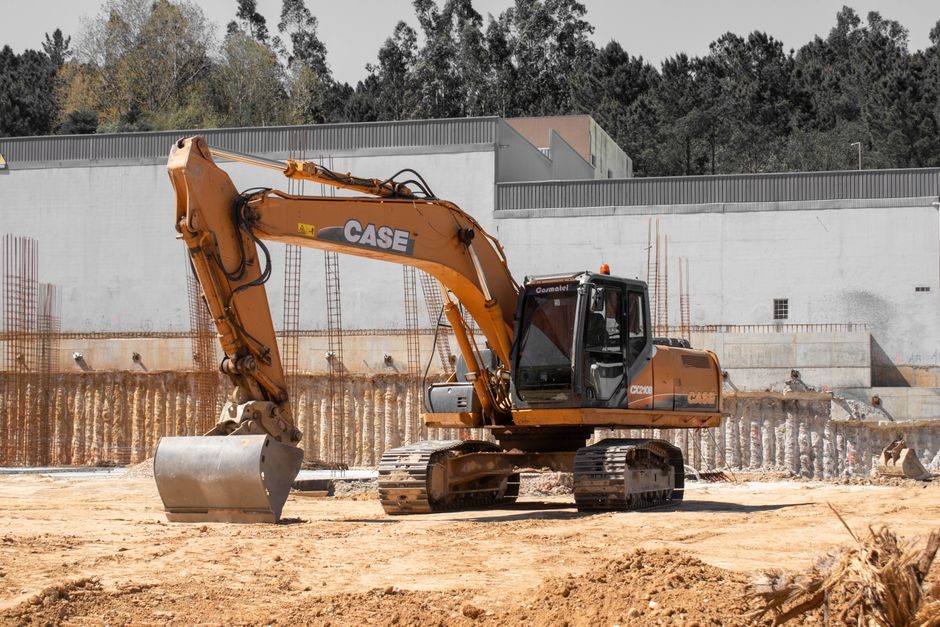
A 20-ton crawler bulldozer class machine (Caterpillar D6/D7, Komatsu D65/D85, Shantui SD22/SD32 equivalent) commonly carries an OEM list price in the USD 280,000-450,000 band for a new unit in 2025, yet lifecycle studies on heavy construction fleets show that 10-15 year ownership cost is typically 2.5x to 3.5x the initial purchase price once fuel, undercarriage, scheduled service and depreciation are layered in [S3].
Total Cost of Ownership (TCO) is a lifecycle cost metric that combines acquisition cost, operating cost, maintenance and support, and end-of-life disposal or residual value [S3]. For earthmoving equipment, four cost lines do almost all the work: acquisition (capex + financing), fuel and lubricants, scheduled wear-part replacement (undercarriage, cutting edges, ripper tips), and downtime/labor overhead. A model that ignores any of these is a budget tool, not a TCO model.
Acquisition Cost: Sticker, Attachments and Financing
Acquisition is the line item everyone sees, and the easiest to under-estimate. New 20-ton crawler dozers from the four major OEMs (Caterpillar, Komatsu, John Deere, Liebherr) typically sit in the USD 280,000-450,000 FOB range with a standard blade and ripper, while a forestry/heavy-duty package with rear ripper, GPS-ready hydraulics and ROPS/FOPS cab adds 12-18% on top. Used 5-7 year units in good undercarriage condition run roughly 45-60% of OEM list, which is often the most defensible TCO entry point for mid-size contractors [S1].
Financing is where capex gets mis-modelled. Most dealers quote 0% or low-rate promo terms for 24-36 months, then step up sharply, and the residual balloon at month 60 is rarely a real option for a dozer with 8,000-12,000 operating hours on it.
Fuel, Fluids and the Hidden Energy Line
Diesel is the single largest operating line on a working dozer. A 20-ton class machine burns 12-18 L/hr at moderate load (dozing, light ripping) and 20-30 L/hr in hard push or stockpile work, which translates to 1,500-2,500 engine hours of useful life per year on a single-shift site. At USD 0.85-1.10/L off-road diesel, that is USD 18,000-55,000 of fuel per year per machine, frequently more than the financed payment on the same unit [S2].
Lubricants, DEF (for Tier 4 Final / Stage V emissions), filters and hydraulic oil add another 8-12% on top of the diesel line. Tier 4 Final machines burn 3-5% more diesel than the equivalent Tier 3 unit on the same duty cycle because of the diesel particulate filter (DPF) back-pressure and the diesel exhaust fluid dosing cycle, which is a real, measurable, line item that should be added when TCO-comparing a 2014+ machine against an older unit [S2].
Undercarriage and Wear Parts: The Floor of the TCO Model
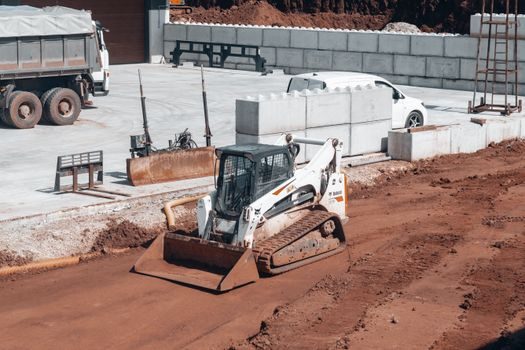
Undercarriage is the line that surprises new buyers. A 20-ton class dozer's undercarriage (track shoes, pins, bushings, idlers, rollers, sprockets) typically costs USD 35,000-70,000 to rebuild at 4,000-6,000 hour intervals, and the interval itself is governed by ground condition: abrasive rock cuts it by 30-50%, while finished-grade or soft-soil work can stretch it 20% beyond OEM baselines. Cutting edges and end bits add USD 4,000-8,000 every 1,000-2,000 hours; ripper tips and shrouds run another USD 1,500-3,500 per cycle [S3].
The procurement move that changes the TCO number the most is buying genuine OEM pins, bushings and seals rather than aftermarket copies. Genuine bushings on a D6/D65 class machine last 4,500-6,000 hours between rebuilds; cheap aftermarket sets frequently fail at 1,800-2,500 hours, which then damages the matching pin and sprocket. The part that looks cheap is the part that costs you a full undercarriage.
Scheduled Service, Labor and Downtime Drag
OEM service intervals for a modern 20-ton dozer are typically 250 hours (lube and filters), 500 hours (hydraulic and engine oil), 1,000 hours (valve adjustment, major filter change) and 2,000 hours (hydraulic and transmission sample-and-inspect). Annual scheduled parts cost runs USD 8,000-15,000 in consumables alone; labor at a competent dealer field-truck rate of USD 110-150/hr adds another USD 5,000-10,000 per year for a working machine [S3].
Unscheduled downtime is the line nobody prices honestly. Industry fleet data consistently shows that for every scheduled service hour, a working dozer in construction/mining service logs 0.2-0.4 hours of unscheduled downtime, mostly hydraulic, electrical and undercarriage-related. At a typical contractor billing rate of USD 250-450/hr for the dozer plus operator, a single 3-day unscheduled outage can wipe out the annual labor-savings case for choosing a used Tier 3 unit over a new Tier 4 Final machine.
Residual Value and Disposal: The Line That Closes the Loop
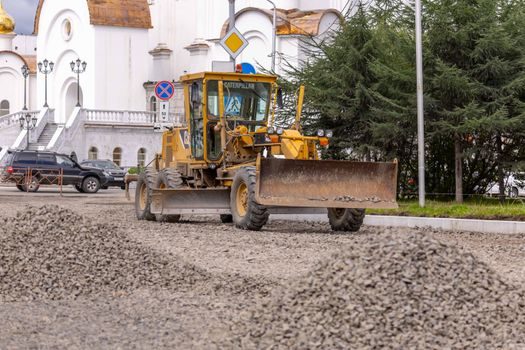
Residual value is the second-biggest single number in the TCO after fuel, and the most commonly mis-stated. A TCO model that assumes 40% residual at year 7 with no undercarriage rebuild in the maintenance schedule is dishonest [S1].
End-of-life disposal is small in dollar terms (USD 2,000-5,000 for fluids drainage, transport and scrap steel credit) but it is a real closing entry. Scrap steel credit has softened from the 2022 peak and now typically offsets 40-60% of disposal cost on a 20-ton machine, which is a number worth pricing into the model rather than ignoring.
Building a Working TCO Spreadsheet: The Four-Column Layout
A defensible 10-year TCO model has four columns: acquisition (capex + financing), operating (fuel + DEF + lubricants), maintenance (scheduled parts + labor + wear parts), and residual/disposal. Each column is independently stress-tested at a low, base and high case. The base case typically lands at 2.8x-3.4x initial purchase price over 12,000 operating hours for a 20-ton class dozer in general construction service [S3].
Sensitivity matters more than the headline number. A 1,000-hour undercarriage life cut (rock vs soil duty) swings TCO by 4-6%. A 10-point miss on residual value swings TCO by 3-5%. If your procurement model cannot tell the buyer which lever is doing the work, it is not a TCO model.
Comparable Earthmoving TCO: Bulldozers, Excavators, Wheel Loaders
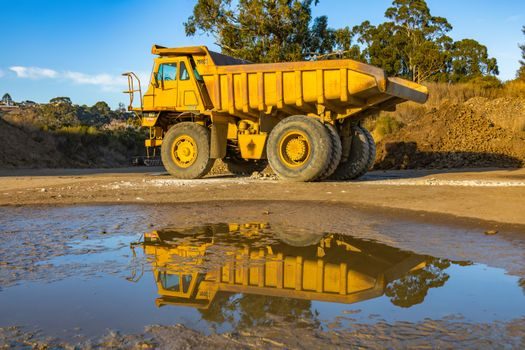
For a fleet buyer cross-checking equipment choices, the 10-year TCO multipliers on a working hour basis are within a narrow band across the major earthmoving classes: a 20-ton excavator in similar duty typically lands at 2.6x-3.2x acquisition price; a 3-4 m3 wheel loader at 2.4x-3.0x; a 20-ton crawler dozer at 2.8x-3.4x. Excavators tend to be more fuel-efficient per ton-moved but more expensive to maintain; dozers carry the highest undercarriage cost but the most predictable operating envelope. A detailed look at how excavator TCO lines up against this pattern is given in Excavator TCO: Where the Real Money Goes Beyond the Sticker Price, and the wheel-loader side is broken down in Wheel Loader Advantages and Disadvantages: A Spec-Driven Engineering Brief. [S1]
Operationally, a dozer's edge is grade-finishing precision (paired with a 2D or 3D machine-control system) and its ability to work steep, soft or rocky ground where a wheel loader cannot safely travel. Its weakness is cycle time: a 20-ton dozer is rarely the right tool for truck-loading on a hard-rock haul, where a hydraulic excavator or wheel loader wins on fuel-per-ton. Fleet TCO planning should be a mixed-fleet question, not a single-machine question.
Where TCO Models Break: Five Common Failure Modes
A TCO model that does not correct at least these five is not a procurement tool, it is a budget cover. [S2]
The cleanest test of a TCO model is whether it predicts the second machine on the second site. If the same unit on a softer-soil job shows a 12-18% lower TCO against the same acquisition price, the undercarriage and fuel lines are working. If it shows the same number, the model is hiding the work in a fixed annual overhead line and should be re-built.
For a procurement team running this analysis on a working fleet, the next actionable node is collecting the past 24 months of fuel tickets, service invoices and undercarriage rebuild records from at least three comparable machines on the same site class, then re-pricing the model against that data. Two trackable signals to watch over the second half of 2026: diesel off-road pricing trends in your operating region, and OEM-announced updates to the 250- and 500-hour service intervals for Tier 4 Final / Stage V engine families, both of which will move the TCO number by 3-6% if they shift.
For component-level specifications, see total station, and pressure transmitter.