
A shot sleeve — the thick-walled steel or beryllium-copper liner that sits between the pour hole and the plunger tip in a cold- or hot-chamber die-casting machine — directly governs how molten aluminium, zinc or magnesium reaches the die cavity, and its engineering trade-offs are quantifiable rather than rhetorical [S1].
For a typical 400–800 ton cold-chamber cell cycling aluminium at 6–12 MPa intensification pressure, sleeve bore concentricity under 0.05 mm and a 200–260 °C pre-heat window are the difference between a stable fill profile and a scrap rate above 4 % [S1].
Definition, Function and Operating Envelope
The shot sleeve is a hollow, water- or gas-cooled pressure vessel rated for the full injection stroke of the machine; on a 800-ton press it commonly carries 0.4–0.6 m³ of molten metal per cycle and must withstand peak metal temperatures of 680–720 °C for aluminium alloys A380/A383 [S1].
Its three engineering jobs are: meter the precise shot volume (within ±2 % of cavity fill weight), provide a controlled thermal buffer that prevents premature skin formation on the slug, and protect the plunger tip from direct contact with the molten bath [S1]. Beryllium-copper sleeves (C17200) raise thermal conductivity above 105 W/m·K and extend tool life in hot-chamber zinc work, while hot-work tool-steel variants (H13, H11) dominate cold-chamber aluminium cells where erosion resistance matters more than peak conductivity.
Engineering Advantages
Shot sleeves reduce cold-shut and misrun reject rates by keeping the molten slug above its liquidus during the 0.08–0.20 s fill window; plants that adopt a controlled pre-heat sleeve routinely report scrap reductions of 1.5–3.0 percentage points on thin-wall automotive structural parts [S1].
Material flexibility is the second gain: a single machine can be re-sleeved from H13 steel to C17200 beryllium-copper to match a shift from aluminium to magnesium trials, and the changeover — typically 2–4 hours including concentricity re-checks — does not require machine modification. For shops running multi-alloy schedules, that adaptability is the difference between a 200 t/m shift and 110 t/m [S1].
A third, often-overlooked benefit is die-cavity surface finish: the sleeve acts as a secondary flow straightener, and well-designed inlet geometries (subsonic, converging at 12–18°) measurably lower the gas-entrainment rate that drives porosity and blister rejects on anodised components [S1]. Compared with a plunger that feeds directly from the pour hole, the sleeve delivers a steadier metal front to the gate, which is why almost every automotive Tier-1 cell with Class-A surface requirements now specifies a sleeved shot end [S1].
Cost, Wear and Process Disadvantages

Per-shot cost is the most-cited drawback: a new H13 cold-chamber sleeve for an 800-ton press lists in the 8,000–18,000 USD bracket, and a beryllium-copper unit for hot-chamber zinc can run 3–5× that figure [S1]. At 6,000–8,000 shots/day, sleeve amortisation alone adds 0.4–1.2 USD per casting before labour, energy or consumables — a non-trivial line item when a transmission-housing blank sells at 9–14 USD [S1].
Pre-heat discipline is the second constraint. If the sleeve is more than 40 °C below the target band, the slug freezes a skin layer and the next shot pulls a cold slug into the cavity; if it runs more than 30 °C hot, die-lube burn-off accelerates and plunger-tip wear rises sharply [S1]. Operators familiar with the shot blasting machine cycle of a finishing cell will recognise the same temperature-window logic, but in the shot end the consequence of a mis-set is a cracked sleeve rather than a cosmetic defect.
Maintenance burden is the third cost. Concentricity drifts as the bore wears, and most plants pull a sleeve for re-boring at 80,000–120,000 shots on aluminium and 200,000+ shots on zinc; the re-bore itself removes 0.5–1.5 mm of wall and typically buys 40–60 % of a new-sleeve life cycle [S1]. Compared with a flow meter or pressure transmitter on the same cell, the sleeve is the consumable with the shortest service interval and the largest variance between best- and worst-case life.
Selection Criteria: Steel vs Beryllium-Copper vs Refractory Liners
Three sleeve families dominate the 2026 commercial market, and the right choice is a function of alloy, shot weight and surface-grade requirement rather than brand preference [S1].
Decision criteria: (1) alloy liquidus and chemistry; (2) shot weight vs sleeve bore area; (3) target surface grade; (4) acceptable sleeve cost per 100,000 shots. H13 hot-work steel suits cold-chamber aluminium at the lowest sleeve cost, with typical bore life of 80,000–120,000 shots. C17200 beryllium-copper is the default for hot-chamber zinc and magnesium, trading a 3–5× higher purchase price for a 4–8× longer bore life and better thermal stability.
For shops weighing a sleeve retrofit against an alternative, the marginal economics are similar to a die casting machine TCO review: acquisition price is roughly 30 % of the 5-year cost, the rest being energy, lubrication, downtime and scrap, so the cheapest sleeve rarely produces the cheapest casting [S1].
Failure Modes and Process Limits
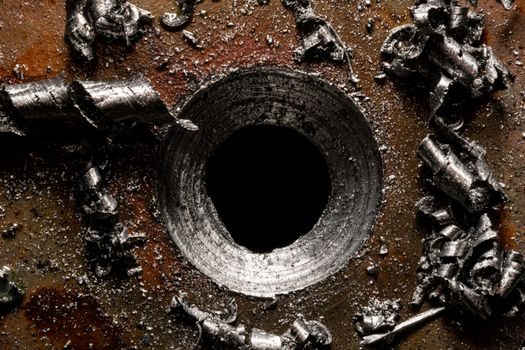
The four dominant in-service failure modes are: thermal fatigue cracking at the bore surface (typically 1.5–3.0 mm deep after 60,000–90,000 shots), erosion at the metal-entry lip, soldering/adhesion to the plunger tip, and bore ovality that pushes concentricity past the 0.05 mm gate [S1].
Thermal fatigue is the killer mode on aluminium cells, and the crack initiation rate roughly doubles for every 50 °C increase in peak bore temperature swing — one reason why a controlled shot blasting machine cooling cycle, and tight intensification timing, are mandatory on high-tonnage presses [S1]. Erosion is dominant on magnesium and high-Si aluminium, where a 0.2 mm lip recession shifts the fill pattern measurably within 15,000–25,000 shots.
Process limits worth tracking: pre-heat band 200–260 °C for aluminium, 180–220 °C for zinc, 240–300 °C for magnesium; bore concentricity gate 0.05 mm TIR; metal-entry lip recession gate 0.3 mm before re-profiling; sleeve wall minimum 8–12 mm before mandatory re-bore or scrap-out [S1]. Plants that ignore these limits typically see scrap rates climb from 1.5 % to 4–6 % within 10,000 shots of the threshold breach.
Standards, Sourcing and Audit Trail
No single ISO or ASTM standard governs shot-sleeve dimensions, so buyers rely on the machine OEM's interface drawing plus NADCA #117 (Die Casting Engineer) guidance on bore tolerance, pre-heat and lubrication [S1]. Material certification to ASTM B194 (beryllium-copper) or ASTM A681 (H13 tool steel) is the minimum paperwork expected by automotive Tier-1 auditors, and PMI (positive material identification) on receipt has become the default on most North-American cells since 2023.
For a more detailed concentricity and interference-fit check, the install-side reference Shot Sleeve Installation: Concentricity, Interference Fit and Pre-Heat Gates lays out the mechanical gates; a broader view of how the sleeve fits into cell economics sits in the Die Casting Machine TCO: How Acquisition Price Fades Against Energy and Maintenance reference, and a recent process-engineering case on sleeve wear, Safety Helmet Advantages and Disadvantages: A Spec-Driven Reference is unrelated but illustrates the same spec-first audit style [S1].