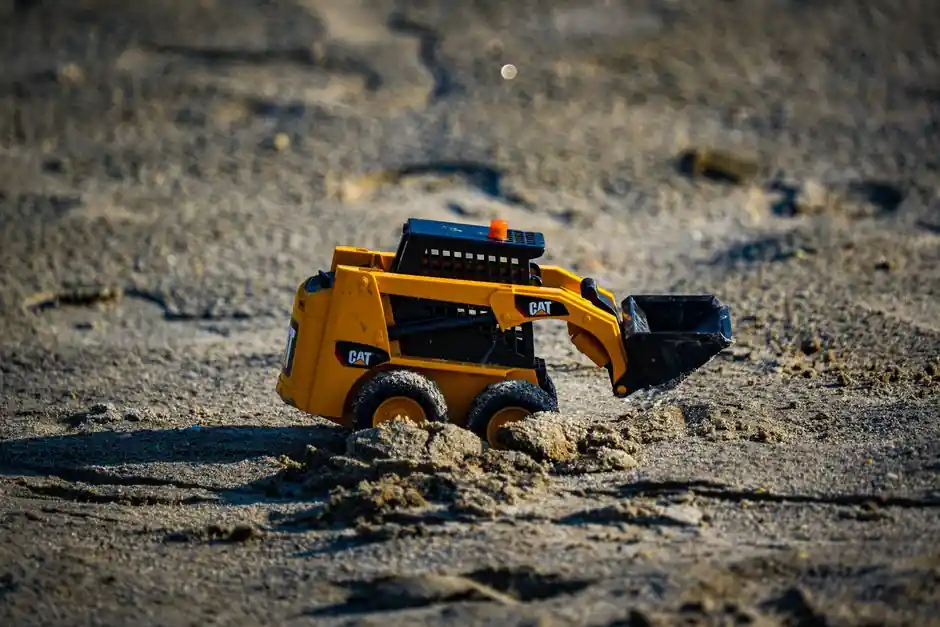
A skid steer loader's reliability budget is dominated by five recurring failure families: hydraulic leakage and hose rupture, engine overheating and fuel starvation, electrical and joystick faults, tire or track wear, and defeat of the control interlock that ties the seat bar, seatbelt, and arm functions together [S1][S3][S6].
These are not separate problems. A hydraulic leak that drops tank level below the pump inlet can trigger cavitation, which kills pump life; a clogged radiator that pushes engine coolant past its limit derates the alternator and adjacent wiring. Maintenance programs that treat each system in isolation consistently underperform those that run a daily visual sweep, weekly fluid and filter checks, and monthly structural inspection [S2][S7].
Hydraulic Failures: Leaks, Hose Rupture, Pump Cavitation
Hydraulic failure is the single most reported skid steer fault class, and the leak signature is usually a wet line at a fitting, a bulged hose at a bend, or a dropped reservoir level on the dipstick [S3][S4]. Hoses fail first at flex points and at clamp contact, with abrasion, heat, chemical exposure, and pressure overshoot as the four dominant root causes; preventive practice is visual inspection at every shift change and replacement of any hose showing cracks, bulges, or weeping before it ruptures [S3].
Pump and drive-motor issues present as sluggish response, whining noise, heat at the pump housing, or sudden power loss, and the upstream causes are almost always fluid contamination, air ingress (cavitation), thermal overload, or chronic overloading of the machine [S3]. The corrective lever is fluid discipline: correct OEM-spec fluid, kept at the correct level, with filters changed on hours, not on memory. For more on how the lift arm and pump interact with attachment cycles, see the skid steer spare parts breakdown.
Engine Failures: Overheating, Fuel Starvation, Glow Plug and Throttle Faults
Engine-side failures split into thermal and fuel-delivery buckets. Overheating is usually a coolant-level, radiator-airflow, thermostat, or water-pump problem; the operator sees a high temperature gauge, steam, or de-rated power, and the correct response sequence is top off coolant, clear radiator debris, then test thermostat and water pump in that order [S3].
Fuel-side hard-starting, rough idle, and power loss trace to clogged filters, a failing lift pump, contaminated fuel, or stuck-open injector passages, with diesel filter service intervals shortened in dusty environments [S4]. Cold-start machinery adds two failure candidates: glow plugs that work loose from the combustion chamber and throttle cables that detach from the throttle body, both of which a 30-second visual check at the start of shift will catch [S4]. Daily engine oil, hydraulic oil, and coolant level checks are the single highest-yield inspection block on the machine [S2].
Electrical and Control Faults: Joystick, Wiring, Interlock
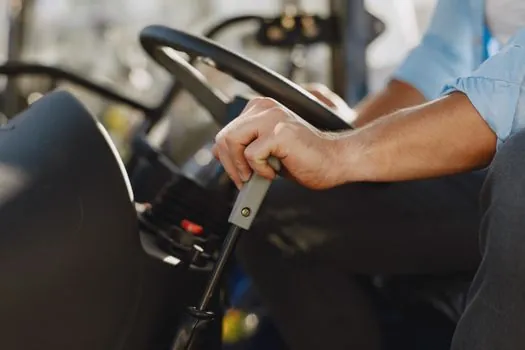
When steering or loader joysticks go unresponsive, the first checks are disconnected or loose harness connectors and the circuit between the joystick module and the hydraulic control valve, before any assumption is made about a failed valve [S2]. Abnormal hydraulic noises, slow functions, low fluid level readings, and intermittent electrical faults are commonly co-reported because a single loose ground can mimic a sensor failure [S6].
The control interlock system, which ties the seat bar, the operator-presence seat switch, and the parking brake, is the most safety-critical electrical subsystem. OSHA's review of its Integrated Management Information System recorded 100 skid-steer-specific accidents between 1997 and 2007, with bypassed interlocks and absent seatbelt use as recurring contributors [S1]. Field guidance treats any defeated interlock as an immediate stop-use condition: operators sometimes disable interlocks for convenience, and the result is exposure to crush, runover, and entrapment by the lift arms or bucket [S1][S5].
Undercarriage Failures: Tires, Tracks, and Bucket/Lift Arm Wear
Wheeled skid steers lose performance and stability to under-inflation, sidewall cuts, missing lugs, and embedded debris; tracked machines add tension, tear, and deformation checks on the rubber track itself [S7]. Loss of traction is not only a productivity issue: worn tires on concrete ramps reduce braking, which raises the rollover exposure on slopes [S5].
Lift arm and coupler wear is the second undercarriage bucket. Daily checks target cracks, dents, loose bolts, worn bushings, and seal weep at the tilt and lift cylinders, because a small leak at a cylinder rod is the precursor to a sudden load-drop event on a raised boom [S2]. For operators weighing rebuild against replacement, the wear-parts lifecycle, hours at which buckets, teeth, bushings, and pins reach scrap dimension, is laid out in Skid Steer Lifespan and Replacement: Hours, Wear Parts, and Buy-vs-Rebuild Cues.
Safety-Structure Defeat: ROPS, FOPS, Seatbelt, Seat Bar

Standard protective equipment on a modern skid steer is the seatbelt for operator restraint, a Falling Object Protective Structure (FOPS), a Roll-Over Protective Structure (ROPS), and a control interlock system, with a pull-down armrest or seat bar acting as the operator-presence switch [S1]. The protective frame only works when the operator stays inside it: a forward tip with an unbuckled seatbelt can throw the operator into the path of the bucket or the machine itself [S5].
ROPS and FOPS are designed to ISO/SAE crush and impact-load envelopes; the field-level requirement is that they be present, intact, and that the seat belt be worn on every cycle, not removed for short lifts. Bypassed interlocks, removed seat belts, and missing ROPS or FOPS are the three findings that turn a routine tip-over into a fatal event, and OSHA's SHIB 01-12-2009 was issued specifically because fatality data showed a continuing pattern of defeated safety devices [S1][S5].
Comparison of Failure Modes vs. Prevention Levers
The five failure families line up against distinct prevention levers, and a maintenance program has to hit each row of this matrix, not just the loudest one. [S3]
Hydraulic failures (leaks, hose rupture, pump cavitation) are prevented by daily leak sweeps, hose replacement at first sign of bulge or crack, and reservoir-level discipline on the dipstick [S3][S4]. Engine failures (overheat, fuel starvation, glow plug, throttle) are prevented by coolant top-off, radiator cleaning, filter change on hours, and a 30-second pre-shift visual on plugs and cables [S3][S4]. Electrical and control faults (joystick, harness, interlock) are prevented by connector and ground checks before valve diagnosis, with zero tolerance for any bypassed interlock [S1][S2][S6]. Undercarriage failures (tire, track, lift arm) are prevented by pressure, tread, track tension, and bushing/cylinder inspections at every shift change [S2][S7]. Safety-structure defeat (ROPS, FOPS, seatbelt, seat bar) is prevented by operator training, daily seatbelt and seat-bar verification, and a stop-use policy on any machine with a removed or defeated interlock [S1][S5].
Maintenance Cadence That Actually Works
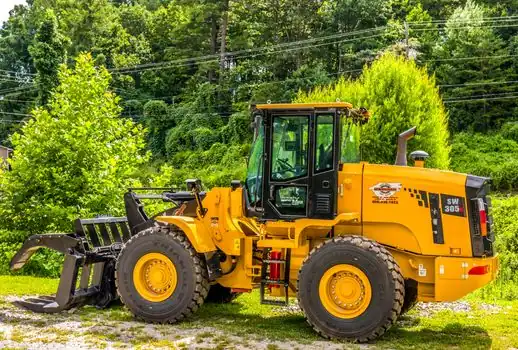
OEM service literature structures skid steer maintenance into daily, weekly, and monthly blocks, and the failure-mode list above maps cleanly onto that cadence rather than onto calendar dates [S2]. The daily block is visual inspection for cracks and dents, fluid level checks on engine oil, hydraulic oil, and coolant, a quick clean of dust and debris from hot surfaces and electrical connectors, and a tire or track check for pressure, cuts, and tension [S2].
The weekly block adds filter condition, hose routing under load, and battery terminal integrity, and the monthly block adds structural checks on lift arms, couplers, and ROPS mounting hardware [S2][S7]. Machines operating in dust, demolition, or agricultural environments shorten all three intervals; machines on clean indoor pads can hold the OEM baseline. Either way, the rule is: develop the schedule from operating hours, not from the wall calendar [S2].
Who Benefits and Where the Limits Are
This failure-mode map is built for fleet owners, rental-yard technicians, and site mechanics who run scheduled service rather than run-to-failure operations, and it applies across construction, agriculture, municipal, and landscape use cases because the underlying machine architecture does not change between sectors [S2][S5]. It is less useful for one-off owners who run a machine under 200 hours a year; for those, the right move is dealer-supported pre-season inspection rather than a full in-house cadence.
The map's hard limit is that it cannot substitute for the model-specific service manual: hydraulic pressure settings, filter part numbers, ROPS bolt torques, and interlock wiring diagrams are machine-specific and must come from the OEM, not from a generic checklist. The map's other limit is operator behaviour: no inspection schedule will overcome a habit of defeating the seat-bar interlock for faster cycle times, and that is the one failure mode where training, not hardware, is the only effective prevention [S1][S5].
The verifiable next signal to watch is whether major OEMs move to standardise published interlock-test procedures in their operator manuals, which would let a single shop test defeat conditions on any brand without a dealer laptop, and whether telematics platforms start flagging seat-belt-unbuckled-under-load events as a reportable fault rather than a soft warning.
The underlying component specifications are covered under skid steer loader, backhoe loader, and wheel loader.