
An ISO tank container for snow-removal operations is, in physical terms, the same 20 ft intermodal vessel that hauls sulfuric acid: a stainless cylinder inside a 6,058 mm long x 2,438 mm wide x 2,591 mm high corner-cast frame, capacity band 17,500–26,000 L [S1][S4][S5]. The "tank container" itself is a standardised freight unit defined by ISO 1496/3 corner geometry and an ITCO-tracked global fleet of 848,400 units as of 1 January 2024 [S5].
Specifying one for brine, magnesium chloride, calcium chloride, or propylene/ethylene glycol runway de-icers means choosing the right T-code, material grade, and ancillary package, because the cargo is corrosive, low-temperature, and frequently loaded outdoors in winter conditions. Most leasing operators stock only 3-4 variants in volume, so the engineer who walks in asking for a "snow tank" usually gets either an over-specified T14 lined unit or an under-specified food-grade T11. Neither is optimal.
Frame Geometry and Capacity Envelope
Every snow-removal candidate must clear the 20 ft ISO envelope: 6,058 mm x 2,438 mm x 2,591 mm external, with internal frame length 5,898 mm, width 2,438 mm, height 2,438 mm or 2,591 mm depending on variant [S4][S5]. Standard capacity is the 17,500–26,000 L range, with 21,000–26,000 L the most commonly stocked "T11" volume for non-hazardous liquids [S1][S4][S5]. Larger 27,000 L+ units exist in European swap-body fleets but are restricted to intra-European traffic and are not intermodal [S5].
Gross mass is capped at 36,000 kg on most road/rail corridors, and the maximum fill is governed by the 80% fill limit above which the maximum permitted mass of the tank becomes the binding constraint [S6]. A 24,000 L tank loaded with 30% calcium chloride brine (density ~1.29 g/cm^3) reaches 30,960 kg of liquid, which fits inside the 36 t envelope with ~5 t margin for frame, valve gear, and chassis. A 26,000 L tank loaded with neat magnesium chloride brine (density ~1.32 g/cm^3) hits ~34.3 t and leaves almost no margin. Engineers should size the unit against cargo density, not nominal capacity.
Material and T-Code Selection
The de-facto material for snow-removal service is stainless steel 316L (1.4404), which is the standard offering on volume T11 units from EXSIF, Danteco, and Hillebrand's fleet partners [S1][S4]. T11 is the right UN Portable Tank code for non-hazardous liquids with a vapour pressure below 4 bar absolute at 50 C, which covers all chloride brines and glycol solutions [S4][S5]. T14, by contrast, designates a hydrofluoric-acid-capable unit with higher test pressure and thicker shell; it is over-specified for snow service and is normally rubber-lined, adding cost without benefit for chloride brines.
A direct comparison: T11 (316L, no liner, 4 bar MAWP) vs T14 (316L + rubber liner, higher test pressure) vs T4 (double-walled, mild/carbon steel, for diesel-class service). For snow-melt liquids the relevant axes are: chloride corrosion resistance, low-temperature ductility, and cost per litre. 316L clears all three on chloride resistance; 1.4402 (316) and 1.4404 (316L) are both referenced in the EXSIF pressure-vessel material schedule per SANS 50028-7 [S1]. Carbon steel T4 is unsuitable: chloride pitting will perforate the shell within 2-3 winter seasons in a road-salt depot.
Low-Temperature and Baffling Behaviour
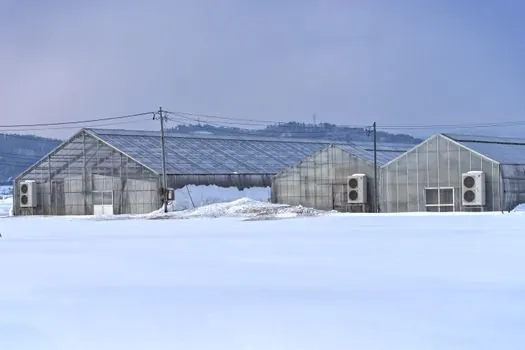
Brine and glycol de-icers are commonly loaded at 0 C to -20 C and discharged at ambient winter air temperatures, occasionally down to -30 C in northern climates. AISI 316L retains impact toughness well below -30 C in the annealed condition, so the shell itself is rarely the limiting factor. The real winter-spec concerns are the EPDM gaskets (specify low-temperature rated, not standard NBR), the manway cover seal, and the bottom-outlet ball valve, which can ice up if the unit is parked with residual liquid inside. [S3]
For road-de-icing service, baffle-less straight-bore tanks are preferred over baffled designs: the sloshing that baffles suppress hurts pumping performance when the operator is drawing brine at 1,000 L/min from a truck-mounted pump [S5]. Standard smooth-bore T11 shells are adequate. Baffled tanks (sometimes called "BC" or compartmented variants) only earn their premium on long rail moves with high centre-of-gravity liquids, not on depot-to-spreader shuttle runs.
Loading, Fill Limits, and Pump Interface
Fill above 80% is prohibited by the IMDG-derived fill rules applied to portable tanks, and the binding constraint switches from volume to maximum permitted mass (MPM) of the tank shell as fill rises [S6]. For a 24,000 L 316L T11 with MPM of 36,000 kg, a 30% CaCl2 brine fill should be stopped at 22,000 L or ~28,400 kg to leave a 2-3% ullage for thermal expansion if the brine is loaded warm (e.g. from a heated indoor tank) and parked outdoors. This is the same fill rule the operator uses for any other bulk liquid, and the same tank container envelope applies.
Discharge interface is the standard 3-inch camlock bottom valve with a 2-inch vapour return, identical to chemical service. The pipework on a snow-removal unit is often simpler: no dip pipe, no internal wash nozzle, no N2 pad connection. Specifiers who need wash-in-place for switching between magnesium chloride and acetate-based runway de-icers should ask the lessor for a tank cleaning machine-compatible top hatch and a CIP-rated spray ball. This is standard fitment on most chemical-grade 316L T11s but should be confirmed in writing.
Standards, Approvals, and Sourcing
The mandatory baseline is ISO 1496/3 for the frame and corner casting geometry, plus the UN Portable Tank T-code designation appropriate to the cargo (T11 for most snow-melt brines, T50 only for liquefied gases, T4 only for diesel-class cargo) [S5]. For road transport in Europe the unit must also satisfy ADR; for rail, RID; for intercontinental ship-leg, IMDG [S5]. Operators leasing a fleet of 70,000+ units, such as EXSIF, hold these approvals across the standard fleet, so a lessor-sourced unit is normally already compliant [S1].
Sourcing options for a stainless steel T11 tank container include leasing from a major operator such as EXSIF (which maintains a fleet of over 70,000 tank containers) or purchasing new from builders such as CIMC or Danteco, which supply 316L stainless steel T11 and related units. For a winter municipal fleet sized 20-200 units, leasing dominates because summer lay-up of the same asset as an IBC tank-compatible water hauler is impractical and the depreciation profile is unattractive.
Operational Constraints and Failure Modes
Top failure modes on snow-removal tank containers in service: (1) chloride pitting at the bottom-outlet weld after 4-6 seasons, repairable by weld-repair and re-passivation; (2) manway gasket blow-out after cold-snap loading, mitigated by specifying low-temp EPDM; (3) frame corrosion at the lower corner castings from road-salt splash, mitigated by annual re-paint; (4) accidental overfill to 95%+ during peak storm loading, mitigated by hard-wired level sensor and 80%-fill interlock at the loading gantry. [S5]
The single most common spec error in this market is paying for a T14 rubber-lined unit when a T11 unlined 316L would handle chloride brines indefinitely. T14 liners are a hedge against hydrofluoric and strong mineral acid attack, neither of which appears in winter road service. The cost delta is roughly 20-30% on the lease rate, with zero benefit in chloride service. A correctly spec'd T11 316L with a low-temp EPDM seal package is the right answer for ~90% of municipal and airport de-icing fleets.
For operations planning around 2026-27, two trackable signals: (1) the ITCO global fleet update expected January 2027, which will revise the 848,400 unit baseline; (2) the gradual fleet shift in the European market from 26,000 L to 27,000+ L swap-body units for intra-EU road haul, which is irrelevant to intermodal snow fleets but does affect the secondary rental market for older 24,000 L T11s coming off long-term lease.
Related analysis: Industrial Flooring Selection for High-Rise Buildings: Specs, Zones, and Resin Choices.