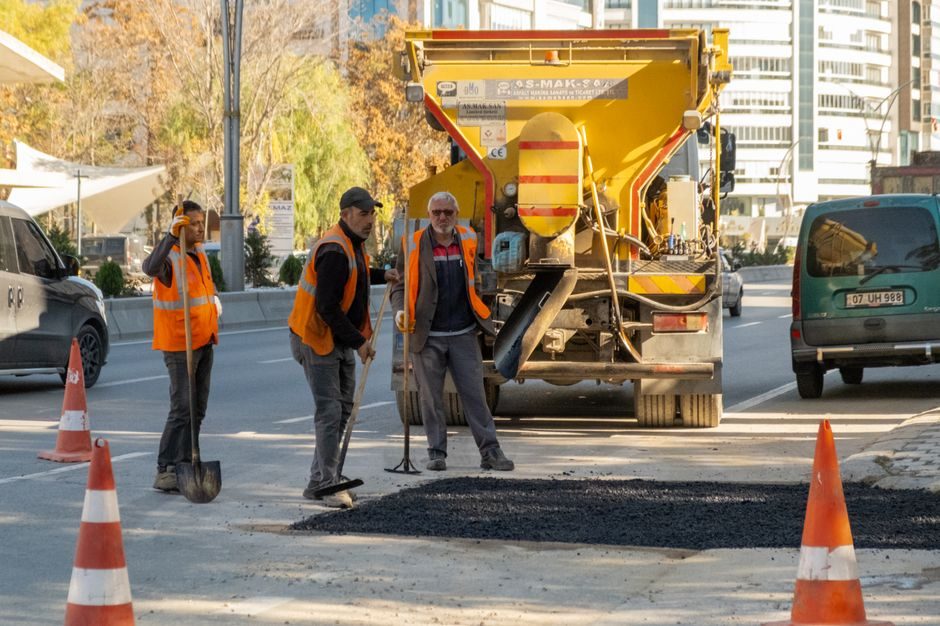
New cold milling machine prices in 2026 still split by milling width and frame size: walk-behind gasoline planers list around USD 5,500 per piece on Made-in-China (2025-02), 1 m-class half-lane machines such as the LXD120 and Shantui SM100 sit in an USD 80,000 to USD 180,000 ex-works band (2026-05, 2026-06), and 2 m-class full-lane 4-track machines built by Wirtgen, Caterpillar and XCMG trade above USD 500,000 with 0.5 m-class compact mills roughly halving the 1 m price point [S1][S2][S3].
The cost stack is dominated by engine, hydraulic system, milling drum and undercarriage; the same Shantui SM100 spec sheet gives a 162 kW rated engine, ~1,000 mm drum and 14,300 kg operating weight as the variables that move the quote the most [S1]. For buyers comparing cold milling machine options, the first decision is the milling class — half-lane, full-lane or compact — because each step roughly doubles the price and the operating envelope.
Price Bands by Milling Class (2026-06 ex-works / FOB China)
Walk-behind cold planers from Chinese suppliers such as the gasoline-engine model on Made-in-China show a USD 5,500 negotiable FOB tier with 1 piece MOQ and 500 pcs/month capacity (2025-08 listing, still the active 2026 reference for low-horsepower machines) [S3]. LXD120-class 1 m asphalt cold milling machines on Okorder sit in the USD 80,000–180,000 range depending on configuration and supplier (2026-06) [S2], while Huatong/Ca-long CLX-1000 1 m road surface cold planers appear in the same band on cmsou product listings (2025-08) [S6].
At the top end, 2 m-class 4-track cold milling machine machines from Wirtgen, Caterpillar, Dynapac and XCMG are listed in the USD 500,000+ tier; Shantui's own SM200 class sits in the same envelope as its 162 kW / ~1,000 mm platform data on the global catalog (2026-05) [S1]. Compact 0.5 m-class mills (e.g. Wirtgen W 50 H, Cat PM310 equivalents) typically land at half the 1 m price, putting them in the USD 40,000–90,000 range for Chinese-built units.
Major Cost Drivers Inside the Quote
Engine power tracks the class almost linearly: Shantui publishes 162 kW for the SM100 1 m platform [S1], while 2 m machines from Wirtgen and Cat typically run 300–447 kW, and a 0.5 m compact mill needs only 60–90 kW. Hydraulic system and milling drum together account for roughly 30–40% of build cost on a 1 m machine, with drum tooth holder count scaling with width — a 1,000 mm drum uses ~80–120 holders versus ~150–170 on a 2,000 mm drum.
Undercarriage type is the second big lever: 4-track full-lane machines command a 30–50% premium over equivalent 3-axle or 4-tyre half-lane frames because of the track drive motors and load-bearing structure. Shantui's SM100 spec lists 14,300 kg operating weight and 4-track layout for the 1 m class, a configuration that pushes price into the upper USD 150,000+ range of the half-lane band [S1].
Brand, Origin and Supply-Tier Levers
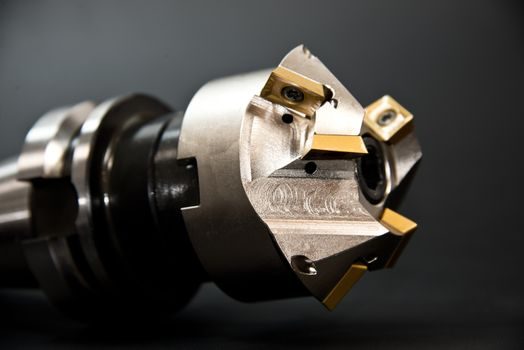
Origin premium is the cleanest differentiator on 2026 quotes. Wirtgen (Germany), Caterpillar (US/Germany) and Dynapac (Sweden/India) list 30–80% above equivalent XCMG, Shantui and Huatong builds for the same milling width, mainly on engine Tier 4 Final / Stage V emissions compliance, drum control electronics and global service network. The Shantui SM100 datasheet, the LXD120 Okorder listing and the cmsou CLX-1000 entry all confirm the Chinese-brand 1 m price band of USD 80,000–180,000 against an estimated USD 220,000–350,000 for the Wirtgen W 100 Fi / Cat PM102 in 2026 [S1][S2][S6].
On the entry tier, Made-in-China listings and Okorder both publish negotiable FOB prices, payment in T/T or Western Union, wooden-crate export packing, and 1 piece MOQ — useful for procurement teams comparing cold milling machine sourcing channels against direct OEM purchase (2025-08, 2026-05, 2026-06) [S2][S3][S6]. Production lead time for the 1 m class runs 30–60 days ex-works in 2026 according to multiple Made-in-China vendor profiles, while full-lane 2 m builds stretch to 90–150 days on European brands.
Used, Rental and Total Cost of Ownership Levers
Used 1 m cold milling machines from 2018–2022 fleets in Europe and North America trade at 40–55% of new list on 2026 dealer listings — meaning a 1 m unit that cost USD 130,000 new now sells used around USD 55,000–70,000, with hours and drum condition being the two pricing variables. For 2 m Wirtgen W 200 / Cat PM620 used units, 5-year-old machines hover near 50–60% of original list because of high residual demand from road contractors. [S1]
Rental rates run on a different curve: walk-behind planers go for USD 150–300/day, 1 m half-lane machines at USD 1,200–2,500/day, and 2 m full-lane at USD 4,000–8,000/day in 2026 European/North American markets. Drum wear is the single largest operating cost — pickholder replacement cycles on 1 m machines average 200–400 milling hours, with a full drum rebuild (cutting tools + holders + sealant) running USD 8,000–15,000 per event.
Selection Criteria: Class, Brand, After-Sales
For contractors milling 30,000–80,000 m² per season on municipal roads, the 1 m Chinese-brand band (USD 80,000–180,000) gives the best $/m² — the LXD120 and SM100 both qualify [S1][S2]. For airport runways, motorway mainline work or 24/7 production milling above 100,000 m²/season, a Wirtgen or Cat 2 m machine in the USD 500,000+ bracket is the right tool despite the premium. Walk-behind planers (USD 5,000–8,000) make sense only for trench restoration, joint cutting and small parking-lot patches — they cannot match production rates of even a compact 0.5 m mill [S3].
After-sales and parts availability is the other axis: Wirtgen, Cat and Dynapac run direct service trucks in most EU/US states; Chinese OEMs typically use local dealer partners with parts shipped ex-Wuhan or Jining, extending drum and hydraulic parts lead times to 7–14 days outside China. For the [cold planer attachment vs cold milling machine](news/cold-planer-attachment-vs-cold-milling-machine-2026-selection-frame.html) decision, integrators and skid-steer buyers should note that a dedicated half-lane mill outperforms a planer attachment above ~30,000 m²/year on cost per square metre. Cross-referencing a [planetary reducer 2026 price and cost guide](news/planetary-reducer-2026-price-and-cost-guide-stage-ratio-backlash-and-frame.html) is also worthwhile because the milling drum's track-drive gearbox is one of the highest-cost replacement items on a 1 m machine.
Standards, Sourcing Channels and What to Verify in a 2026 Quote
Cold milling machines sold into the EU for road work must meet Stage V emissions (EU 2016/1628) and the machinery directive 2006/42/EC, while US/Canada jobs typically require EPA Tier 4 Final engines — Chinese-brand 1 m machines from Shantui, XCMG and Huatong can be ordered with both emission packages at 5–8% cost adder over the base configuration [S1][S6]. On the asphalt side, milled surface tolerances and dust suppression generally follow the contractor's local transport-authority spec rather than a single global standard.
When validating a 2026 quote, confirm four items: declared rated engine power (kW, not hp only), milling drum width and number of holders, undercarriage type and track-pad condition, and warranty terms on the hydraulic system and drum. For a [backhoe loader buying guide 2026](news/backhoe-loader-buying-guide-2026-operating-class-dig-depth-loader-spec-and-sourc.html) audience already running road-maintenance fleets, the same checklist applies — engine power, working attachment spec, undercarriage and warranty. Trackable next signals: Shantui's 2026-05 SM100 spec refresh with 162 kW / 14,300 kg data [S1] and Okorder's 2026-06 LXD120 active listing in the USD 80,000–180,000 band [S2] — both confirm the 1 m Chinese-brand price tier is holding into mid-2026.
For component-level specifications, see cold chamber machine, and cold box core machine.
For related coverage, see Magnesium Die Casting vs Squeeze Casting Machine: Spec, Process and Selection Gate.