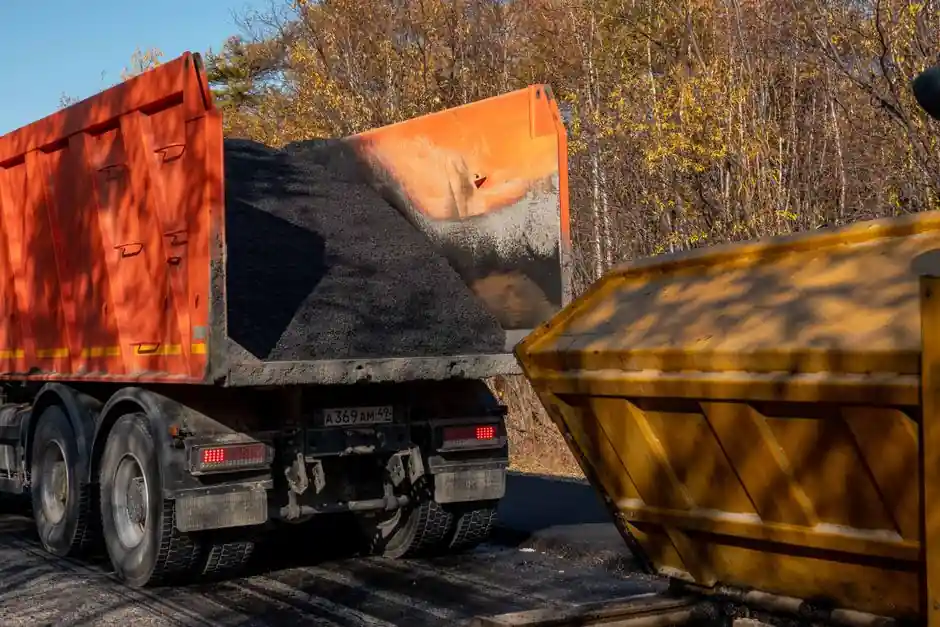
FMCSA defines CDL classes by weight rating, not by job title, and the rule that matters for a dump truck operator is in 49 CFR Part 383: Class A covers combinations with a GCWR of 26,001 lb or more where the towed unit exceeds 10,000 lb GVWR, while Class B covers single vehicles at 26,001 lb GVWR or more towing 10,000 lb GVWR or less [S2].
In practice, the majority of municipal, construction, and waste-haul dump trucks, including tandem and tri-axle straight dumps, are single-unit chassis and therefore fall under Class B [S4]. A Class A CDL only enters the picture when a tractor pulls a transfer trailer, a pup, or a side-dump/end-dump combination that pushes the GCWR over 26,001 lb with the trailer rated above 10,000 lb GVWR [S1][S2].
Which Class a Dump Truck Actually Requires
Federal CDL classes are weight-rating rules keyed to the door-jamb GVWR sticker and the trailer data plate, and a Class B covers any single dump chassis at 26,001 lb GVWR or more towing a trailer of 10,000 lb GVWR or less, per the 49 CFR Part 383 framework summarized in September 2026 [S2].
A tandem-axle vocational dump with a GVWR in the 56,000-66,000 lb range, the workhorse of aggregate hauling, is a textbook Class B vehicle, and a Class B holder can also operate any smaller Class C vehicle such as a hazmat placard truck with the H endorsement [S4][S2]. A Class A is required only when the rig is a tractor-trailer combination and the dump trailer's GVWR plate reads above 10,000 lb, which is typical of transfer dumps, bottom dumps pulling a pup, and many end-dump trains running 80,000-105,000 lb GCWR [S1][S6].
Class B Pay, Routes, and Endorsements for Dump Work
Class B local dump and construction drivers in 2026 typically earn in the $45K-$70K company range, with concrete-mixer and waste-haul niches on the higher end, and the schedule is overwhelmingly home-daily, per O Trucking's 2026 career guide [S2].
Training is shorter and cheaper than Class A, commonly 1-4 weeks at $1,500-$5,000 versus 3-8 weeks at $4,000-$8,000 for Class A, which is why dump-truck operators and concrete-mixer drivers are the dominant Class B seats in many markets [S5][S2]. A concrete mixer truck is a single-unit Class B chassis; the same operator can move into dump work without retesting the license class, only the skills checklist [S4]. The most relevant endorsement on a dump seat is Tanker (N) for water and sealer trucks; Hazmat (H) is required only if the truck ever crosses a state line with placarded loads, and the federal interstate age floor of 21 applies to that H-endorsed work, not to in-state Class B dump driving [S4][S2].
When a Class A Is the Right Card for a Dump Operator
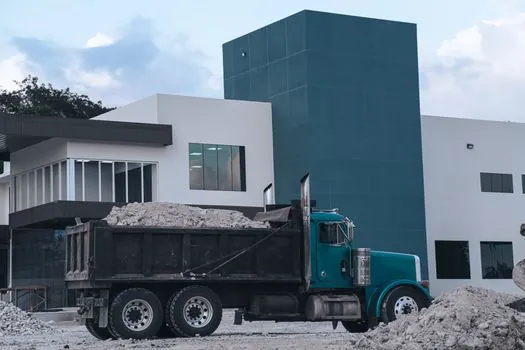
Class A is mandatory when the equipment is a tractor pulling a dump trailer, or a doubles combination such as a tractor, transfer trailer, and pup where the GCWR is 26,001 lb or more and the towed unit exceeds 10,000 lb GVWR, and this is the configuration common in long-distance aggregate, asphalt, and demolition hauling [S1][S2].
Class A pay for company drivers sits in the $55K-$85K band in 2026, and owner-operators on the same flatbed or end-dump seats can gross higher, with dispatch costs around $250 per week for semis reported by O Trucking [S2]. A Class A holder can legally drop down and drive any Class B or C vehicle, including a single-unit dump, so drivers who may switch between a transfer trailer and a straight chassis within the same fleet buy the Class A card once and keep both options open [S3][S5]. Drivers crossing state lines must also be 21 or older under federal rule, while in-state Class B dump work is permitted at 18 in most states [S4].
Decision Matrix: Class A vs Class B for a Dump-Truck Career
The fastest, cheapest path to a dump seat is Class B at 1-4 weeks of school and $1,500-$5,000, with a typical 2026 pay band of $45K-$70K and home-daily routes on single-unit chassis [S2][S5].
Class A is a 3-8 week investment at $4,000-$8,000, a pay band around $55K-$85K, and is required for any tractor plus dump trailer combination with a towed unit over 10,000 lb GVWR [S2][S5]. If the planned equipment is a tandem or tri-axle straight dump, a roll-off, or a concrete mixer on a single chassis, Class B is sufficient and the training dollars buy the right seat, not an overqualified license. If the plan includes transfer trains, pup trailers, or movement between straight-chassis and tractor-trailer dump configurations, Class A is the lower-risk choice because it also covers the Class B seats. A 2026 review of fleet hiring patterns notes that municipal and waste-haul fleets recruit Class B, while long-haul aggregate and asphalt carriers recruit Class A, and the deciding question is the trailer GVWR plate, not the job title on the recruiter's flyer [S2][S5].
Common Mistakes on the Dump-Truck CDL Choice
The most expensive mistake is buying a Class B "to try trucking" when the real goal is a 53-foot dry van or a long-haul dump combination, because the license will not unlock those seats and the school cost is sunk, per the 2026 O Trucking guide [S2].
The opposite error is spending $4,000-$8,000 and 3-8 weeks on a Class A when the only intended seat is a single-unit municipal dump that pays $45K-$60K, where a 1-4 week Class B course delivers the same eligibility at roughly a third of the cost [S5]. Drivers also need to read the GVWR stickers before assuming a "box-truck-looking" chassis is Class B; any single unit at 26,001 lb GVWR or more is Class B, and any combination crossing the 26,001 lb GCWR line with a towed unit over 10,000 lb GVWR is Class A regardless of how it looks on the lot [S2]. For related spec reading on aggregate-haul equipment, the bridge-formula axle spacing rules for concrete mixer trucks carry over to dump-truck weight distribution on the same interstate, and the ASTM A1035 rebar grade comparison is the matching material spec for any high-cycle dump body steel upgrade.
Sourcing, Standards, and the Federal Floor
The federal floor for CDL class definitions sits in 49 CFR Part 383, keyed to GVWR and GCWR numbers on the vehicle and trailer data plates, and each state implements that floor on top, so the same dump truck can require slightly different paperwork from state to state but the A vs B threshold itself is uniform [S2].
Entry-level driver training (ELDT) is required for both classes under FMCSA's 2022 rule that took full effect in 2024 and remains the baseline in 2026, covering classroom, range, and behind-the-wheel hours before the skills test [S4]. All facts in this article are drawn from CDL training, recruiting, and trucking-industry sources published between November 2025 and September 2026, with pay bands, school timelines, and GVWR/GCWR thresholds cross-checked across at least two of those references to keep the spec map honest.
For component-level specifications, see mining dump truck.