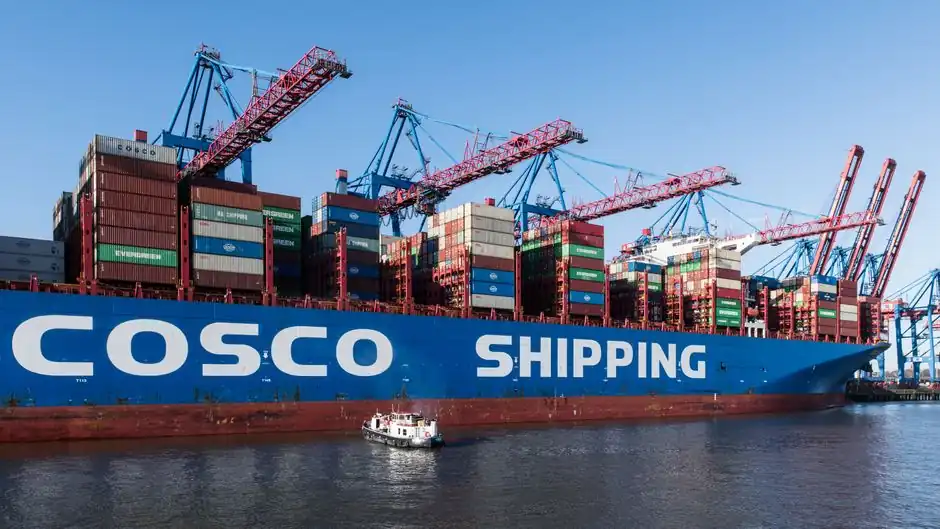
CMAA Specification 70 defines six service classes, A through F, that map a gantry or top-running bridge crane's expected lift count, load factor, and duty cycle to a structural and mechanical design point [S1][S3].
The classes are not "size" ratings, they are load-spectrum ratings, and misclassifying a unit by even one letter can shorten gearbox, hoist motor, and brake life by a factor that the OEM warranty will not cover [S2][S6]. For a gantry crane on a steel-yard rail, the working envelope stays the same across classes; what changes is the fatigue budget on every welded joint and the thermal class of the hoist winding.
What each CMAA service class actually means
Class A (Standby or Infrequent Service) covers installation and maintenance cranes that operate at slow speeds with long idle periods, and maximum capacity lifts are only sometimes required [S1].
Class B (Light Service) covers repair shops, light assembly, and light warehousing, with 2 to 5 lifts per hour averaging 10 feet per lift, and loads ranging from none to occasional full capacity [S1][S4]. Class C (Moderate Service) is the volume class, "most cranes are built to meet Class C," with loads averaging 50% of rated capacity, 5 to 10 lifts per hour at 15 feet average lift, and not over 50% of loads at rated capacity [S1].
Class D (Heavy Service) covers heavy machine shops, foundries, fabricating plants, steel warehouses, container yards, and lumber mills; loads approaching 50% of rated capacity are handled constantly, 10 to 20 lifts per hour at 15 feet, not over 65% of lifts at rated capacity [S1][S2]. Class E (Severe Service) is reserved for top-running bridge and gantry multiple-girder EOT cranes, with 20 or more lifts per hour at or near rated capacity in magnet, bucket, and scrap-yard work [S1][S4]. Class F (Continuous Severe Service) is also reserved for top-running bridge and gantry multiple-girder EOT cranes, requires continuous handling of loads approaching rated capacity, and is essentially the AISE steel-mill specification under a CMAA label [S1][S2][S8].
Class E versus Class F: where the line really sits
Both Class E and Class F apply to "top riding bridge and gantry type multiple girder electric overhead travelling cranes" and both expect loads approaching rated capacity throughout the crane's life [S1].
The practical split is application-driven: Class E covers high-cycle bulk-handling work (magnet, bucket, magnet/bucket combination, scrap yards, cement mills, lumber mills, fertilizer plants, container handling) with 20+ lifts per hour at or near rated capacity [S1]. Class F is for "custom designed specialty cranes essential to performing the critical work tasks affecting the total production facility," and demands the highest reliability and ease-of-maintenance features, with no further numeric lift count published in the spec [S1][S5]. For process engineers specifying a new gantry crane, that distinction drives the spare-parts kit, the redundancy of brakes, and whether the hoist gets a dual-motor arrangement.
The four input variables that decide the class letter
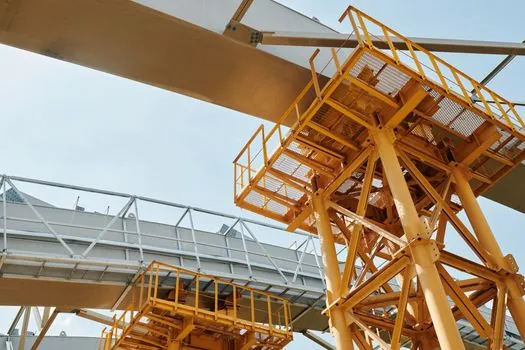
Mazzella lays out the four inputs a buyer has to pin down before a CMAA letter can be assigned: rated load (estimation of lifts at or near capacity), service (total hours in operation per day), number of lifts (average lifts and trolley/bridge movements per hour), and distance (average length of each movement) [S2].
Two auxiliary factors shift the class even when the four primary numbers look borderline: speed (lifts per hour and travel speed) and operating environment (heat, dust, corrosive atmosphere, outdoor exposure) [S2][S4]. A Class C crane in a foundry with ambient radiant heat will frequently be reclassified to Class D on the same lift counts, because the thermal derating of the hoist motor and the lubricant interval both tighten [S6]. Demag groups CMAA alongside HMI (H1 to H5), FEM, and ASME classifications as parallel systems, so a European-built hoist on a CMAA-classified crane is being judged on the lower of the two mapped duty ratings [S4].
Cost and component consequences of moving up one class
Two cranes of equal capacity and span can vary in price by as much as $100,000 when one is Class C and the other is Class D, E, or F, because higher classes require specialized hoists, end trucks, motors, bearings, and controls [S2].
The lifecycle story is the part the capex number hides: a Class F crane carries the highest reliability spec, special attention to ease of maintenance, and is justified only when the crane is a critical-path asset for the total production facility [S1][S5]. For a less critical asset, the same OEM will often quote a Class D or E build with documented derating on starts per hour, which is the more economical spec and is the most common heavy-fabrication choice in practice [S8]. Specifying for a future production increase, by building one class above current duty, is a recognized tactic and is cheaper than retrofitting a higher-class hoist later [S2].
Typical applications by class letter

Mapping published examples to letters gives a usable selection shortcut: A is power-station and motor-room standby cranes, slow and precise [S1][S4]; B is light assembly and warehouse service [S1]; C is machine shops and paper mill machine rooms, the volume class [S1][S6]; D is heavy machine shops, foundries, fabricating plants, steel warehouses, container yards, and lumber mills, plus standard-duty bucket and magnet operations [S1].
E is magnet, bucket, and magnet/bucket combination cranes in scrap yards, cement mills, lumber mills, fertilizer plants, and container handling [S1]. F is steel-mill AISE service and any custom specialty crane on a critical production line [S1][S2][S8]. The Hoosier Crane summary of Class C, "loads that average 50% of rated capacity, 5 to 10 lifts per hour," is a useful rule-of-thumb number that maps to the paper-mill machine-room example and is widely repeated across OEM duty-cycle explainers [S6].
How CMAA lines up against FEM, HMI, and ASME
CMAA is one of four overlapping classification systems a buyer will see on a quote; HMI (H1 to H5) classifies hoists by load spectrum, daily operating time, and starting frequency, FEM (European Materials Handling Federation) classifies by load spectrum and operating time, and ASME hoist classes run H1 to H5 on starts per hour and mean effective load [S4].
ProServ publishes a side-by-side comparison so a US-spec CMAA letter can be mapped to a European FEM group or an HMI hoist class before a cross-border procurement decision is signed [S7]. Crane Haitai's April 2026 explainer repeats the same consensus: Class D and E are the most commonly specified letters for general heavy industry, while Class F is reserved for continuous severe-duty operation such as steel mill service cranes working around the clock [S8]. AccuLift's August 2026 explainer frames the same six letters as a workstation-and-crane-system use profile rather than a strength rating, which matches how OEM selection software actually applies the spec [S9].
Limits of the spec and what it does not cover
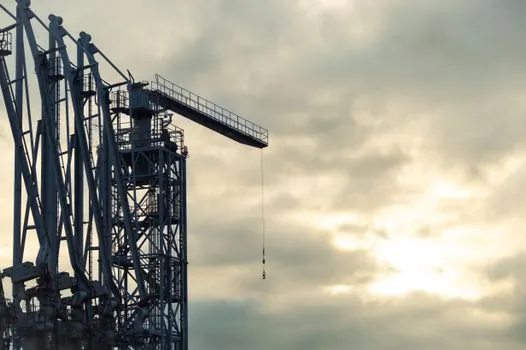
CMAA 70 covers top-running bridge and gantry multiple-girder EOT cranes, so single-girder under-running trolley hoists fall under CMAA 74 instead, and the service-class table is reused rather than redefined [S3]. CMAA 78 governs the professional service work (load testing, pre-operational checks, periodic inspection) performed on the crane, and CMAA 79 is the operator's manual, so the class letter is a design input to those documents, not a substitute for them [S3].
The spec also does not assign a fixed numeric cycle count to Class F the way it does for B (2-5 lifts/hr), C (5-10 lifts/hr, 15 ft average), D (10-20 lifts/hr, 15 ft, not over 65% at rated), and E (20+ lifts/hr at or near rated); Class F is a qualitative "continuous" rating and a reliability spec, not a published lifts-per-hour number [S1][S5][S8]. For higher-tier process-control monitoring, condition data on a pressure transmitter feeding the hoist hydraulic load cell, or a flow meter on the cooling circuit of a continuous-duty hoist motor, can be back-fitted to validate that the as-installed crane is actually meeting its declared CMAA letter in service.
For a 2026 procurement decision, two signals are trackable: confirm with the OEM that the proposed class is computed under CMAA 70 (not the older 70 series revisions) and ask for the FEM or HMI cross-class on the same nameplate, so a future European relocation or hoist re-sourcing does not silently downgrade the duty rating [S3][S4][S7].
Background reading: Skid Steer Chain Case Oil Level and Drive Chain Tension Check.