
Under standard asphalt milling conditions, road planing picks are swapped on average every 24 working hours, or roughly 7000 to 9000 m² of milled surface, while extreme abrasive cuts can force changes every 30 minutes [S1][S5]. The interval is not a fixed number, and treating it as one is the single most common source of unplanned downtime on cold milling machine fleets.
The four wear components on a cold milling drum are cutting picks, toolholders, tool bases, and the drum itself, with picks and holders being the only consumables that operators are expected to change in the field [S1]. The cold milling machine pick wear discussion therefore lives inside a wider toolchain where each downstream part is only as reliable as the wear data driving the upstream replacement decision.
What Sets the Real Replacement Interval
Pick life is not a single number, and the 24-hour, 7000 to 9000 m² average applies to a normal asphalt cut on a half-lane machine; once concrete, rebar, or deep cuts enter the picture, the interval collapses. Crews working in very abrasive, heavy-cut situations have reported tool changes as often as every 30 minutes, which sets a real-world floor for the planning window [S5].
Material hardness, cut depth, and machine travel speed are the three primary drivers, with cut depth typically held at 200 mm on a standard 2-meter class cold planer during normal asphalt work [S4]. Under those baseline conditions, a fresh set of picks consumes 55 to 65 L/hr of diesel, and that fuel number is the cleanest leading indicator the operator has.
Fuel Rate as a Predictive Wear KPI
Fuel consumption rises measurably before any individual pick looks worn to the eye, with the gap between visible wear and fuel-driven wear running 8 to 12 operating hours [S4]. At 50% of pick service life the rate climbs to 65 to 72 L/hr, and at end of service life it reaches 75 to 85 L/hr, which is a 30% fuel penalty at the top end of the curve.
Cutting resistance increases 40 to 60% once the carbide tip wear flat reaches 2 to 3 mm across the cutting face, and engine power demand follows the same curve because the hydraulic drum loop simply asks the engine ECU for more torque [S4]. Replacing picks early at 15 to 20% fuel increase above baseline instead of 30 to 35% can reduce fuel cost per project hour by 8 to 12%, and on a five-machine fleet running 2000 hours per year the excess fuel bill from running picks one wear stage past optimal can exceed $15,000 annually [S4].
Picks vs Holders vs Bases: Where Wear Cascades
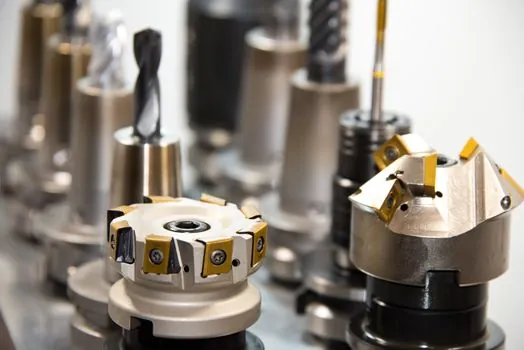
Holders are the next wear part downstream of picks and most manufacturers recommend replacement once wear exceeds 0.5 mm from nominal diameter, because a worn holder will not centralise the new pick and immediately destroys its rotation pattern [S7]. A pick left in service past that cascade can wear into the holder, drive up secondary repair cost, and in the worst case write off the tool base, which is welded to the drum and shares the drum's service life [S1].
The grooved toolholder profile used by major cutter suppliers extends holder service life by more than 25% by reducing lengthwise wear of the holder pocket, and that improvement is what allows modern holders to outlast the carbide inserts they carry [S2]. When choosing between a cutting machine pick set and a holder set, the holder is the longer-life component and is therefore the wrong place to economise if the goal is consistent pick rotation.
Preventive vs Reactive Maintenance on the Drum
There is no universal replacement interval for carbide picks, and life depends on material, cut depth, and travel speed rather than on hours alone; carbide picks on active asphalt jobs are commonly replaced roughly twice a week, while steel-bodied blades run 1 to 3 months under the same duty cycle [S3]. Daily inspection still beats a calendar, because uneven wear, vibration, rotation problems, and pattern defects in the milled surface all show up before a pick would have failed on a schedule.
A dull or damaged tool forces the machine to work harder for the same cut, which strains the drum, holders, and drivetrain together, so a missed pick replacement rarely costs only a pick [S3]. Crews that run planned inspection and replacement almost always spend less than crews that wait for emergency tool swaps, lost production hours, and secondary drum damage, and this is consistent across both asphalt and concrete-reinforced sections.
Selection Criteria by Job Type
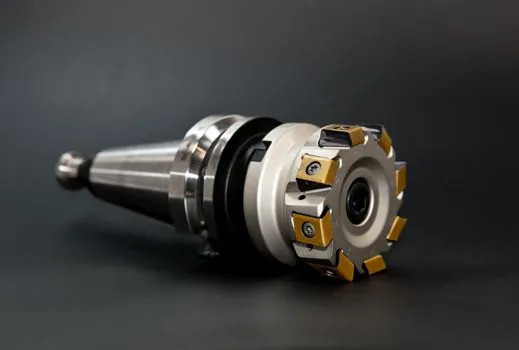
For routine asphalt resurfacing at 200 mm depth, the 24-hour pick change interval and a 15 to 20% fuel-rate trip point are the most defensible spec values, with 8 to 12% fuel savings as the immediate ROI figure [S1][S4]. For concrete or rebar-reinforced sections, expect 30-minute change intervals at the extreme, holder wear to dominate secondary cost, and a riser cutting machine style bit change cadence rather than a mill-and-walk cadence.
For deep partial-depth removal where a cold chamber machine sized drum is being pushed at maximum depth, the 2 to 3 mm carbide wear flat threshold is the right cut-off for force-based scheduling, and the 0.5 mm holder diameter tolerance is the right cut-off for holder-side replacement [S4][S7]. Both numbers should be in the contractor's daily inspection checklist, not just the calendar.
Limits, Failure Modes, and Common Misreads
Visual inspection lags fuel data by 8 to 12 hours, and by the time a row of picks looks worn to a walk-around check the machine has already burned excess diesel for most of a shift, so fuel-rate trending is the higher-resolution KPI [S4]. A tip that wears flat on one side is not normal wear, it is a stopped-rotation failure mode caused by material buildup, and a stopped pick will wear into the holder well before it falls out on its own [S5].
A solid streak in the milling pattern behind the machine is a downstream symptom of a worn tooth, not a grade or speed problem, and chasing it with more travel speed accelerates the rest of the drum [S5]. Toolholders below the 0.5 mm nominal-diameter limit should be treated as a holder-and-base problem, not just a holder swap, because a new pick in a worn holder will replicate the same uneven wear pattern within hours [S7].
Sourcing and Standards Discipline
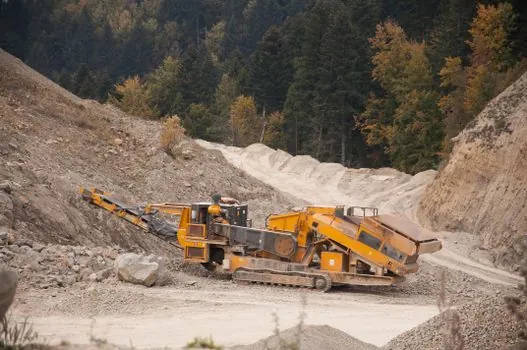
Round-shank conical picks compatible with Wirtgen, Roadtec, and Simex cold planers are widely available from dedicated milling-teeth manufacturers, and the round-shank form factor is the de facto interface across most half-lane machines in service today [S8]. For OEM-spec holders and grooved-prolongation toolholders that meet the Wirtgen cutting tools catalogue, the published service-life gain of more than 25% is the most concrete supplier-side claim worth verifying on the contractor's own data [S2].
For spec writers, the durable reference set is: 24 working hours or 7000 to 9000 m² as the planning baseline [S1]; 30 minutes as the worst-case abrasive cut interval [S5]; 2 to 3 mm carbide wear flat and 15 to 20% fuel-rate increase as the predictive replacement trigger [S4]; and 0.5 mm holder diameter wear as the holder-replacement threshold [S7]. Treat the next node to watch as the carbide-grade and tip-geometry options entering the air pick adjacent segments, where similar wear-versus-fuel trade-offs are being quantified for handheld concrete demolition, and the practical signal to track is whether suppliers start publishing per-cubic-metre fuel curves alongside their holder service-life gains [S4][S2].
For related coverage, see Cantilever vs Selective Pallet Rack for Long Bar Stock: Spec Decision.