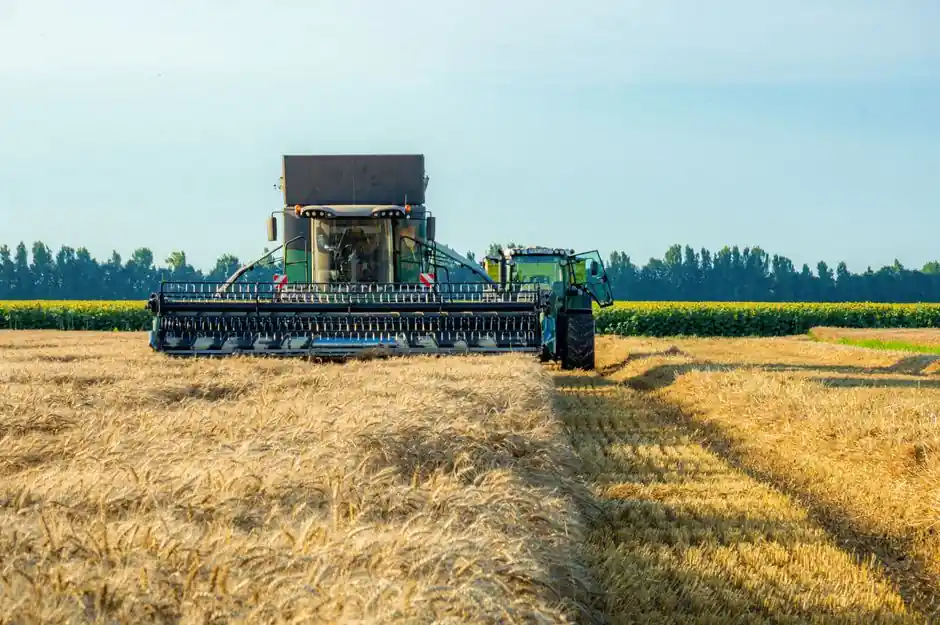
Shantui's 2026 catalog lists cold milling machines at 0.5 m, 1 m, and 2 m milling widths, with wheel and crawler chassis paired to hydraulic or mechanical drive [S4]. ORIEMAC's export catalog groups cold milling machines under road construction machinery, alongside motor graders, asphalt pavers, and soil stabilizers, confirming a market overlap between road-class equipment and rural resurfacing contractors [S1].
Used inventory confirms real-world price floors: a 1995 Bitelli SF-210 tracked cold mill is listed for resale across Middle East, Africa, and Europe channels on Plantandequipment.com, dated 2026-07-18 [S2]. DHgate's marketplace is dominated by tungsten-steel and ceramic nail-milling cutters, a different product class, illustrating that "milling machine" returns split sharply between road-class and personal-care categories [S3].
Drum Width, Power, and Drive Train: The Three Gates
Drum width is the primary gate. The 0.5 m class suits farm-lane edge trimming and feedlot aprons; the 1 m class covers standard farm-road overlay removal; the 2 m class is a highway-spec drum scaled down to agricultural lane widening [S4]. Shantui lists wheel and crawler variants, with hydraulic and mechanical drive options on each, giving four chassis-and-drive permutations per width [S4].
Engine power scales with drum width and cutting depth. A 0.5 m mill typically runs 80-130 kW for surface texturing to 100 mm depth; a 2 m mill requires 300-450 kW to maintain 0-300 mm milling depth on compacted asphalt or cement-stabilized gravel. Cutter drum speed sits in the 90-120 rpm range for most agricultural cold-planing duties, with line speeds of 0-30 m/min depending on material hardness.
Wheel chassis work on paved farm lanes and concrete feedlot floors; crawler chassis are mandatory on soft subgrade, mud-prone feedlots, and any job where ground pressure must stay below 40 kPa. A 2 m wheel mill can weigh 18-22 t empty, so axle load on rural bridges becomes a selection gate equal to drum width.
Cold Milling Machine vs Asphalt Planer vs Soil Stabilizer
A cold milling machine is built to remove a defined thickness of bound pavement, asphalt or concrete, in a single pass with a rotating tungsten-carbide drum. An asphalt planer is usually a smaller, skid-steer-mounted attachment limited to 200-450 mm widths and 50-75 mm depths. A soil stabilizer mixes binder into unbound material in place and is not a milling tool. [S1]
For a 4 m wide farm lane receiving a 60 mm asphalt overlay removal before resurfacing, a 1 m cold mill makes 4 passes; a 2 m mill makes 2 passes and halves the joint count. The 2 m mill needs a 350 kW+ engine and a 20 t+ chassis, which most farm tractors cannot tow. The 1 m mill at 150-200 kW is the practical sweet spot for contractor-supplied agricultural work.
Buyers comparing a dedicated cold mill to a cutting machine attachment should note that planer attachments sacrifice depth control, dust suppression, and grade automation. A standalone cold mill carries a conveyor for milled material loadout, water spray for dust, and a hydraulic side-shift, none of which a compact attachment replicates.
Agricultural Use Cases Beyond Asphalt
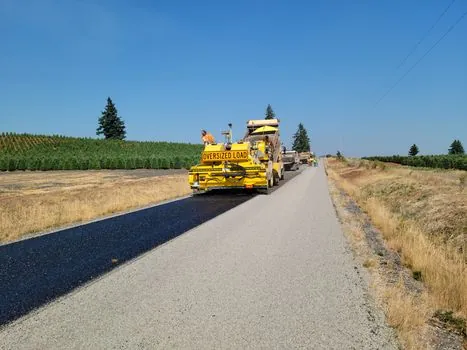
Farm applications divide into four bands. Band one: asphalt-overlay removal on rural roads and farm-lane entrances, where 50-100 mm depth is standard. Band two: concrete feedlot floor texturing to restore slip resistance, depth 3-8 mm, which a 0.5 m mill handles at high line speed. Band three: cement-stabilized gravel reshaping, depth 100-200 mm, requiring 1 m or 2 m class with mechanical drive for high torque. [S4]
Band four is less common but real: removal of failed geomembrane liners from manure lagoons and silage clamps, where a 0.5 m wheel mill on low ground-pressure tracks removes the top 20-40 mm of contaminated surface. Wirtgen's W 50 Ri and similar 0.5 m machines are routinely redeployed from road work to this niche on European dairy farms.
Core machine type selection matters: a fine-milling drum (tool spacing 6-8 mm) leaves a surface texture suitable for thin-lift asphalt overlay without shot-blasting; a standard drum (tool spacing 15-18 mm) leaves a coarser profile that needs a leveling course first.
Selection Criteria Map for Farm Buyers
Match these four gates in order: (1) lane or yard width vs drum width, (2) cutting depth vs material hardness, (3) haul-truck turning radius vs machine length, (4) bridge/culvert load rating vs operating weight. A 2025 product summary on the Chinese construction-equipment portal groups cold mills under the "XM Series" and "CLX-1000" labels, with the CLX-1000 explicitly rated for "milling and removing asphalt concrete layers on expressway, road, airport, parking lot, large freight yard" [S6].
Buyers who already operate skid steers for feedlot work should compare a 0.5 m cold-mill attachment against a dedicated mill. The same selection logic used for skid steer loader selection for agriculture, rated operating capacity and hydraulic flow, applies when sizing an attachment-class mill: a 0.5 m planer draws 60-90 L/min at 200 bar.
For larger contractors running cold mills alongside milling-class machines, the torque and ground-pressure logic overlaps with skid steer loader selection for tunneling and forestry skid steer selection, where chassis type and hydraulic cooling are the failure modes that drive downtime.
Limitations, Failure Modes, and What Cold Mills Will Not Do
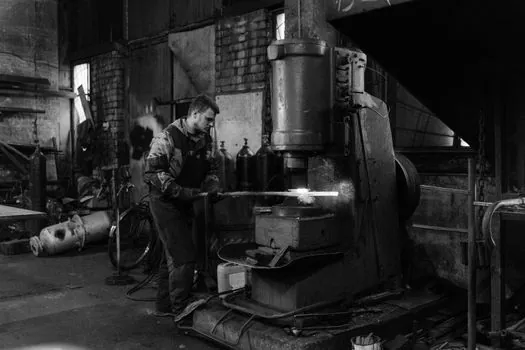
A cold mill is not a reclaimer: it cuts and loads, it does not remix. It is not a soil stabilizer: it does not inject binder. It is not a grader: it does not shape unbound material. Attempting any of these roles burns cutters, stalls the drum, and voids the conveyor warranty. A 2 m class mill on a 30 m farm-lane job is also uneconomic: mobilization cost dominates. [S1]
Common failure modes on agricultural deployments: (a) cutter-block loss on contaminated bases with hidden rebar or large aggregate; (b) track wear on abrasive cement-stabilized gravel at 200+ hours; (c) conveyor belt tracking errors when milling damp, sticky asphalt; (d) dust-suppression pump cavitation in freezing conditions. Each is a known design weakness, not operator error.
Used-import buyers should verify drum hours, conveyor splice condition, and water-tank integrity before signing. The 1995 Bitelli SF-210 listing dated 2026-07-18 [S2] sits in a market segment where 30-year-old machines are still serviceable with replacement drums, but only if the undercarriage and engine have been rebuilt.
Sourcing Channels and Standards Anchors
Three sourcing channels dominate 2026: (1) OEM-direct export through Chinese exporters like ORIEMAC, which lists cold milling machines alongside motor graders, pavers, and soil stabilizers [S1]; (2) used-equipment dealers serving Middle East, Africa, and Europe with legacy brands such as Bitelli [S2]; (3) new-OEM direct sales through manufacturer portals such as Shantui, which publishes the 0.5/1/2 m width matrix and four drive permutations [S4].
Buyers comparing Chinese OEM offerings against established European brands should match spec sheets on drum width, engine power, milling depth, conveyor discharge height, and water-tank capacity. The Chinese construction-equipment portal CLX-1000 entry cites expressway, road, airport, parking lot, and large freight yard as target applications, with no agricultural sector listed explicitly [S6].
Verify drum type (fine vs standard) and tool spacing before purchase; these two specs control 80% of the surface finish. Confirm engine emissions tier for the destination market, since Tier 4 Final and EU Stage V machines cannot be imported into regions requiring only Tier 3 without re-engineering the aftertreatment.
Track the Shantui 0.5/1/2 m width matrix updates and any new fine-milling drum SKUs released through Shantui's 2026 product portal [S4], and watch for CLX-1000 spec-sheet refreshes on the Chinese construction-equipment portal [S6], since these two sources set the floor on price and width availability for agricultural-scale cold mills through the rest of 2026.