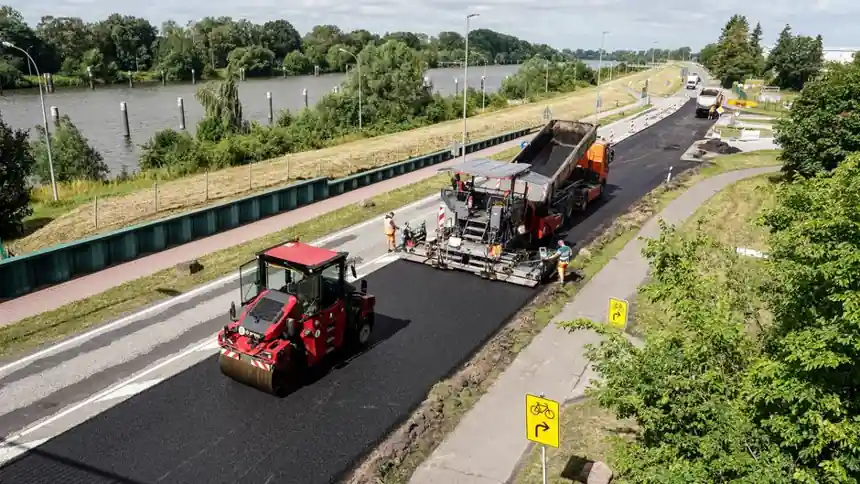
Cold milling is the controlled removal of asphalt or concrete pavement to a desired depth, performed unheated by a rotating drum lined with tungsten-carbide tipped teeth [S1][S4]. Heater scarification heats the pavement surface first, then uses stationary steel tines or teeth to rake off up to 25 mm of the softened layer [S1].
The depth gap is the dominant fact on a job-planning sheet: a cold milling machine routinely cuts 0 to 300+ mm in a single pass, while a heater scarifier is capped at roughly 25 mm because heat penetration into the bound layer sets the working window [S1][S4]. That single number decides which process goes on the schedule.
Cutting Mechanism and Tooling
FHWA's archived recycling glossary defines cold milling as an automatic removal method using machines with a rotating drum lined with a variable number of tungsten-carbide tipped teeth; cold planing is the sister term describing shearing of the surface [S1]. Heater scarification, in contrast, uses spring-loaded tines, carbide teeth, or hot milling heads that follow an infrared or direct-fire heater; the steel tines are stationary relative to the ground, with the scarified slab peeled off rather than milled to grade [S1][S3].
Tooling cost and wear pattern diverge accordingly. Tungsten-carbide milling teeth on a cold milling machine see impact loading on every rotation and are changed per tooth-holder, with pick cost being one of the main OPEX drivers on a contract [S4]. Heater-scarifier tines work hot asphalt, a softer matrix, and are typically replaced by row rather than individually, but heater burners, fuel trains, and radiant panels add a separate maintenance stream that cold milling does not carry [S3][S5].
Depth, Production Width, and Throughput
Depth of cut is the cleanest separator. Cold milling is depth-flexible: typical mid-size machines cut from surface texturing at 10-30 mm up to full-depth removal of 300 mm or more on thick concrete, with drum widths commonly between 1.0 m and 2.2 m for utility-class units and 2.0 m to 3.8 m for highway-class machines [S4]. Heater scarification is depth-limited to roughly 25 mm because the heater array can only soften the upper 25 mm of the bound layer in a single pass without overheating the binder below [S1].
Production-rate economics follow. Cold milling is a one-pass, ambient-temperature operation, so area output scales directly with drum width, machine travel speed (often 30-100 m/min on fine texturing), and downtime for tooth changes; dustrol-class contractors cite high productivity at low cost when RAP is sold back into the same job [S4]. Heater scarification runs slower because the heater dictates travel speed (typically 8-25 m/min for surface recycling units) and the softened layer must be raked while hot, but the trade is reduced aggregate degradation and no dust plume [S3][S5].
Heat, Emissions, and Site Constraints
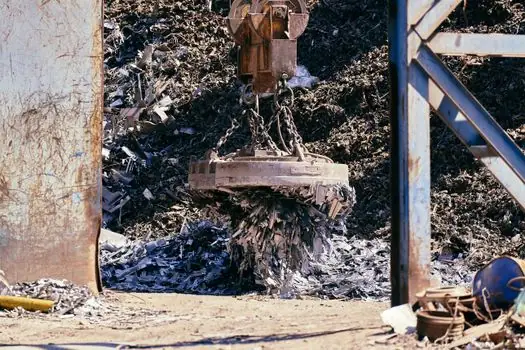
Heater scarification is a hot process: burners heat the pavement to roughly 150-180 degrees C at the surface so tines can peel a 25 mm lift, which means a propane or diesel fuel supply on site, hot-side crew protection, and a queue of pavers waiting for the train to clear [S3][S5]. Cold milling is unheated, so it avoids the fire-risk envelope entirely, but it generates a milled RAP windrow and airborne fines that must be managed with water suppression or dust collection [S4].
For urban arterials and night work, cold milling is usually the lower-friction option: no open flame near utilities, no radiant heat signature, and no fuel convoy. For residential streets with thin existing overlays where the agency wants to keep the existing aggregate gradation intact, heater scarification is often specified because the asphalt is softened rather than fractured, producing a reworked surface that bonds well to a simultaneous HMA overlay in a "repaving" configuration [S1][S5].
End-Use: CIR and HIR Treatment Fit
Where the goal is to remove and reprocess the upper layer, cold milling feeds directly into Cold In-Place Recycling (CIR): a milling machine breaks and pulverizes a thin amount of the top layer of the old pavement, the material is sized, mixed with emulsified asphalt, foamed asphalt, or chemical additives, and laid by a follow-up paver before a wearing course is placed [S2]. This is the most common configuration on county and state rehabilitation jobs because the depth, gradation, and additive rate are independently controllable [S2].
Heater scarification, by contrast, is the lead unit in Hot In-Place Recycling (HIR) surface recycling trains: a heater-scarifier preheats and rakes 25 mm, the loosened material is sometimes blended with virgin aggregate and a recycling agent in a pugmill, and the train lays either a single recycled lift (remixing) or a recycled lift plus a simultaneous HMA overlay (repaving) [S1][S3][S8]. ARRA's standard HIR classification groups heater scarification under "Surface Recycling," which is the lightest of the three HIR depth tiers and is reserved for pavement with sound base and only surface-level distress [S8].
Decision Matrix: Which Process When

Use cold milling when the project calls for: depth correction beyond 25 mm; removal of a failed HMA layer down to a sound base; production rates above roughly 1,500-3,000 m^2 per machine-shift; or full RAP recovery for downstream cold recycling or hot-mix feed [S2][S4]. It is the default on highways, urban arterials, and any job where an overlay will be placed on a milled, tooth-textured surface to restore skid resistance [S4].
Use heater scarification when the existing surface is oxidized but structurally adequate; the project scope is limited to the top 25 mm; an HIR repaving or remixing train is on the schedule; and the agency wants to keep the existing aggregate gradation intact instead of generating a milled RAP windrow [S1][S3][S5]. It is the wrong tool for rutting deeper than 25 mm, for base failure, or for any pavement with active fatigue cracking that has propagated below the heated zone [S1][S2]. A side-by-side reference for cold milling depth classes is in the spec guide at Cold Milling Machine Depth Range: 2026 Spec Guide for Pavement Rehab.
Cost Drivers and Spec Watchouts
Cold milling cost is dominated by drum width, depth of cut, and tooth consumption. Heater-scarifier cost is dominated by fuel burn, train length, and the matching paver throughput, because the scarifier cannot outrun the laydown operation behind it. On multi-day jobs, plan for one or two standby milling drums on a cold milling spread and one spare burner array on a heater-scarifier spread, with the latter having a longer mean time to swap [S3][S4].
Spec watchouts: confirm whether the contract calls for "cold planing" or "cold milling" because the two are commonly used interchangeably for the same rotating-drum operation but may carry different smoothness tolerances in the bid documents [S1][S4]. For HIR work, confirm the heater-scarifier is part of an ARRA-recognized surface recycling, remixing, or repaving train, since the equipment alone is not "HIR" until it is paired with downstream sizing and laydown [S8]. For CIR, verify the additive system is rated for emulsified asphalt, foamed asphalt, or the specific chemical additive named in the spec, because additive selection controls the resulting air-void content of the recycled layer [S2].
Failure Modes and Limits
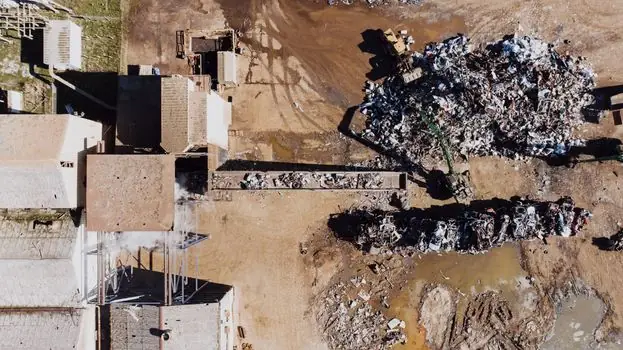
Cold milling fails in spec when the operator runs too fast for the cut depth, leaving a wave under the drum, or when the teeth are worn enough to glaze the surface instead of fracturing aggregate, producing a smeared, low-friction finish that defeats the whole point of the operation [S4]. Heater scarification fails when the heat front is non-uniform, either scorching the binder (smoke and flames trailing the train) or leaving cold streaks where tines cannot penetrate, producing an unevenly scarified mat that the paver cannot correct downstream [S1][S3][S5].
Both methods share one structural limit: they do not fix a failed base. If the distress is sub-grade or base-layer, the correct next step up is Full Depth Reclamation, not deeper cold milling and not another pass of the heater-scarifier train [S1][S2].
Trackable signals for the next planning cycle: monitor whether ARRA's HIR committee updates the Surface Recycling depth limit above the legacy 25 mm figure, since burner-array and insulation improvements continue to push the heat front deeper, and watch for county-level CIR bid tabs that separate milling-only line items from additive-injection line items, because that split is what lets contractors price additive rate against depth on a square-meter basis [S2][S8].