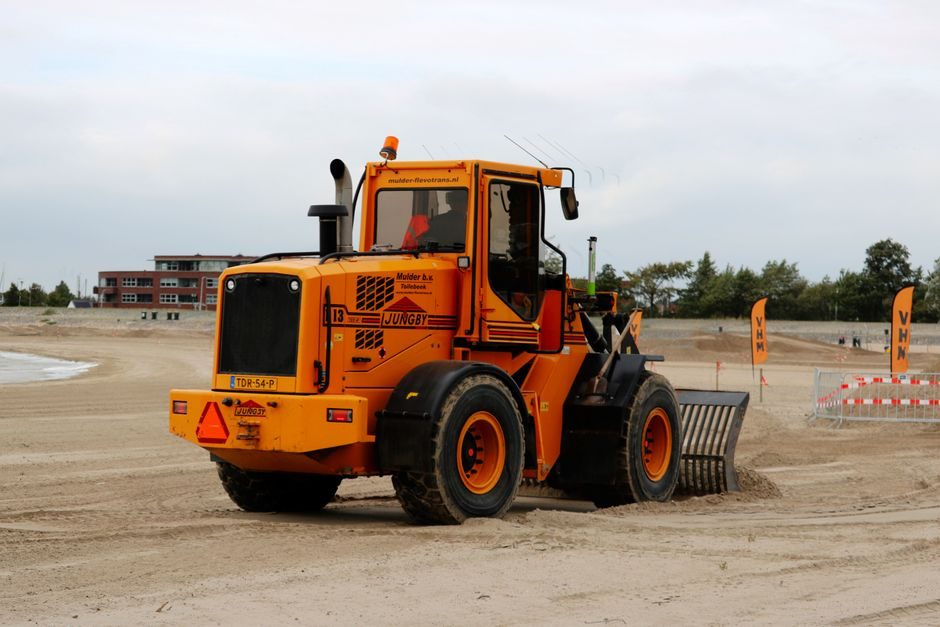
A skid-steer cold planer is a compact, self-levelling attachment designed to dismantle asphalt crusts, define utility cuts and strip damaged surface layers; a cold milling machine is a dedicated, self-propelled production machine engineered for full-lane asphalt or concrete removal at much higher daily output [S1][S5].
The two are commonly confused on jobsites because both use a rotating drum fitted with conical carbide picks and both are sold under the umbrella term "cold planing", but they target completely different production envelopes and capital cost bands. The selection frame below is built from public manufacturer specification sheets and 2026 product listings for the two equipment families [S1][S2][S3][S4][S5].
Operating envelope: width, depth and weight
Skid-steer cold planer attachments in the 2026 catalogue sit in the 200-450 mm milling width band and typically reach 100-150 mm milling depth, with the operator mounting them on a compact host such as the Bobcat Classic S450 (49 hp, 1,370 lb rated operating capacity) [S1][S2][S4]. The CM Srl FS-series self-levelling planer is specified as compact and designed to dismantle asphalt crusts, create predefined sections and remove damaged surface layers on skid-steer, backhoe-loader and wheel-loader hosts [S1].
Dedicated cold milling machines, by contrast, start in the 1,000 mm class and go up to the Wirtgen W 2000's 2,000 mm milling width at 0-320 mm milling depth, with a 433 kW / 589 PS engine, mechanical milling-drum drive, four-track travel and 30,000 kg CE operating weight [S5]. For an overview of the host machine used on the smaller end, see the skid steer loader selection frame and the skid-steer-loader encyclopedia entry.
Power source and hydraulic demand
Attachment-class cold planers derive all cutting and traction energy from the host skid-steer's auxiliary hydraulics and engine, which is why CM Srl and Mazio Attachments both market their products as universal cold planers for skid-steer platforms [S1][S2]. Cutting energy is limited by the host's hydraulic flow (typically 60-90 L/min on a 49 hp skid-steer), which constrains drum speed and pick engagement in dense asphalt or concrete [S4].
Self-propelled cold milling machines carry their own diesel engine, independent hydrostatic track drives and a mechanical or hydraulic drum gearbox, which decouples cutting energy from any tow or host machine [S5]. This is the reason the W 2000 can sustain a 2,000 mm cut at 320 mm depth, where a skid-steer attachment would stall the host's hydraulics in seconds.
Daily output and jobsite positioning
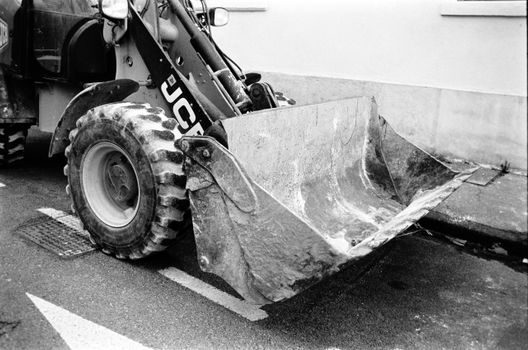
For utility patches, trench reinstatement, manhole surrounds and small footpath repairs, a skid-steer cold planer delivers output in the 50-200 m²/day range with a single operator and a compact host, which is its economic sweet spot [S1][S2]. A 49 hp skid-steer host such as the Bobcat S450 keeps the combination inside a 2-tonne transport envelope, so the unit can be towed on a light trailer between small jobs [S4].
For motorway resurfacing, runway milling and full-width pavement recycling, dedicated cold milling machines such as the W 2000 operate in the 2,000-8,000 m²/day range and feed material directly into a conveyor-loading truck, which the attachment class cannot do [S5]. For a deeper look at the larger production-class host, the cold milling machine encyclopedia entry covers the machine class in detail.
Selection criteria side-by-side
Decision criteria for procurement typically compress to four axes: milling width, milling depth, host/prime-mover weight, and capital cost. The table below lines the two families up against those axes using only the 2026-published data points [S1][S2][S4][S5].
On width, a skid-steer cold planer covers 200-450 mm and a Wirtgen W 2000 covers 2,000 mm, a 4-10× gap. On depth, attachments cap at roughly 150 mm while the W 2000 reaches 320 mm. On host weight, a S450-class skid-steer sits near 2.7 t and the W 2000 is 30 t. On capital cost, attachment list prices sit in the USD 5,000-15,000 band while dedicated half-lane millers are an order of magnitude higher [S1][S2][S4][S5].
For procurement, the rule of thumb is: if the daily milled area is below 300 m² and the cut depth stays under 100 mm, a skid-steer cold planer is the economic pick. Above 1,000 m²/day, or any cut depth beyond 150 mm, a dedicated cold milling machine is the only realistic option [S1][S2][S5].
Material, picks and consumables
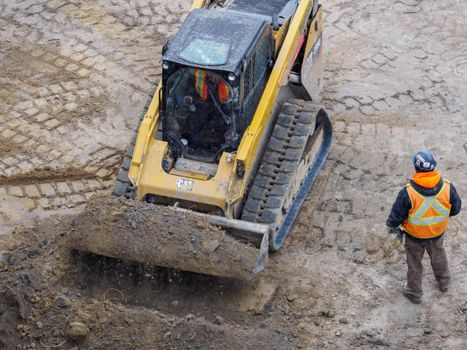
Both machine families use a welded steel drum fitted with conical tungsten-carbide picks held in spiral or V-pattern holder blocks, and both water-spray dust suppression is standard. The CM Srl FS-series is described as a self-levelling asphalt planer, which means the drum frame pivots to follow a reference surface and the depth is set mechanically or with a simple ski [S1].
The W 2000 uses a mechanical milling-drum drive with hydraulic all-track travel, plus integrated conveyor loading and grade-control sensors, so consumable wear is managed in tonnes-per-pick rather than square metres per shift [S5]. For owners of skid-steer hosts, the Lonking CDM303 product specification is a useful reference point for matching auxiliary hydraulic flow to a 200-450 mm planer drum [S3].
Who it is for, and who it is not for
A skid-steer cold planer is for utility contractors, landscaping firms, municipal road crews and small paving subcontractors who already own a skid-steer and need a low-capex milling attachment that can be fitted and removed in minutes [S1][S2]. It is not for production-scale paving contractors, motorway resurfacing or any job that needs a uniform 2,000 mm milled texture in a single pass [S5].
A dedicated cold milling machine is for large paving contractors, airports, motorway maintenance operators and rental fleets that can justify the capital cost, transport permits and trained operator base. It is not for contractors who only need a handful of patches per week, where a skid-steer attachment pays back in months and a half-lane miller would sit idle [S1][S5].
Limitations and failure modes to spec against
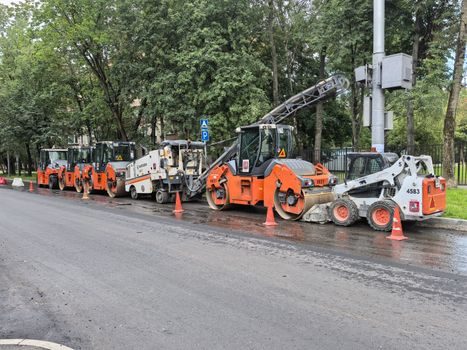
The most common failure on skid-steer cold planer attachments is hydraulic overheating when the operator tries to take a full-width, full-depth cut in dense asphalt, which stalls the host's auxiliary circuit and trips the relief valve. Specifying a host with at least 70 L/min of auxiliary flow and an oil cooler is the practical mitigation [S4].
On dedicated cold milling machines, the binding constraint is pick retention and drum balance at high depth, plus the logistics of water-spray tanker support and conveyor truck staging [S5]. Specifying a minimum 4-track travel system and mechanical drum drive is the standard mitigation on half-lane and full-lane machines [S5].
For buyers comparing the two categories, the most reliable next step is to pull the host-machine hydraulic curve and match it to the attachment's published flow/pressure window before issuing a PO, and to confirm the production-class miller's emissions tier and transport width against local road permits. Watching for new compact cold planer listings from CM Srl and Mazio Attachments, and any 2026 model-year update to the Wirtgen W-class drum gearbox, are the two trackable signals for the next procurement cycle [S1][S2][S5].