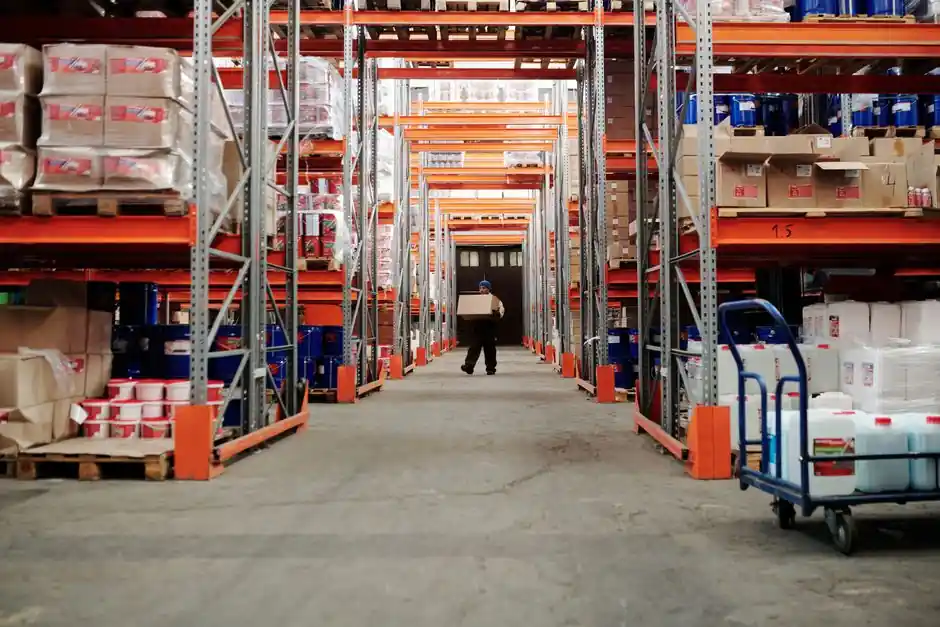
Embedded part selection for a cold storage warehouse is dominated by four concrete engineering gates: target temperature zone (per the Codex Alimentarius/ASHRAE bands cited in CKY's March 2026 facility guide [S2]), required panel foam-core thickness for that zone, underfloor heating load sized to prevent frost heave under the slab, and the vapor/condensate interface between embedded anchors and the insulated envelope [S1][S2][S3].
The U.S. cold storage market alone is on track to USD 55.61 billion in 2026, growing at 5.83% CAGR to USD 73.83 billion by 2031 [S7], which makes correct embedded-part specification a high-leverage decision across a 25-30 year facility lifespan [S2]. This article maps embedded hardware to zone, substrate, and standard, and flags the constraints that sink conversions versus greenfield builds.
Zone-Driven Embedded Spec: Chilled, Frozen, Deep-Freeze
Codex Alimentarius and the ASHRAE Handbook define four operative temperature bands that the embedded spec has to follow: chilled 0°C to +4°C, medium-temp -5°C to 0°C, frozen -18°C to -25°C, and deep-freeze -30°C to -60°C, with the -18°C threshold codified by EU Directive 89/108/EEC as the point where microbial growth effectively ceases [S2]. Operators typically target -20°C to -22°C in frozen zones to absorb door-opening and defrost transients [S2].
Embedded insulation panels follow that band: 80-100mm PUF or PIR sandwich panels cover chilled zones 2-8°C, 100-150mm is the working range for -18 to -25°C frozen storage, and 150mm or thicker foam-core panels are mandatory for -30 to -40°C blast-freeze and industrial cooler cells [S3]. PIR (polyisocyanurate) is the standard upgrade from PUF where fire compliance is a regulatory requirement alongside refrigeration performance, because it retains the same thermal conductivity profile while improving fire behavior [S3]. This layered logic also feeds directly into the broader cold storage facility design workflow, where panel U-value and zone adjacency cascade into refrigeration load.
Slab and Sub-Slab Embedded Hardware
Frost heave is the dominant failure mode under any frozen or deep-freeze zone, and it is mitigated with embedded underfloor heating plus, in many retrofits, cement ventilation pipes cast beneath the slab to reduce ground temperature through natural airflow [S1][S5]. Heat tracing density, glycol loop sizing, and pipe embedment depth have to be calculated against the ASHRAE five-component load model, where product pull-down (Q2) typically represents 35-55% of total refrigeration load in high-throughput facilities, and infiltration (Q3) can add 15-25% in busy DC doors [S2].
For warehouse conversions, the existing slab is rarely adequate: structural capacity, vapor barrier continuity, and electrical capacity must be re-evaluated before any embedded element is poured or anchored [S5]. Comparing greenfield versus conversion, new builds carry higher initial investment but lower 25-year operating cost, while conversions can save on civil works but inherit the prior building's thermal and structural limits [S5]. Specifying embedded-part inserts for rack baseplates, door frames, and dock seals therefore starts with a slab condition survey, not a catalog number.
Comparison: PUF vs PIR vs XPS Embedded Panel Cores
Three foam-core families dominate embedded cold storage panels, and the selection gate is a four-criteria stack: thermal conductivity, fire rating, moisture uptake, and delivered cost per m². PUF (polyurethane foam) is the default in most chiller and frozen builds because it delivers the lowest thermal conductivity per millimeter of thickness, freeing floor area and reducing structural load [S3]. PIR keeps the same thermal envelope but adds improved fire performance, which is the deciding factor where the AHJ (Authority Having Jurisdiction) requires a Class B or better surface spread rating alongside refrigeration duty [S3].
For deep-freeze zones below -30°C, panel thickness rises to 150mm or more, and foam density has to sit at the upper end of the supplier's published range; under-specifying either thickness or density at this band is the most common cause of a refrigeration system running outside its design envelope and a chronic heat-ingress penalty [S3]. XPS (extruded polystyrene) appears in slab-edge and under-slab embedded applications where compressive strength and low water absorption matter more than minimum thickness, but it is rarely used as the primary wall or ceiling panel because of its lower thermal performance per millimeter compared to PUF/PIR [S3].
Rack, Pallet, and Automation Embedded Interfaces
Pallet rack and automated storage embedded interfaces have to be designed against the same thermal envelope, because pallet selection directly drives hygiene, automation uptime, and labor strain across cold operations [S1]. Multiplexed, open-plan cold environments replacing legacy walk-in freezers and pallet racks are emerging as the preferred layout for rapid grocery fulfillment, and this shift changes the embedded anchor pattern: wider column spacing, more floor-embedded conveyor pickpoints, and more door-frame embedded sensors [S4].
When the layout transitions to open-plan, the storage rack embedded baseplate count typically drops but each baseplate's shear and uplift load rises, because racking concentrates load at fewer columns to free pick-face area. For pallet flow lanes inside frozen zones, storage cage embedded rails and stops have to be rated for the local sub-zero steel impact behavior; standard cold-formed channel ratings do not automatically apply below -20°C without a documented Charpy or impact test at the operating temperature.
Material Handling Equipment Embedded in Cold Zones

Material handling equipment that lives inside the cold envelope, conveyors, lift-truck chargers, dock levelers, automatic doors, has to be specified for sustained sub-zero duty, and its embedded parts (anchor bolts, cable trays, sensor mounts) inherit the same temperature derating rules. Forklift and pallet-jack battery performance drops sharply below 0°C, and charger placement in an unconditioned anteroom is a common design choice to keep the embedded electrical spec standard rather than cold-rated [S1].
Cold-room sandwich panel door hardware, hinges, closers, and panic bars, is frequently built around a stainless or zinc-plated embedded sub-frame, because any ferrous embedded part without proper coating is a long-term rust and contamination source inside food-grade zones [S3]. The storage handling workflow consequently treats embedded sensor mounts, RFID gate antenna frames, and weight-scale pit frames as cold-rated items from day one, not as field retrofits.
Standards, Sourcing, and Common Specification Errors
Three sources carry the most weight when embedded parts are specced: the ASHRAE Handbook, Refrigeration (Chapter 24) for load methodology and the Q1-Q5 component model [S2]; Codex Alimentarius and EU Directive 89/108/EEC for the -18°C frozen threshold [S2]; and the supplier-published panel datasheet for foam density, face-sheet gauge, and fire rating [S3]. The August 2026 conversion guide from HYDA adds a fourth gate: a documented structural, insulation, fire, electrical, and slab evaluation before any embedded element is anchored into a retrofitted building [S5].
The most common embedded-part errors we see on cold storage projects: under-thickness panel cores in -25°C zones (60-80mm specified where 100-150mm is required, with predictable refrigeration overload) [S3]; missing vapor barrier at the panel-floor interface, which allows moisture migration and ice lensing inside the embedded assembly [S1][S2]; and absence of underfloor heating or sub-slab venting below frozen zones, which leads to frost heave and slab cracking within the first few operating seasons [S1][S5]. Mechanism-informed AI control work published in 2026 indicates that tighter supervisory control of refrigeration cycles, informed by embedded temperature and humidity sensors, can cut energy use and food loss in tandem, which raises the value of specifying more embedded sensing points rather than fewer [S6]. A practical next signal to track is the ASHRAE Refrigeration chapter's next revision cycle for slab and panel U-value tables, which historically shifts embedded thickness requirements by a band whenever it updates.
For related coverage, see Holding Furnace Selection for Electronics-Housing Die Castings.