
In industrial plants, embedded parts are the small, application-specific computing modules that close the loop on motors, sensors, valves, and conveyors, and they are sized by I/O count and real-time duty rather than by CPU clock speed [S3].
For 2026 facility builds, the practical decision is between a fanless box PC on x86 and a microcontroller-based or SoC-based module on ARM, with the choice driven by interface mix, EMC class of the installation area, and the need for a real-time operating system or bare-metal scheduling [S2][S3].
What an embedded part is, and what it is not
An embedded part is a specialized computer integrated into a larger product, optimized for one defined function rather than general-purpose computing, and typically designed without a direct user interface [S3]. The functional block always combines a processing unit, memory, interfaces, a power supply, and software, and a microcontroller alone is not yet a complete system [S3].
In Chinese plant-engineering catalogues, the same family is split into box PCs, fanless industrial PCs, and panel PCs, all classed as 嵌入式工控机 (embedded industrial computers) and built around an embedded microprocessor plus an embedded OS plus user application code [S2]. The portable variant (便携工控机) extends the same architecture into a rugged enclosure for on-site commissioning and machine-vendor data acquisition [S1].
Processing unit: MCU vs MPU vs SoC
Three processing-unit classes dominate 2026 industrial embedded parts: microcontroller (MCU), microprocessor (MPU), and system-on-chip (SoC) [S3]. Microcontrollers integrate memory and peripherals on a single die and fit compact, energy-efficient nodes such as sensor transmitters or simple valve drivers; MPUs are picked when the application needs a complex OS like Embedded Linux; SoCs sit between the two and are common in vision and HMI gateways [S3].
For facility-scale applications such as SCADA edge nodes, machine controllers, and protocol converters, the MPU/SoC class is the usual pick because the OS footprint, Ethernet stack, and TLS libraries exceed what a bare-metal MCU can carry without an external radio or security module. For sub-system nodes (a single motor starter, a pressure loop, a small VFD keypad), an MCU class part with on-chip ADC, CAN, and UART is normally sufficient [S3].
Memory, interfaces, and the I/O checklist
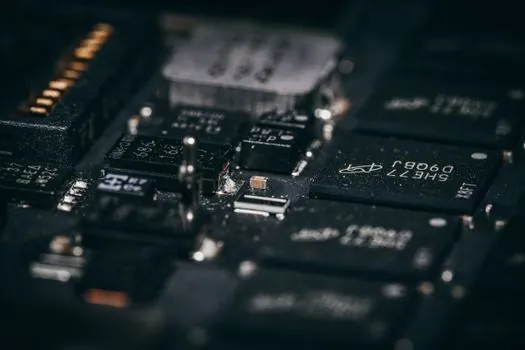
Industrial embedded parts almost always carry three memory tiers: Flash for program code, RAM for runtime data, and a non-volatile store (EEPROM or FRAM) for persistent setpoints and calibration constants [S3]. Sizing is application-specific, but a useful rule is to keep persistent parameter storage on a wear-levelled part so that reboot, brown-out, and field-replacement events do not corrupt calibration.
The interface list is where most selection arguments are won or lost. Typical industrial I/O on a 2026 embedded part includes GPIO, ADC and DAC, I²C and SPI for local sensor and EEPROM buses, UART for legacy RS-232/485 links, CAN for machine and vehicle networks, and Ethernet for SCADA, PROFINET, or EtherNet/IP uplinks [S3]. A practical gating question is whether the part must support both an RTOS-style deterministic cycle (sub-millisecond for current-loop or motion control) and a Linux-class network stack at the same time, or whether two coordinated modules are acceptable.
Power architecture and EMC class
A stable, optimized power supply is treated as a first-class subsystem, not an afterthought, and the typical bill of materials includes voltage regulators, DC/DC converters, power management ICs, and battery management for parts that ride through plant-side brown-outs [S3]. Industrial embedded parts are commonly fed from 24 V DC plant bus with a wide-input DC/DC front end (often 9-36 V or 18-36 V) to survive voltage sags and surge events on the DC bus.
EMC behaviour is a separate gate. Parts specified for EN 61131-2 industrial control cabinet environments, for sub-station installations with higher surge and fast-transient exposure, or for hazardous-area enclosures carry different filter, isolation, and creepage/clearance budgets. Conformal coating, extended temperature screening (commonly -25 to +70 °C or -40 to +85 °C for outdoor or unheated cabinets), and TVS protection on field-side I/O are the typical mitigation items, although the exact limits must be checked against the project specification rather than vendor marketing.
Software stack: bare-metal, RTOS, or Embedded Linux
Software on an industrial embedded part is one of three forms: a bare-metal loop without an operating system, a real-time operating system (RTOS) for deterministic scheduling, or Embedded Linux where the application needs full POSIX networking, filesystems, or container support [S3]. RTOS choices such as FreeRTOS, Zephyr, and VxWorks dominate the deterministic end; Embedded Linux on Yocto or Buildroot dominates the gateway and edge-analytics end.
Selection here has long-life consequences. A bare-metal firmware on an MCU is the cheapest path to deploy and the easiest to certify for functional safety, but it scales poorly beyond a few hundred lines of logic. An RTOS buys deterministic threads and a stable HAL but still needs careful BSP work. Embedded Linux is the most flexible but drags a security-maintenance burden (CVEs, kernel updates) that a small maintenance team may struggle to honour across a 15- to 20-year asset life.
Selection criteria compared
For a 2026 industrial facility build, the four most important comparison axes are real-time capability, interface mix, software/maintenance load, and environment tolerance. On these axes, an MCU-class bare-metal part scores high on determinism, cost, and EMC tolerance, but low on interface mix and software reuse; an MPU/SoC part with Embedded Linux inverts that profile, with strong networking and software reuse but a heavier security and update load; an RTOS-based SoC module is the middle ground and is often the right pick for protocol converters and motion nodes [S3].
For commercial-building projects, the same family of parts is used but with a different duty cycle and enclosure budget, and a sister spec map covers that case in Embedded Part Selection for Commercial Buildings: 2026 Spec Map.
Where embedded parts earn their place in the facility
Typical industrial placements, drawn from the same 2026 reference framing, are motors, sensor systems, and conveyor technology, with the embedded part doing the local closed-loop control and reporting up to a SCADA or PLC layer [S3]. That covers VFD line shafts, pump and fan skids, dosing skids, packaging lines, and the small industrial buzzer and indicator nodes that round out a control cabinet.
A practical filter is to ask whether the function can be lost without shutting the line down. Functions that can, such as non-safety HMIs, local data loggers, and remote dashboards, are the right first candidates to put on Embedded Linux with a managed update pipeline. Functions that cannot, such as over-speed trips, flame-scan interlocks, and emergency-stop chains, belong on a simpler MCU or a safety-certified PLC, not on a general-purpose embedded module.
Limits, failure modes, and what to push back on
The most common failure mode in the field is not CPU overload but storage wear and brown-out corruption of persistent parameters; a part sized with too little non-volatile memory, or with EEPROM used as a write log, will fail in years rather than decades. The second is thermal: a fanless box PC specified for 0 to 50 °C will throttle or reboot in an unventilated top-of-cabinet position above 40 °C ambient, so derate the vendor's number by at least 5-10 °C for sealed enclosures. [S3]
Push back on any selection that tries to consolidate safety, control, and HMI on a single Linux-based part without independent safety certification; the maintenance savings rarely offset the trip risk. Push back as well on an MCU-only spec for a node that is expected to run TLS to a cloud broker, an MQTT client, and a PROFINET slave at the same time; that is a software-stack mismatch that the hardware cannot fix later. The 2026 reference treats these as architectural choices, not procurement fine print [S3], and the same logic is why a sister article on rebar straightener selection for bridge construction treats controller placement as a design decision rather than a last-minute wiring call.
Track for the next cycle: how widely deterministic-Ethernet (TSN) profiles displace classic PROFINET/EtherNet/IP gateways on new facility builds, and whether the RTOS-class SoC module converges with the MPU/Embedded Linux module in the same silicon family; both shifts would compress the comparison table in the section above and change the BOM split between cabinet space and edge-analytics spend.