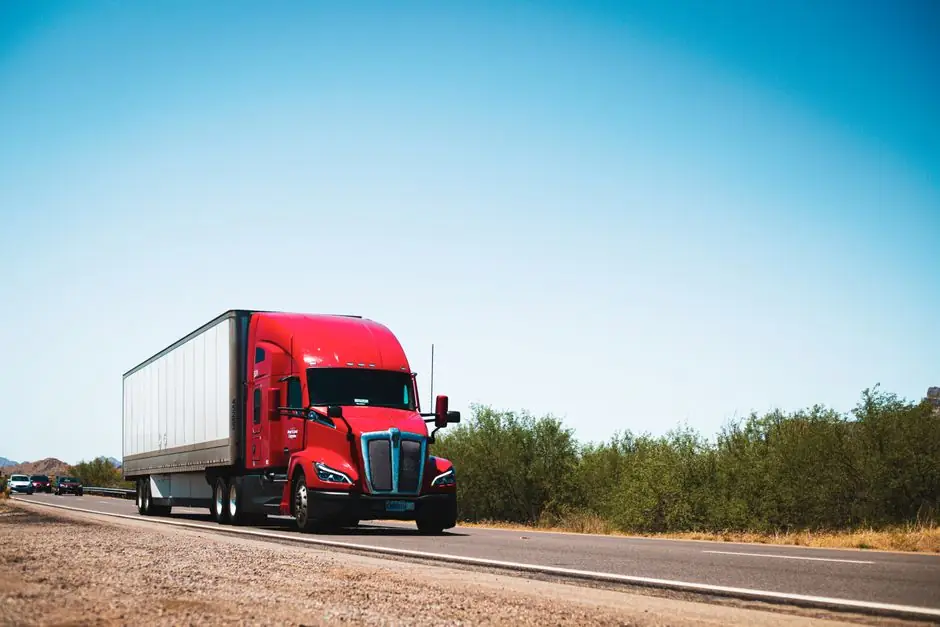
Commercial electric vehicles and electric trucks are pulling a disproportionate share of incremental Li-ion demand in 2026, with IDTechEx projecting EV Li-ion demand above 4,500 GWh by 2036 and the IEA framing trucks as the fastest-rising mode behind passenger cars [S2][S4].
BloombergNEF's 2026 outlook shows global passenger EV sales hitting 23.3 million units, an 11% rise over 2025, with buses and two- and three-wheelers already closing in on 50% sales share while vans and trucks are on a trajectory to surpass 50% by 2035 [S1]. The commercial-vehicle subsegment is where cycle life, energy density and TCO arguments are converging, and where cell-chemistry choices diverge most sharply from the passenger-car playbook.
Market sizing: 2026 baseline across three reference forecasts
Three reference data points bracket the 2026 commercial-EV battery opportunity. Persistence Market Research sizes the full electric vehicle battery market at USD 85.9 billion in 2026, growing to USD 213.6 billion by 2033 at a 13.9% CAGR [S5]. Custom Market Insights values the broader electric commercial vehicle (ECV) market at USD 108 billion in 2026, scaling to USD 498 billion by 2035 at an 18.5% CAGR, with buses and coaches representing more than 65% of the 2025 base and BEVs holding the dominant propulsion share [S3]. IDTechEx, working from a Li-ion-pack-revenue lens, projects EV Li-ion revenue rising from USD 170 billion in 2026 to USD 320 billion in 2036, a 6.5% CAGR that reflects the deflationary trend in pack prices [S4].
The arithmetic gap between these forecasts is not contradictory. Persistence's USD 85.9 billion measures the battery market alone; Custom Market Insights' USD 108 billion captures the whole vehicle value chain in the commercial slice; IDTechEx's USD 170 billion is Li-ion pack revenue across all EVs. For a fleet buyer benchmarking 2026 capex, the usable number is the battery-layer figure, which sits in the USD 85.9–170 billion corridor depending on whether the BOM includes pack integration and BMS or just cells.
Electric trucks: the segment pulling the 2026 demand curve
Electric trucks are the single fastest-growing slice inside the commercial EV stack, with the global electric truck market projected to expand from USD 2.13 billion in 2026 to USD 17.09 billion by 2034 at a 29.70% CAGR [S6]. The IEA's Global EV Outlook 2026 flags the rising importance of modes other than passenger cars, particularly electric trucks, in both the Current Policies Scenario and the Stated Policies Scenario [S2].
Demand is being driven by three structural factors. First, total-cost-of-ownership math: IDTechEx notes that electric commercial vehicles are expected to see higher growth rates than passenger cars specifically because of lower TCO at fleet scale [S4]. Second, regulatory pull: zero-emission vehicle mandates, low-emission zones and tightening Euro VI / BS-VI standards are forcing fleet renewal cycles, and operators are skipping diesel to go straight to battery-electric [S3]. Third, energy-security exposure: diesel price volatility since the Iran war is being treated by fleet procurement as a structural risk premium, accelerating battery-electric truck orders [S1][S3].
Cell chemistry and form factor: why trucks diverge from passenger cars
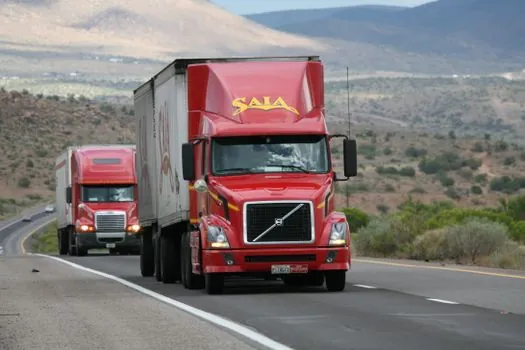
Trucks and heavy commercial vehicles sit at the chemistry-form-factor intersection where passenger-car assumptions break. For mass-market BEV passenger cars, the industry has shifted decisively to prismatic LFP cells, leveraging Chinese cell-maker dominance and LFP's lower cost and higher cycle life [S4]. LFP, however, has more limited volumetric energy density than ternary chemistries, a constraint that becomes binding at the 300–500 kWh pack sizes typical of Class 8 tractors.
For heavy-duty and off-highway applications, NMC retains a structural advantage because it offers higher gravimetric energy density and power, with cylindrical and pouch form factors further improving pack-level energy density [S4]. Cycle life drives the second divergence: a passenger car is generally spec'd for roughly 1,000 cycles, whereas commercial vehicles require 3,000–5,000 cycles, which keeps mid-nickel NMC in a defensible niche even as it is phased out of cars [S4]. IDTechEx also tracks LMFP entering deployment in 2026 and Li-Mn-rich chemistries from 2027/2028, which target the same heavy-duty volumetric window without the nickel cost exposure [S4]. Solid-state and sodium-ion are flagged by Yahoo Finance's transportation battery coverage as the next-wave chemistries chasing fast-charging and trucking duty cycles [S7].
Charging infrastructure and grid-side constraints for fleet deployment
Battery demand from commercial fleets is tightly coupled to depot and public charging build-out, and 2026 is the year that constraint is being quantified at the megawatt level. Joint Charging's 2026 fleet-operator guidance frames electric-truck deployment around a USD 2.13 billion to USD 17.09 billion market ramp that is gated by high-power charging availability [S6]. BloombergNEF notes that new Li-ion cell manufacturing capacity is increasingly directed toward stationary storage in the US, with major automakers such as General Motors, Ford and Volkswagen expanding battery businesses beyond EVs into large-scale energy storage [S1].
For fleet specifiers, the practical read-through is that buffer storage at truck depots, paired with high-power CCS and MCS-class chargers, is becoming part of the same procurement conversation as the truck battery itself. Sodium-ion and solid-state are the chemistries positioned by analysts as the second-wave answer to fast-charging degradation at pack level, both for truck duty cycles and depot storage cycling [S7]. For context on how raw-material cost layers are shifting in parallel, see this caustic soda and chlorine supply imbalance through H2 2026 note on adjacent chemical-feedstock volatility, and this cold storage construction 2026 piece on the refrigeration-side demand for depot battery rooms.
Selection criteria for commercial fleet battery sourcing in 2026
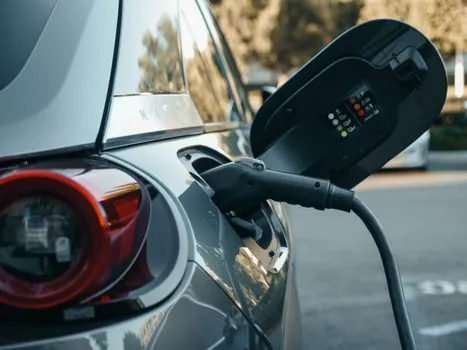
Fleet procurement teams in 2026 should weight four criteria in order: cycle life rating (3,000–5,000 cycles minimum for trucks, versus ~1,000 for cars), energy density at the pack level (gravimetric for range, volumetric for chassis packaging), TCO per kWh delivered over the asset life, and supplier geographic exposure given IRA and EU local-content rules [S4][S5].
On these four criteria, the LFP-prismatic option (dominant in Chinese supply, lower $/kWh, high cycle life, lower energy density) competes against the NMC-cylindrical/pouch option (higher energy density, higher $/kWh, narrower cycle-life margin, more diversified supplier base) and against the emerging LMFP and solid-state entrants (targeted 2026–2028 deployment, unproven at scale) [S4][S7]. For Class 8 linehaul, the answer in 2026 is still overwhelmingly NMC in cylindrical or large-format pouch; for last-mile delivery vans and city buses, LFP-prismatic is the default and accounts for the bulk of the 65%+ bus-and-coach share of the 2025 ECV market [S3][S4].
Limitations, failure modes and what the 2026 numbers do not yet capture
Two structural caveats sit on top of the 2026 forecasts. First, the IDTechEx 6.5% CAGR through 2036 embeds a deflationary pack-price assumption, and the same report flags that 2026 prices have risen relative to a five-year low in 2025, a reversal that could compress fleet TCO math if it persists [S4]. Second, the IEA and BNEF both flag uneven adoption: BloombergNEF's 23.3 million 2026 passenger EV figure is driven by China, with weaker sales in some major markets and a growing share of plug-in hybrids and range-extenders that use smaller batteries than BEVs [S1]. For trucks, that means total GWh demand will track closer to BEV share than to total electric truck unit sales, and a PHEV- or REEV-heavy mix in any given region will under-deliver on the headline ECV unit forecast.
Infrastructure delivery risk is the third constraint: the 29.70% CAGR in the electric-truck market [S6] assumes depot and corridor charging keeps pace, which is not guaranteed in 2026 given permitting lead times and grid-interconnect queues in the US and parts of Europe. For cross-sectoral material-cost context relevant to both bus bodies and depot structures, this CBAM steel and aluminium cost impact reference covers the 2026 carbon-border regime that is reshaping chassis and enclosure sourcing.
Trackable signals into Q4 2026: (1) BloombergNEF's next EVO data viewer update on commercial-segment battery demand GWh versus unit sales, to confirm whether the 23.3 million passenger figure is pulling trucks into a higher or lower kWh-per-vehicle band; (2) IEA Global EV Outlook tracker updates on electric-truck deployment against the Stated Policies Scenario, which is the cleaner signal of the 2030 trajectory; (3) OEM disclosures of LMFP and Li-Mn-rich cell production-start dates, which will set the chemistry baseline for the 2027 heavy-duty model year.
The underlying component specifications are covered under lighting equipment and electric lamps, electric pallet truck, and construction machinery and equipment.