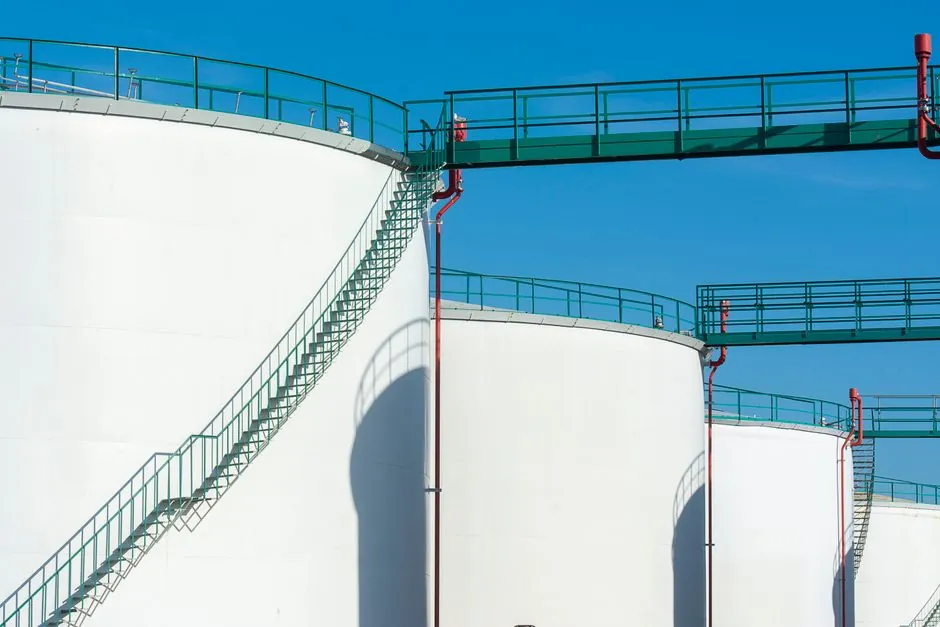
Caustic soda and chlorine are locked in a 1.1-tonne-to-1-tonne co-production ratio from brine electrolysis, so the 2026 imbalance is fundamentally a chlor-alkali problem, not two separate commodity stories [S3]. PVC demand is weak across the US, India, China, Europe, Brazil and West Coast South America, dragging down chlorine offtake, while high plant utilisation and fresh Asian capacity keep caustic soda flowing into an oversupplied market [S3]. Caustic values repeatedly touched five-year lows in the first half of 2026, and producers cut acetic acid operating rates to 70-75% in May and June without restoring balance [S2].
The co-product trap is the single biggest reason 2026 looks the way it does: chlorine cannot be stored or shipped economically, so once a cell house is running, output of both NaOH and Cl2 is forced into the market together [S3]. ResourceWise framed the year as a more complex chlor-alkali environment than prior cycles, with new capacity, shifting trade flows, geopolitical disruption and uneven downstream demand all acting at once [S1].
Why Caustic Diverges from the PVC Narrative
Caustic soda's demand base does not move in step with housing starts: alumina refining and pulp and paper together account for roughly a third or more of global consumption, alongside textiles, soaps and detergents, and water treatment [S3]. Several of the largest 2026 demand losses sit on this non-PVC side of the ledger, including Alcoa's permanent closure of the 2.2 million tonne/year Kwinana alumina refinery in Australia, which removes approximately 220,000 tonnes of annual caustic demand, plus cyclone-related disruption at Pinjarra and a wave of North American pulp and paper curtailments at International Paper, Georgia-Pacific and others [S3]. Producers therefore face weaker caustic offtake from sectors that are not construction-linked, on top of soft PVC demand, and high fixed-cost economics incentivise keeping utilisation elevated and discounting into export markets rather than shutting capacity [S3].
Regional Capacity and Pricing Pressure: China, Asia, Europe, Americas
ResourceWise reports that China's caustic soda market was repeatedly pulled back by oversupply in H1 2026, with values repeatedly touching five-year lows even as plant utilisation stayed high and new capacity continued to add [S2][S7]. The Q1 2026 surge in caustic exports was year-on-year significant but only provided a brief lift; once the export window closed, the market reverted to excess availability, with Sunsirs flagging a risk of a loose supply-demand balance returning as exports normalised [S7]. Outside China, ResourceWise's World Chlor-Alkali Conference Day 1 debrief confirmed that when PVC demand is weak, chlorine offtake is reduced, limiting chlor-alkali output and constraining caustic soda supply even when caustic fundamentals look looser [S9].
Europe is balanced but fragile after a wave of 2025 site closures left chlor-alkali and vinyl producers structurally challenged by high production costs [S1]. Asian PVC imports into Europe throughout 2025 into 2026 squeezed regional margins, but Asian ethylene supply constraints and higher freight have now made those imports less competitive, which has firmed European PVC pricing in the short term and tightened the regional chlorine balance [S1]. In the US, capacity rationalisation is the dominant theme: CoreChem documents a net decline in United States caustic and chlorine production with no new capacity expected before 2025-2026, while Alcoa's Kwinana closure and Braskem's Maceio chlor-alkali shutdown in Brazil are removing regional barrels outright [S3][S5].
Co-Product Economics and Operating-Rate Behaviour
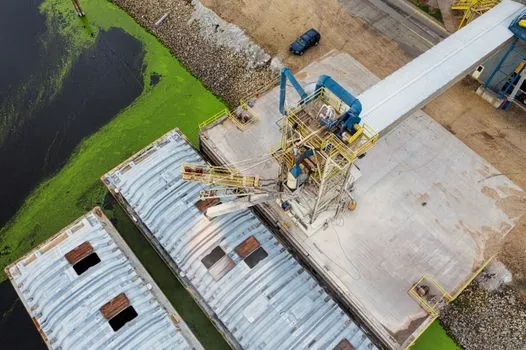
Electrolyser economics force the 1.1 t NaOH / 1 t Cl2 fixed ratio, so any decision to run a cell house commits the producer to both molecules whether downstream wants them or not [S3]. Slow, expensive restart economics and high fixed costs reinforce an industry preference to keep utilisation elevated, discount price and redirect surplus into export rather than shut down capacity on PVC weakness alone [S3]. ResourceWise's Day 1 conference note makes the same point in the opposite direction: when PVC demand is weak, chlorine offtake is reduced, limiting chlor-alkali output and constraining caustic soda supply even when caustic markets look oversupplied [S9]. The two mechanisms work in tension, and which one dominates in any given quarter depends on local cost position, export window access and the depth of any structural rationalisation.
Genuine structural rationalisation does still move the needle, and 2026 has produced several such events: Vynova moving into administration across multiple European sites, Braskem closing its Maceio chlor-alkali unit in Brazil, and Alcoa's Kwinana alumina shutdown [S3]. None of these remove chlorine demand cleanly: Braskem's PVC lines still need EDC, so a formerly captive chain becomes an import-dependent one and creates a new shipping requirement rather than eliminating freight tonnage [S3]. For procurement teams, that means chlor-alkali plant closure lists are an unreliable proxy for caustic soda availability, because the chlorine derivative chain keeps pulling even when the cell house stops [S3].
Geopolitical, Energy and Trade-Flow Layer
Geopolitics has added a cost layer on top of the volume imbalance. ResourceWise reports that the US-Iran conflict pushed Asian ethylene prices higher, sharply raising chlor-alkali production costs across Northeast and Southeast Asia, while also disrupting sulphur and sulphuric acid flows that are essential inputs for nickel-cobalt hydroxide production and the paper industry [S1]. China's Q2 2026 export bursts in VAM (April-May volumes up roughly 350-400% versus March) and the April caustic export lift were both short windows that closed quickly once overseas supply normalised, leaving domestic prices back at five-year lows [S2]. The VAM episode, where Chinese domestic prices nearly doubled during the export surge before correcting, is the cleanest demonstration in 2026 that export opportunities can distort pricing for only a brief period when the underlying supply base is still long [S2].
Global Q2 2026 caustic pricing showed mixed movements, with overall volatility driven by shifting regional supply-demand balances rather than a single dominant driver [S6]. Elchemy's January 2026 review noted that Asia-Pacific markets have been the most exposed to oversupply, with regional price variation reflecting new capacity concentration in China, Southeast Asia and India plus uneven downstream demand recovery [S8]. For shippers, SSY's July 2026 tanker note separates the freight question from the headline PVC narrative: the H2 2026 freight call is not whether PVC demand is soft, but how chlor-alkali producers, caustic buyers and regional supply chains respond to that softness in trade flows [S3].
Decision Criteria: When Caustic Tightens vs Stays Long

For procurement and trading desks, four criteria decide whether caustic soda is more likely to tighten or stay long into Q4 2026: alumina run-rate, pulp and paper curtailment depth, Chinese export window length, and any structural chlor-alkali closure. Alumina is the swing variable: Alcoa's Kwinana closure plus Pinjarra cyclone disruption together remove a material slice of caustic demand, but if alumina prices fall below the cost curve for non-integrated producers, additional alumina curtailments can swing the market further toward oversupply rather than balance [S1][S3]. Pulp and paper curtailments at North American integrated sites (International Paper, Georgia-Pacific) are a second structural drag that does not reverse with PVC recovery [S3].
Chinese export behaviour is the third lever, and Q1 2026 showed it can absorb surplus quickly when overseas basins are tight, but the lift evaporates as soon as those basins normalise [S7]. Fourth, structural closures (Vynova administration, Braskem Maceio, Kwinana alumina) are the only mechanism that physically removes caustic-equivalent demand from the system, but their effect on freight is non-linear because chlorine derivative chains often create new shipping requirements after captive chlor-alkali units shut [S3]. Comparing the four on speed, reversibility and tonnage impact: alumina curtailments are fast and reversible but moderate in tonnage; pulp and paper curtailments are slow and partially reversible; Chinese export windows are fast but short-lived; structural closures are irreversible and large in tonnage but create offsetting freight demand from the chlorine chain [S3][S7].
Implications for Power, Construction and Adjacent Sectors
For industrial buyers, the 2026 caustic-chlorine imbalance maps directly onto construction materials and energy infrastructure. Soft PVC demand shows up in construction activity indicators across the US (homebuilder sentiment below the 50-point threshold that signals positive conditions), India (earlier over-buying plus cheaper carbide-based material), China (tentative real estate recovery), Europe (only marginally improving data), Brazil and West Coast South America (high financing costs) [S3]. Energy infrastructure decisions intersect the chain at the chlorine and power supply layer, since chlor-alkali cells are major industrial electricity consumers and any shift in DC power supply architectures for electrolysis or membrane cell retrofits is sensitive to the same energy-cost curve now squeezing Asian producers [S1].
Brine electrolysis also drives demand for upstream lamps and light fittings and broader lighting equipment and electric lamps for plant instrumentation, switching power supply units for control panels, and the wider construction machinery and equipment cycle that pulls both PVC and caustic-derived construction chemicals. Material and trade-flow signals worth tracking into Q4 2026: alumina pricing versus non-integrated cost curve, Chinese caustic export volumes after the Q1 2026 surge normalised, any new chlor-alkali capacity announcements in India or Southeast Asia, and the cadence of further European vinyl site closures. The chlorine-caustic imbalance is therefore a multi-sector signal worth tracking through regional capacity reports, freight positioning data and downstream demand indices rather than reading from any single commodity screen.
For related coverage, see Cobalt end-use demand 2026: batteries dominate, superalloys and hard metals hold the.