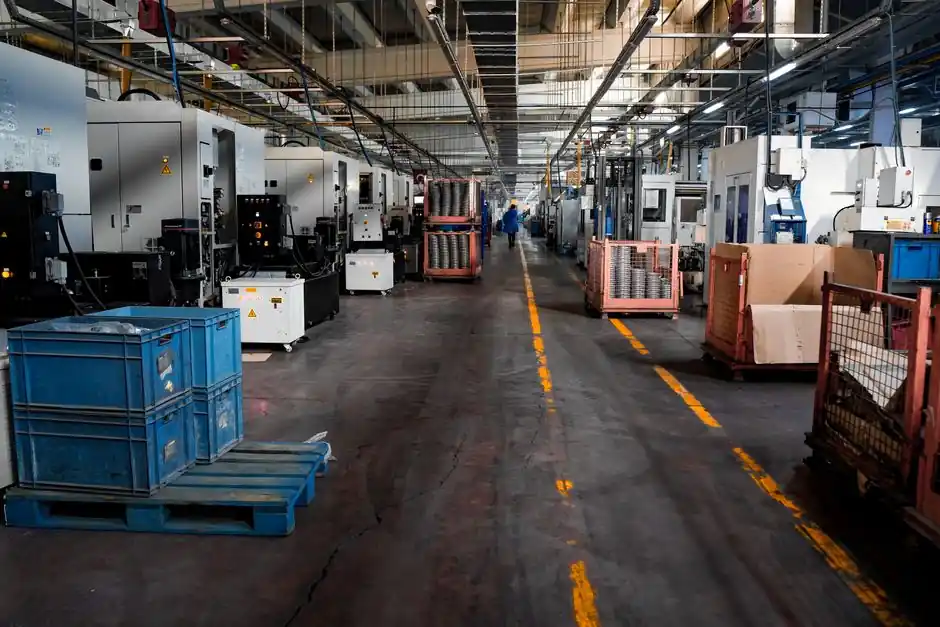
Compressed air is the single largest parasitic load on most process plants and underground mines, with published figures placing the share at 20-40% of total site energy use [S1]. That ratio is the anchor point for every 2026 sourcing decision, because cost, uptime, and emissions targets all flow from how the supply side is structured rather than from headline compressor nameplate.
For 2026 the practical pressure points are: positive-displacement compressor paralleling, multi-zone pressure/dewpoint control, replacement filter compatibility across major OEM element codes, and tier-2/tier-3 supplier qualification in India and Southeast Asia, as reflected in industry trade coverage and supplier catalogues dated May-July 2026 [S3][S5].
Why parallel compressors, not bigger single units, define the redundancy spec
Operating a single positive-displacement compressor, screw or piston, at full duty is the most common route to a hard stop, because the unit has no fallback and the air receivers cannot buffer a long enough outage for drilling, hoisting, or paint-line loads [S1]. Mine reliability studies back the parallel architecture: N+1 standby lets a failed unit be swapped while the rest of the train holds system pressure, with the number of active and standby machines set by required airflow plus an explicit loss-of-air allowance [S1]. The same logic now shows up in general plant practice as multi-zone management, where a controller breaks the network into compressor rooms and demand-side zones instead of treating the system as one header [S3].
Spec-wise, the 2026 default on a greenfield site is 2-3 screw units in the 30-110 kW class with a common receiver, sized so that loss of one unit still meets the peak demand, plus a smaller standby for low-load night tariff windows. For very large or remote sites, containerised electric units are increasingly specified over diesel, mainly because the carbon-credit accounting that procurement now reports against is kWh- and tCO2e-based, not just compressed-air-m3 [S3].
Zone management is now the procurement boundary, not the compressor
Purchasing a controller is no longer a controls-budget decision; it is a sustainability decision, because the device is what the COO uses to monetise compressed-air kWh, dollar cost, and greenhouse-gas emissions as a single management report [S3]. The 2026 reference architecture, typified by the Pneu-Logic PL4000-class platform, treats each compressor room and each demand cluster as a separately metered zone, with dewpoint sensors on desiccant dryers and pressure transducers on critical end-uses, rather than a single plant-wide pressure setpoint [S3].
Two real failures documented in trade coverage frame the spec: an aluminium extruder was over-drying air for an intermittent paint duty because the desiccant dryer ran on timer, not dewpoint, wasting compressor energy; a pneumatic wrench line was fed at 100 psig against a 45 psig spec, destroying tools and driving maintenance cost up [S3]. The corrective spec is the same in both cases: zone-level dewpoint or pressure transducer, alarm thresholds tied to an energy-cost deviation rule, and automatic email escalation to the named plant manager when the zone drifts. In supply-chain terms, this is why the controller now sits on the same RFQ as the air pick and the air impact wrench, not as a separate work-package.
Filtration, drying, and nitrogen: where Indian tier-2 suppliers close the gap

Treatment-side spend in 2026 is dominated by three lines: line filters and replacement elements, refrigerated and desiccant dryers, and on-site nitrogen generators fed from the same compressed-air main [S5]. Indian suppliers now routinely stock replacement elements cross-referenced to Parker, Atlas Copco, Kaeser, and Ingersoll Rand OEM part numbers, alongside Omega Air filter housings, which has materially shortened the lead-time for spares in South Asia [S5].
Specifying for a 2026 build, the practical envelope is: coalescing pre-filter to 1 micron with ISO 8573-1 class 2 oil carry-over, particulate to 0.01 micron for instrument air, and a desiccant dryer sized to give a -40 to -70 degrees C pressure dewpoint depending on whether the downstream user is a paint line, a power supply pneumatic actuator, or a nitrogen PSA feed. A DC power supply controlling a solenoid bank on a refrigerated dryer is the typical 24 Vdc instrumentation rail, and the dryer's air solenoid valve for purge cycling is the most replaced service part on a 5-year-old unit, so stockholdings should be planned in months, not weeks. A continuous air quality monitor on the main header is now the cheapest insurance against a silent dewpoint excursion that ruins a batch of coated product.
Selection criteria for 2026 vendor qualification
Use four criteria, weighted by site criticality: (a) confirmed element cross-reference to at least three major OEM codes, with published micron and burst ratings, not generic "equivalent" claims; (b) demonstrated zone-management controller with dewpoint, pressure, and flow inputs and named alarm rules; (c) local service coverage for the compressor class with published mean-time-to-respond, not just a regional office address; (d) verifiable efficiency data, in kW per m3/min at a stated discharge pressure, with test method referenced, e.g. ISO 1217. Vendors that pass all four typically out-price the headline low bidder over a 5-year life-cycle, because the bulk of compressed-air spend is energy, not capex [S3].
The same logic applies to spares stocking: a sludge pump sourcing map running alongside a compressed-air RFQ is normal now, because the condensate from a refrigerated dryer feeds a separator pump, and that pump's seal, impeller, and air impact wrench maintenance schedule all draw on the same vendor pool. Treat the pneumatic actuator supply picture and the compressed-air RFQ as one logistics line, not two, when sizing buffer stock.
Limitations, failure modes, and what the 2026 supply chain still cannot fix

Three constraints have not moved: artificial-leakage, especially at refuge bays and quick-disconnects, can still consume a measurable share of mine compressed-air output, with control-valve and set-point studies cutting electrical demand by around 1.35 MW at a deep-level site [S1]. Second, older piston units above roughly 15 years of service remain the dominant failure contributors, and parallel redundancy only masks the symptom, it does not retire the asset; a planned replacement programme based on run-hours and oil analysis beats emergency swap-outs every time [S1]. Third, the duty cycle on intermittent end-uses such as paint booths or torque tools is routinely ignored at the design stage, and no controller can recover the energy wasted by an oversized compressor running unloaded for long gaps [S3].
What 2026 procurement can fix: insist on per-zone metering from day one, require cross-referenced filter elements with traceable batch numbers, and lock the dryer sizing to dewpoint, not to a generic "-40 degrees C" line in a brochure. The same rule applies to the industrial filter supply chain and to actuator spares, which is why these lines increasingly arrive in a single consolidated RFQ rather than separate purchase orders.
Sourcing signals to watch through the rest of 2026
A drop in any one of these is more meaningful than any new product launch. [S5]