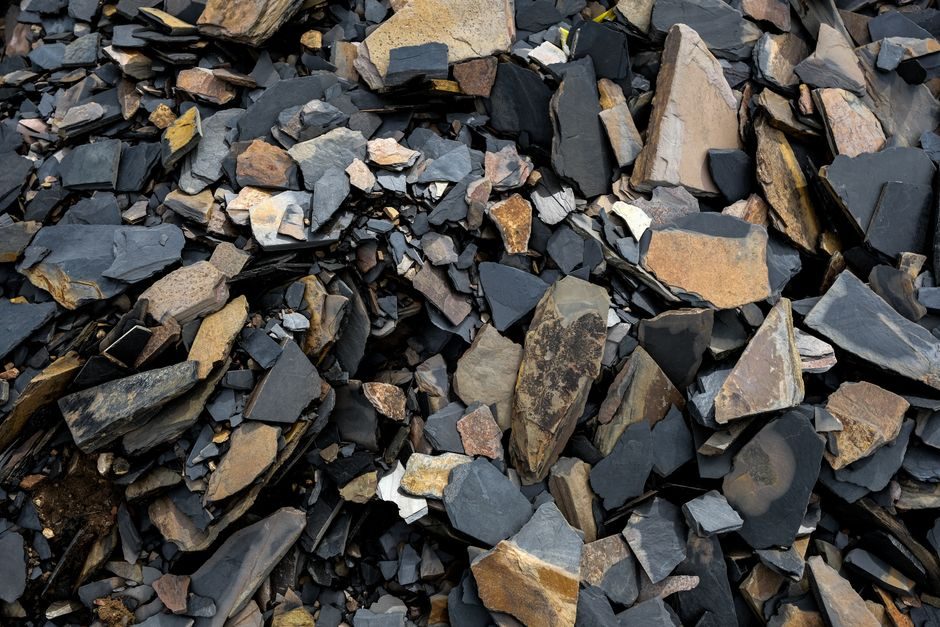
Phosphate rock is a sedimentary calcium-phosphate mineral with the simplified formula 3Ca3(PO4)2·CaR2, sold commercially as a raw phosphate ore and traded in grades that step from ~28% P2O5 (low) to 32–34% P2O5 (high) for merchant export [S5]. Its upstream end is geology and mining; its downstream end is a split ladder of fertilizer, feed, phosphoric acid, lithium-iron-phosphate cathode, and phosphogypsum, each of which imposes a different impurity ceiling.
The Wind Product Chain Database tracks 5,154 industries and more than 160,000 upstream-downstream relationships across A-share, H-share, and major U.S.-listed companies, mapping primary raw materials, production equipment, and supporting services upstream of phosphate rock, and end products plus related services downstream [S1]. The same database pairs listed-company financials with the chain, so a process engineer can pivot from the phosphate node to fertilizer producers, feed-grade defluorinated phosphate, and LFP cathode makers in one view.
Upstream nodes: from phosphate rock to feedstock and additives
Upstream of phosphate rock sits the mining and beneficiation layer, where run-of-mine ore is crushed, washed, and floated to lift P2O5 to a merchant grade and strip gangue; the typical target CaO/P2O5 ratio in merchant rock is 1.55–1.65 to suit downstream acidulation, and silica content above ~5% depresses acid plant throughput [S5]. The Wind product-chain map frames these upstream linkages as primary raw materials, production equipment (crushers, ball mills, flotation cells, thickeners), and supporting services (assay labs, water treatment, tailings handling) that all feed the phosphate mining node [S1].
Ammonia downstream feeds DAP and MAP plants, and defluorination reagents (sodium carbonate, phosphate rock defluorinated feed-grade paths) are themselves an upstream chemical sub-chain for the feed market [S2]. Within the Wind 160,000-link set, the phosphate node's upstream column therefore spans mining services, sulfur logistics, reagent supply, and electrical infrastructure.
Downstream ladder: fertilizer, feed, phosphogypsum, LFP
Downstream of phosphate rock, the dominant volume path is wet-process phosphoric acid (WPA) at ~28% P2O5, which then feeds DAP (18-46-0), MAP (11-52-0), TSP (0-46-0), and SSP (0-16-0) fertilizer grades; the ChemicalBook product page for defluorinated feed-grade phosphate rock explicitly tags the same node as an upstream-material / downstream-product hub for feed applications, where fluorine is driven below 0.1–0.2% to be safe in animal nutrition [S2]. A secondary downstream path is phosphogypsum, generated at roughly 4.5–5.5 t per tonne of P2O5 as a CaSO4·2H2O by-product, and increasingly specified as a cement retarder or soil conditioner where radionuclide and heavy-metal limits are met [S4].
The third leg is lithium-iron-phosphate (LFP) cathodes, where battery-grade iron phosphate is precipitated from purified phosphoric acid; LFP's pull on high-purity acid is a 2024–2026 demand layer layered on top of the fertilizer baseline. The Wind database's industry-prosperity matrix lets a phosphate buyer benchmark these downstream lanes (fertilizer, feed, LFP, cement) by listed-company revenue and profitability side by side, so the same ore spec can be priced against four different demand pools [S1].
Decision-grade spec bands and side-by-side comparison
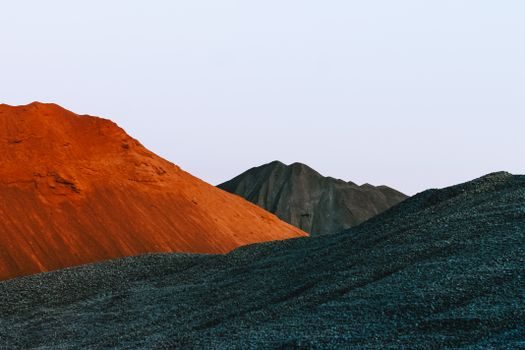
Phosphate-rock buyers in 2026 spec on five concrete numbers: P2O5 grade (28–34% merchant), CaO/P2O5 ratio (1.55–1.65 for acidulation), MgO (<1% to limit acid losses), Fe2O3+Al2O3 (<3% combined to control sludge), and fluorine (0.1–0.2% for feed, higher tolerance for fertilizer acid) [S5]. Below those, defluorinated feed-grade phosphate rock must hold fluorine low enough to meet feed-safety thresholds, while fertilizer-grade rock can tolerate higher F because the acid plant has a defluorination scrubber stage [S2].
The Wind matrix shows the same downstream purity ladder against listed-company financial scale, so the premium each rung pays is auditable [S1].
Process equipment and the industrial control backbone
Across the chain, the same control hardware shows up: flow meters on sulfuric acid lines to the reactor, pressure transmitters on the attack tank and digester, pressure sensors on phosphogypsum slurry lines, industrial valves on acid and gypsum isolation, and PLCs sequencing the filtration train. The Wind product-chain map lists production equipment and supporting services as part of the upstream column, which for a phosphate plant is dominated by acid reactors, filters, evaporators, rock grinding mills, and the instrumentation layer that ties them together [S1].
The analogous upstream link for energy and chlor-alkali inputs shows in a different industry event: the 16th National Chloroacetic Acid Development Forum in Guiyang on 2023-09-07 drew 50+ chloroacetic acid manufacturers and 30+ upstream-downstream participants, an example of how Chinese industry associations still run the same chain-mapping exercise face-to-face that the Wind database does digitally [S6]. For phosphate, that mapping exercise turns into sulfuric acid sourcing contracts, sulfur logistics, ammonia terminals, and instrumentation spares on the upstream side, and fertilizer offtake, feed-mill QA, LFP cathode plants, and cement retarder customers on the downstream side.
Constraints, failure modes, and contamination limits
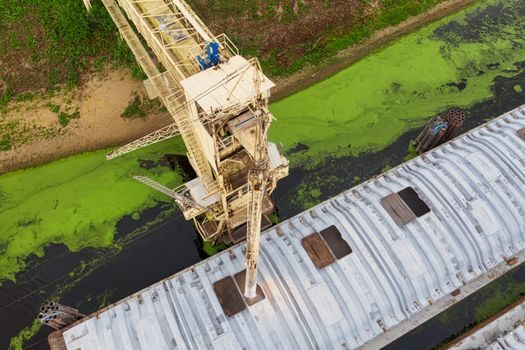
Phosphate rock and its by-product phosphogypsum carry three real-world failure modes that a spec must address: heavy-metal content (Cd, Pb, As, Hg), naturally occurring radionuclides (U-238, Ra-226 from the marine sedimentary origin), and biological activity in stockpiles and PG piles that drives sulfate-reducing and acid-generating reactions [S4]. Microbial diversity studies on Tunisian Gafsa and Sfax PR and PG samples have identified bacterial consortia tied to phosphate solubilization, heavy-metal tolerance, and radiation resistance, which means open-air storage is not inert and run-off control is a real design constraint [S4].
On the process side, the most common upsets are: (a) silica gel fouling in WPA filters when SiO2 in rock exceeds ~5%, (b) magnesium-driven acid losses when MgO > 1.5%, and (c) fluorine carryover to phosphoric acid when F in rock exceeds 3.5% and scrubber capacity is undersized. Defluorination for feed-grade rock uses calcination with sodium carbonate or phosphate additives to drive F below the 0.1–0.2% ceiling that animal-nutrition buyers enforce [S2]. These thresholds vary by buyer; the 2026 spec bands should be confirmed against the actual contract, not the public datasheet.
Sourcing nodes, related reading, and what to track next
Global merchant phosphate rock is concentrated in three supply nodes: Morocco (OCP group, the largest exporter), China (Yunnan, Guizhou, Hubei sedimentary deposits plus Sichuan igneous), and the U.S. (Florida and North Carolina sedimentary). China's domestic mines lean lower-grade, which keeps the country a net importer of high-grade rock even though it is the largest processor. The Wind supply-chain database integrates customer and supplier disclosures from over 20,000 A-share and H-share companies, so a buyer's view of which Chinese fertilizer and LFP cathode plants pull from which mine is reachable from the same product-chain node [S1].
For deeper reading on phosphate-grade bands and sourcing risk, the phosphate rock supply-chain 2026 grade and risk map lines up P2O5 grade bands against mine nodes. A parallel mining commodity with the same risk profile and spec discipline is manganese ore supply shortage and risk map 2026, and for verified source comparison the manganese ore suppliers 2026 source map uses the same node-by-node approach. Two trackable signals through the rest of 2026: OCP's Morocco export quota and any DAP/MAP price reset by Chinese exporters, both of which move the 32–34% P2O5 reference price; the second is LFP cathode plant ramp rates in China, which set the marginal bid for high-purity phosphoric acid and pull merchant rock into the cleanest downstream lane.