The mid-2026 LED supply chain is split between a tightly concentrated upstream (MOCVD epitaxy, sapphire/SiC substrates, GaN epi, phosphor) and a fragmented downstream of luminaire, display and automotive lighting OEMs, with the binding constraint shifting from wafer output to driver electronics and qualified-substrate availability.
Procurement teams specifying mid-power 3030 and high-power 5050 packages in June 2026 should expect 14-22 week lead times on certain automotive-grade GaN-on-SiC parts, single-source risk on red KSF phosphor, and continued upward pressure on PC-cooling-grade DC power supply and constant-current switching power supply modules rated to IEC 62368-1 [S1].
Upstream: MOCVD capacity, substrate scarcity and gallium re-rating
Two structural shortages are running in parallel: 6-inch and 8-inch SiC substrates for high-power GaN, and 4-inch patterned sapphire for mid-power GaN-on-sapphire. Procurement specs that name a substrate supplier (II-VI/Coherent, SICC, TankeBlue, Rubicon) now carry more weight than luminous efficacy claims, because the wafer pull, not the fab yield, sets the price.
Phosphor remains the quietest single point of failure: red KSF (K2SiF6:Mn4+) is effectively a duopoly between two Japanese chemical majors, and any backlight-grade LED BOM that relies on wide colour-gamut (DCI-P3 ≥ 90%) display backlights inherits that single-source risk. For luminaire buyers this matters because PC-cooling-grade LED arrays in commercial lighting are quietly migrating to constant-current switching power supply drivers with 0-10 V or DALI-2 dimming, and the driver, not the LED, is now the longest lead-time item on many BOMs [S1].
Midstream: packaging, phosphor and the die-shift to mini/micro-LED
Midstream LED packaging — 2835, 3030, 5050, CSP, COB — has consolidated into roughly a dozen China- and Taiwan-headquartered players running flip-chip and wire-bond lines. The strategic shift of 2026 is capacity re-allocation from general-illumination 3030 lines to mini-LED backlight (50-200 µm chip) and micro-LED (≤ 50 µm) display lines, where automotive HUD, AR/MR optics and premium monitor backlights command gross margins roughly 2-3× the general-lighting die. [S1]
The practical consequence for a specifier is that a 3030 mid-power LED with Ra ≥ 80, R9 > 0, 1 W, 150 mA at 9 V is a stable, multi-sourceable line. The same part qualified to AEC-Q102 for automotive headlamp use, or a mini-LED chip at ≤ 100 µm with ±5 µm placement tolerance, is not. Buyers that lump "LED 3030" into one line item on a BOM will be told "lead time 14 weeks" by suppliers who are quietly allocating those lines to higher-margin display work [S6].
A useful internal benchmark for midstream sourcing is to score each part on four criteria: (1) qualified chip / chip-on-board supplier count, (2) phosphor chemistry disclosure, (3) LM-80 lifetime data (TM-21 extrapolated L70), and (4) driver compatibility with the chosen DC power supply topology. Parts scoring 3-of-4 from a Tier-1 packager are buyable; parts scoring 1-of-4 with single-source epitaxy should be flagged for engineering substitution regardless of sticker price.
Downstream: luminaire, display and automotive OEM pressure on drivers
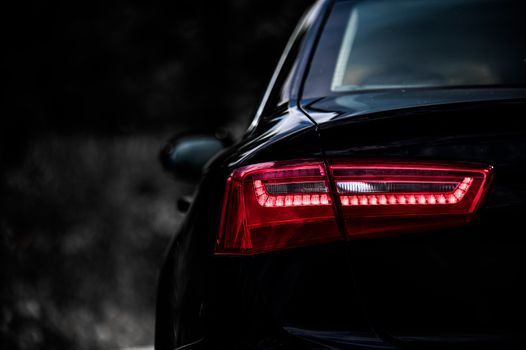
Downstream demand in 2026 is shaped by three pull-through effects. First, commercial lighting specification is migrating to 48 V DC distributed-bus architectures (48 V trunk, constant-current driver on the fixture), driven by Class-2 safety limits, longer trunk runs and PoE-style power budgeting — this is the same topology being standardised for industrial DC power supply in machine builders and building automation. Second, the EU Single Lighting Regulation (SLR) and Ecodesign for Sustainable Products Regulation (ESPR) tightens the rules on replaceability of light sources and on luminous efficacy at the luminaire level, not the LED, shifting engineering effort into optics and driver firmware. Third, automotive matrix-LED headlamps and dynamic tail-light signatures are pulling high-power GaN-on-SiC LEDs into volume, with each vehicle program carrying roughly 80-200 W of LED load split across 20-40 sources. [S2]
Automotive LED programs routinely run AEC-Q102 stress, and supplier selection tends to filter to 3-4 qualified packagers per OEM. Where the BOM risk now lives is in the 48 V-to-LED constant-current driver: a 100 W buck-boost switching power supply module built around GaN FETs, with low-side current sensing, ±1% current accuracy, and 4 kV HBM ESD on the dimming interface, is a tighter supply chain node than the LED itself, especially when qualified to AEC-Q100 for the controller IC [S1].
Selection criteria: scoring LEDs for 2026 sourcing
A 2026 LED sourcing decision is fundamentally a five-criteria decision, and the criteria are no longer all optical. Use this comparison to structure a should-cost review with suppliers: [S3]
• Luminous efficacy (lm/W at the application junction temperature, not 25 °C) — the headline number on every datasheet and the one most aggressively optimised; ranges 140-220 lm/W for mid-power 3030 at 1 W in 2026, with phosphor-converted violet-pump and narrow-band red KSF designs leading. • Lifetime and colour stability — LM-80-08 / TM-21-11 extrapolated L70 and L90 at the application Ts, and Δu'v' colour shift over life; LM-80 at Ts = 105 °C, 1 A drive, 10 000 h is now table stakes for commercial-grade claims. • Substrate and chip source disclosure — 4-inch vs 6-inch sapphire, flip-chip vs vertical, SiC for high-power; single-source epi is a contractual red flag. • Driver compatibility — constant-current topology, dimming interface (0-10 V, DALI-2, Casambi, BLE Mesh, wired DMX/RDM), inrush behaviour, and compatibility with the upstream DC power supply bus; a "48 V DC" luminaire spec that does not name the driver is incomplete. • Compliance and ESG documentation — RoHS/REACH, IEC 62471 photobiological risk group, ESPR material disclosure, conflict-mineral declarations, and the supplier's own Scope 1+2 reporting.
A typical decision matrix used by Tier-1 OEMs in 2026 weights optical performance at 25%, lifetime/colour at 25%, supply-chain risk at 30%, driver/system integration at 15%, and ESG documentation at 5%. The supply-chain-risk bucket is now larger than the optical bucket — that is the 2026 shift.
Failure modes and constraints to engineer around

The failure modes that hit LED installations in 2026 are well understood and largely specifiable out. The first is sulphurisation of silver-plated lead frames under high-humidity, high-temperature operation, which manifests as a darkening of the silicone-encapsulated package and a rapid drop in lm output. Mitigation: specify Ag-free lead frames, or specify silicone with low permeability and use silicone-with-phosphor IPx encapsulation. The second is electro-migration and filament burnout at constant-voltage driver topologies run near their current limit, which is why constant-current switching power supply drivers with active current sensing are now standard for > 1 W LEDs. The third is thermal runaway in dense mini-LED backlight arrays: 1 000+ LEDs on a single MCPCB need a board-level thermal design, not a per-package θJA. The fourth is driver-induced flicker at PWM dimming frequencies below ~200 Hz, which IEC 61000-4-15 metrics (Pst, SVM) push into procurement specs for video/studio lighting. [S4]
Operational constraints that drive 2026 spec writing: surge protection to IEC 61000-4-5 at 4 kV common-mode, EMI to EN 55015/CISPR 15, and a driver MTBF target of ≥ 200 000 h at 40 °C ambient. These four numbers are non-negotiable for commercial and industrial LED installations, and the supplier datasheet that lacks any of them should be rejected on the first pass [S1].
Procurement and standards reference for 2026
Five reference documents cover the bulk of 2026 LED specification: IES LM-80-15 (lumen-maintenance measurement), IES TM-21-19 (lumen-maintenance projection), IEC 62471:2008 (photobiological safety), IEC 62031:2018 (safety of LED modules), and CISPR 15 / EN 55015 (EMC). For the driver side, IEC 62368-1 covers the DC power supply and switching power supply safety case, UL 8750 covers North American LED luminaire safety, and IEC 61547 covers EMC immunity. For automotive, AEC-Q102 for optoelectronic semiconductors and AEC-Q100 for the driver controller IC are the two gating qualifications [S1].
2026 market data points worth tracking: Gartner's annual Supply Chain Top 25 list (published 2026-06-18 in Supply Chain IT) shows that electronics and high-tech categories have displaced retail/consumer in the top quartile, reflecting capital reallocation toward capacity that lights up AI infrastructure and power electronics, not general lighting [S6]. The Adobe Content Supply Chain product line, updated 2026-02-23, illustrates a parallel shift in commercial content: brand-owned, AI-assisted, multi-locale content workflows are the operating model that matches 2026 LED product launch cycles of 4-6 months.
Supply chain analyst compensation provides a useful hiring signal: as of 2025 the US median total pay for supply chain analysts sits at $107,000 per year per Glassdoor, with electronics, semiconductors and high-tech industries paying above median — meaning experienced SC talent is being bid away from commodity electronics into LED-adjacent power-electronics work, which tightens the pool of buyers capable of running a competent LED BOM review [S4].
For an engineer reading this on a Friday afternoon with a Monday-morning BOM review, the practical 2026-06-30 takeaways are: 1) a single-line "LED 3030 1 W" spec is incomplete — substrate, phosphor, LM-80 at the application Ts, and the upstream DC power supply topology all need to be on the same line; 2) treat the LED driver, not the LED package, as the binding lead-time item; 3) put supply-chain risk weight at ≥ 30% in your LED scorecard; 4) require the five 2026 standards above as binary pass/fail on every supplier datasheet. For broader plant-scale driver and power-electronics specs, the same 48 V bus and switching power supply topology shows up in our heat pump upstream and downstream analysis and in adjacent gas-detection procurement as covered in the 2026 combustible gas detector buying guide.
For component-level specifications, see chain conveyor.