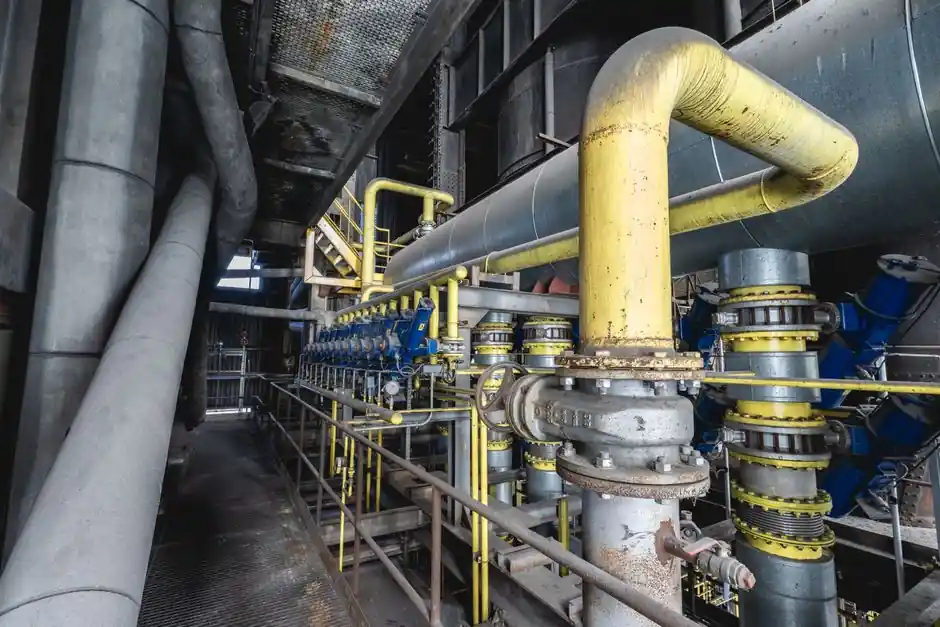
Atlas Copco, Quincy, Sullivan/Palatek, Powerex, Zeks, Domnick Hunter, SMC and Becker are authorised through Maine Air Power for the New England region, giving that dealer portfolio a full chain from oil-injected screw compressors to adsorption and refrigerated dryers [S5].
On the Chinese export side, Made-in-China.com lists 2,000+ compressed-air manufacturers offering 6,000+ products, with individual component price bands running from US$135 for entry-level refrigerated dryers up to US$200,000 for turnkey aseptic-pharmaceutical compressed-air skids [S2][S7][S8].
Supplier tiers: global OEM brands vs regional dealers vs Chinese factory exporters
Tier-1 global OEMs, including Atlas Copco, CompAir, Quincy, Becker and Festo, design the compressor air-end, controllers and downstream treatment, and they publish engineering reference material tied to ISO 8573-1:2010 air purity classes [S4][S6][S10].
Tier-2 regional dealers such as Maine Air Power act as multi-brand stocking distributors, pairing the compressor package with service contracts for end users in the 7–250 kW shop class [S5].
Tier-3 Chinese factory exporters dominate commodity dryers, fittings and pneumatic sub-assemblies, with Made-in-China.com listing desiccant twin-tower dryers at US$3,660–US$3,686 per piece, refrigerated cycling dryers at US$590–US$690 per piece, and small-particle filters feeding pneumatic tools at the lower end of the price curve [S8][S9].
Selection criteria: air quality class, pressure band, and duty cycle
Specifying a compressed-air system starts with ISO 8573-1:2010 purity class, and Festo explicitly ties its treatment portfolio to that standard, recommending filtration and drying be planned in at the system-design stage, not retrofitted [S4].
The next decision is pressure band: workshop pneumatic tools typically run 6–8 bar, while PET-blow and pharmaceutical-grade systems commonly specify 8–10 bar with redundant dryers to meet ISO 8573-1 Class 1.2.1 for particulate, water and total oil [S4][S7].
For vacuum generation, GlobalSpec lists liquid-ring motive-fluid pumps with ultimate vacuum down to 24.76 inHg and 74.2 inHg on the RVS series, paired with separator tanks for partial service-liquid recirculation, which is the typical spec window for paper-mill and chemical-vacuum duty [S1].
Product category comparison: compressor, dryer, filter, fitting, and control
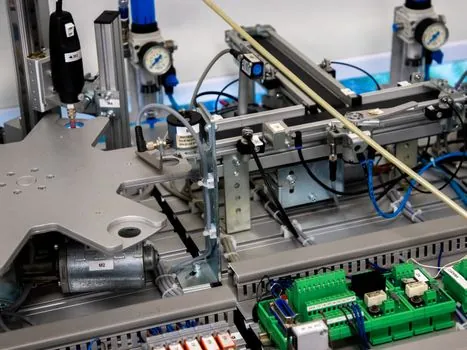
Five product categories carry roughly 80% of the spend in a new build, and each maps to a different supplier cluster: the compressor (Atlas Copco, Quincy, Sullivan/Palatek, Powerex, Zeks), the dryer (Muqi Air Compressor, Demargo, Minfa), the filter and regulator (Festo, SMC, Domnick Hunter), the fittings and couplers (Ningbo Autotech, Milton/A-style compatible), and the master sequencer controller (CompAir SmartAir Master) [S5][S8][S9][S10].
On cost, screw compressors with integral 7–250 kW motors sit in the US$8,000–US$80,000 OEM band, refrigerated cycling dryers cluster at US$590–US$1,200, and desiccant twin-tower dryers in the US$3,660–US$3,686 band, with pharmaceutical-skid integrators like Shanghai Iven Pharmatech selling complete aseptic lines at US$20,000–US$200,000 per piece with 1-piece MOQ [S7][S8][S9].
On certification tier, the European OEM brands carry ISO 8573-1:2010 statements and CE/ATEX documentation, while Chinese commodity dryers on Made-in-China.com are typically supplied as Diamond Member / Audited Supplier SKUs without published purity-class test reports, so a buyer chasing Class 1.2.1 or better must request factory test data per batch [S2][S4][S8].
Standards and engineering references that drive supplier choice
ISO 8573-1:2010 is the dominant purity-class reference for compressed-air treatment packages sold by Festo and other Tier-1 brands, classifying particulate, water and total oil independently, and it is the document most auditors ask to see in pharmaceutical and food-grade plants [S4].
For air-end refurbishment decisions, Atlas Copco's blog frames the air-end as the most vital part of any compressor and walks through worn-versus-damaged inspection criteria before quoting a replacement versus a rebuild, which is the kind of service data Tier-1 OEM channels provide and Chinese factory exporters generally do not [S6].
On the controller side, CompAir's SmartAir Master sequencer is a graphic-interface multi-compressor coordinator designed to trim load/unload waste on installations where combined machine capacity exceeds peak site demand, a common pattern on 5,000–50,000 cfm industrial sites [S10].
Who compressed-air suppliers are FOR, and who should look elsewhere
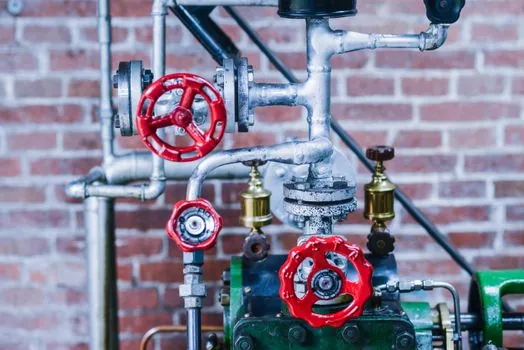
Atlas Copco, Quincy and CompAir are FOR plants with 50–2,000 kW compressed-air demand that need 5-year service contracts, documented ISO 8573-1:2010 performance, and 24/7 field support; they are NOT the right call for one-off 7 kW shop compressors where a Tier-3 Chinese OEM at US$500–US$2,000 is more economic [S5][S6][S10].
Chinese factory exporters on Made-in-China.com are FOR price-sensitive integrators, OEMs needing 100+ unit batches of refrigerated dryers or quick couplers, and pharmaceutical skid builders buying turnkey aseptic lines at US$20,000–US$200,000; they are NOT for end users needing on-site commissioning in North America, since most Chinese factories list Trading-Company terms and rely on third-party integrators [S2][S7][S9].
Dealers like Maine Air Power sit between the two, FOR small and mid-size plants that want one PO covering compressor, dryer, filter and service but do not want to manage four separate supplier relationships, and NOT for hyperscale plants that negotiate global master agreements direct with Atlas Copco or Ingersoll Rand [S5].
Limitations, failure modes, and what the supplier list does not tell you
Made-in-China.com's "2,000+ manufacturers" headline does not separate compressor OEMs from pneumatic-component traders, and a buyer searching there for compressed-air systems can land on either, so RFQ scoping (kW, pressure, ISO 8573-1 class) is the only reliable filter [S2][S7].
Compressed-air system failure modes cluster at three points: wet air causing downstream solenoid-valve stiction (mitigated by refrigerated or desiccant dryers per ISO 8573-1:2010), particulate scoring the air-end (mitigated by pre-filtration), and oil carry-over contaminating food/pharma product (mitigated by oil-free compressors or coalescing + activated-carbon polishing) [S4].
The supplier map also under-represents the pneumatic-tooling and automation-side spend, which is where air pick, air impact wrench, and air solenoid valve categories pull a lot of the same buyer budget, so a sourcing team should run a single cross-category RFQ rather than split it across four workstreams [S3][S5].
Reading the 2026 signals: which suppliers are extending capability
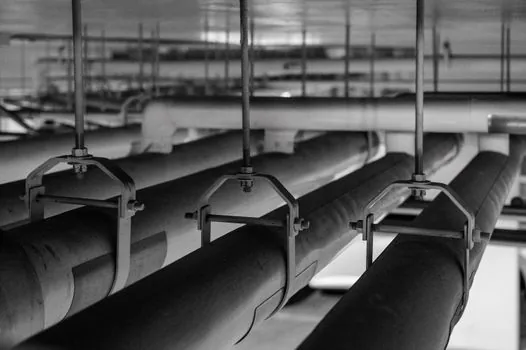
Two signals are worth tracking through the rest of 2026: first, Tier-1 OEMs are pushing controller-side intelligence, with CompAir's SmartAir Master explicitly framed around energy saving through better sequencer logic, and Atlas Copco blogging on air-end refurbishment as a service revenue line [S6][S10].
Second, Chinese factory exporters are climbing the value chain into aseptic pharmaceutical skids (Shanghai Iven Pharmatech at US$20,000–US$200,000 per piece with 1-piece MOQ) and high-purity desiccant dryers, which compresses the price gap Tier-1 brands used to enjoy in regulated markets [S7][S9].
Buyers building a shortlist in August 2026 should pair the industrial filter suppliers map 2026 for pre-treatment components, the hydraulic pump suppliers 2026 for the broader fluid-power sourcing context, and direct RFQs to 3–5 named suppliers per equipment category, with the air quality monitor specification locked against ISO 8573-1:2010 before any PO is released [S2][S4][S5][S7][S8][S9][S10].