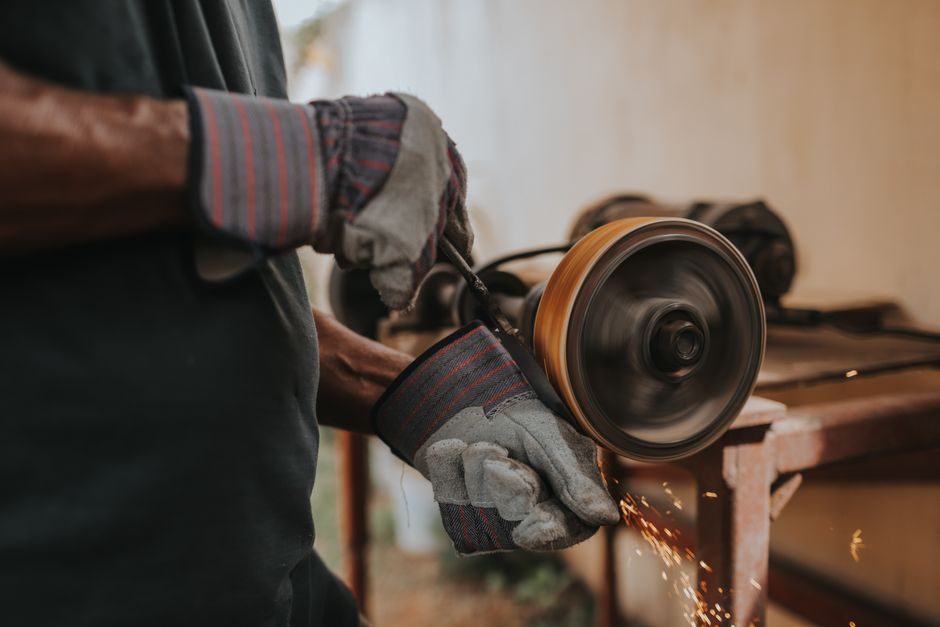
Concrete grinding, beveling, and rebar-flush cuts on a jobsite are driven by three specs: disc diameter in the 180-230 mm range, motor power above 1,500 W for corded or 18-54 V brushless for cordless, and a tested dust shroud matched to a HEPA vacuum for silica compliance [S2][S5].
Tooling supply for these configurations is dense and competitive — a 2026-07-10 AliExpress listing shows 125 mm M14 brushless angle grinders offered at US $31.16, down from US $65.84 [S1], while 230 mm high-output concrete surface grinders sit in the US $120-700 band on secondary markets [S3][S4][S5]. That spread reflects the difference between a finishing tool and a production floor grinder, not a like-for-like comparison.
Disc Diameter and Concrete Workload
Disc diameter is the first cut on the spec sheet and the strongest predictor of usable material removal rate on cured concrete, with 115 mm and 125 mm units classed as light/finish duty and 180 mm, 230 mm (7-inch and 9-inch) units classed as production duty per current buyer-guide guidance [S2].
A 115/125 mm cordless grinder is fine for chasing small patches, cleaning rebar stubs, or detail work around formwork, but its 22.23 mm M14 spindle and narrow cut envelope limit it on slab grinding. For surface preparation, adhesive removal, or smoothing form marks, jump to a 180 mm or 230 mm platform — a 230 mm electric high-performance grinder is sold explicitly as a concrete-cutting tool on major B2B catalogs as of May 2026 [S3], and a 2200 W surface-grinder kit with dust shroud is listed for concrete floor work on the same channel [S5].
Motor Power, Voltage, and Trigger Type
Corded concrete grinders below 1,500 W stall quickly on cured slabs; the 2,200 W class is the practical floor for 180-230 mm concrete work, with corded models dominating the higher-output end of the 2026 market [S5].
Cordless platforms have closed the gap on smaller diameters — a 125 mm brushless M14 model on 18 V-class battery packs (Makita-compatible) is listed at US $41.42 on AliExpress in 2026-07 [S1] — but no cordless SKU in the reviewed listings matches the 2,200 W corded rating for sustained concrete work. For 230 mm cordless, expect a 54 V or 60 V FlexVolt/Acknowledge-class pack; under that, duty cycle on rebar-embedded concrete will be measured in minutes per charge, not hours.
A sealed switch, dead-man paddle, or no-volt-release trigger is a hard requirement for any production concrete grinder — water, slurry, and conductive dust will kill an open-switch tool inside a season. Look for a labeled IP rating in the tool's datasheet, not in the marketing copy.
Dust Shroud, Extraction, and Silica Compliance
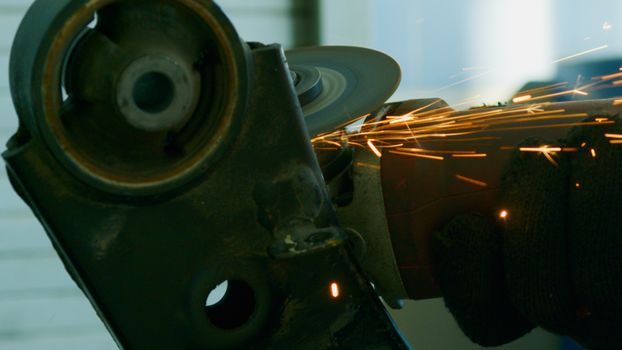
Without a dust shroud matched to a HEPA M-class vacuum, an angle grinder on concrete generates respirable crystalline silica at concentrations that exceed the EU and US occupational exposure limits within minutes. [S5]
The 2200 W surface-grinder kit pictured on the 2026-07 secondary market is sold as a complete package with an integrated dust shroud [S5], and the 5-inch Hilti concrete grinder SKU 3460766 ships with the SPX universal cup wheel system, which is the vendor's matched dust-control accessory [S4]. A bare grinder, even at the same power rating, is not a substitute — the shroud defines the legal and safe tool for concrete work. Buyers comparing SKUs should price the kit, not the bare tool, and should verify that the shroud has a certified 35-50 mm hose port for the site's M-class extractor.
Spindle, Cup Wheel, and Consumable Match
Concrete work is dictated by the M14 spindle and a diamond cup wheel, not a cutoff disc — a Type 27 (depressed centre) or Type 11 (flaring cup) diamond wheel in 115, 125, 180, or 230 mm is the consumable that actually moves material [S2].
For rebar exposure or flush cutting, a diamond cutoff wheel in the same diameter class is paired with the same tool. Segment hardness (soft bond for hard concrete, hard bond for abrasive concrete) and segment count (typically 9-24 for cup wheels) drive life and cut speed. Buyers should match the wheel to the substrate rather than chasing the lowest unit price; an under-spec wheel on a 2,200 W grinder will glaze and stall within minutes on hard aggregate.
Comparison: 125 mm Cordless vs 180 mm Corded vs 230 mm Corded
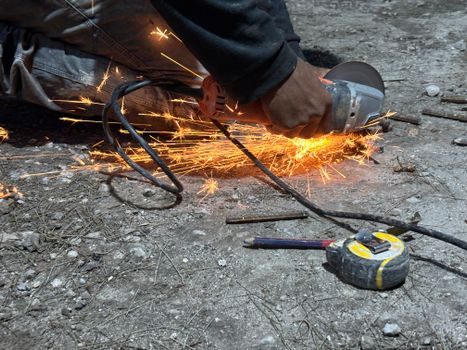
Three configurations cover almost all concrete angle-grinder work in 2026; matching the platform to the task is more efficient than overspec'ing one tool. [S2]
Cost differential in the surveyed market runs roughly 4-5x from entry cordless to 230 mm corded kit [S1][S5]; productivity on concrete scales even more sharply, which is why most professional finishers carry at least two platforms.
Who This Is For — and Who It Is Not
Angle grinders in the 180-230 mm corded class are built for finishers, concrete polishing crews, and utility contractors doing daily surface prep — the Hilti 5-inch concrete grinder at US $693.65 is positioned squarely for that user, not for a weekend DIYer [S4].
A 125 mm cordless M14 grinder is the right call for a rebar tier, a MEP installer cutting chases, or a glazier dressing a sill; it is the wrong tool for anyone hired to grind 100 m² of slab. For deep slab grinding on production pours, a dedicated floor grinder or fettling grinder with a planetary head outperforms any angle grinder, regardless of wattage. For aerial slab or façade work above 2 m, an aerial work platform and a 230 mm corded kit is the only realistic combination — handheld work at height is not a substitution for a stable platform.
Selection Checklist Before Purchase

Confirm the spindle thread (M14 is standard in the surveyed SKUs [S1][S2]), the supplied guard, and the no-volt-release switch before paying. Check that the diamond cup wheel and dust shroud are listed as compatible in the OEM datasheet, not just as aftermarket fits [S4][S5].
For cross-spec work, an angle grinder on the same M14 platform will cut metal, stone, and tile — but only a concrete-rated shroud/wheel pairing should ever be used on cured slabs. Finally, for adjacent tooling decisions like chase cutting in masonry walls, a dedicated masonry rotary hammer outperforms an angle grinder in both speed and operator fatigue, and belongs in the same site kit.
Trackable signals for the next procurement cycle: a second-source 54 V cordless 230 mm SKU with published dust-shroud integration, and a unified M-class vacuum port standard across Hilti, DeWalt, and Makita concrete-grinder lines. Until those land, the safest buy remains a 2,200 W corded 230 mm kit with matched shroud and a separate 125 mm brushless cordless for detail work.