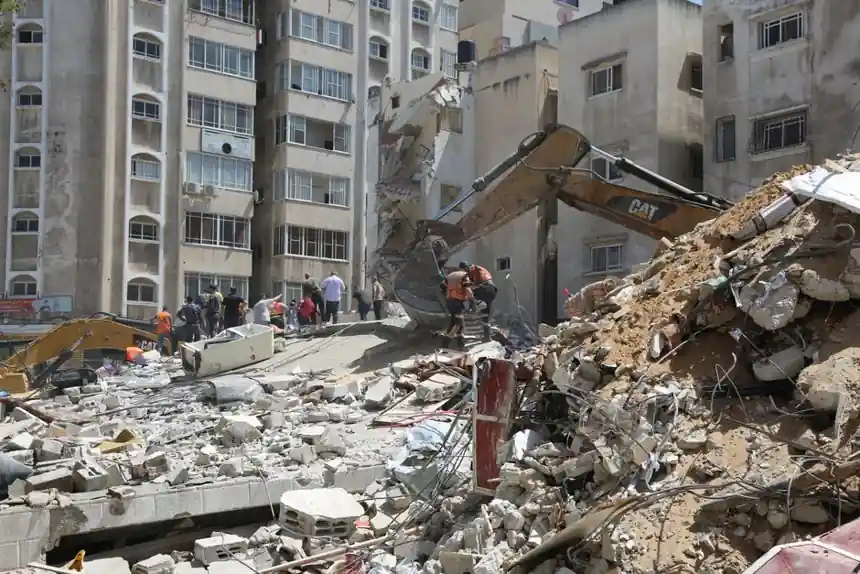
Demolition-site concrete demand is dominated by short-cycle pours, recycled-aggregate backfill, and slab reinstatement, which is why mobile and compact batching plants in the 25-60 m³/h envelope have become the default selection in 2026 over full-size HZS120+ stationary stands [S2][S4].
Output bands sold across the 2026 China OEM catalog run from 25 m³/h (HZS25) up to 240 m³/h (HZS240), with mobile platforms typically capped at 25-120 m³/h and on-site compact units clustered at 30-60 m³/h single-host productivity [S1][S7]. For a single demolition or remediation contract lasting 3-12 months, that is the operating range a process engineer should size to first.
Why demolition rejects the stationary default
Stationary HZS-class plants deliver 60-240 m³/h but require engineered foundations, conveyor trusses, and aggregate pre-bin pits; a 75 m³/h modular stand is already a multi-week civil job before the first batch [S1][S2]. Demolition sites rarely have that civil window because the work zone itself shifts: a building coming down in section A is followed by slab-on-grade pours in section B, often within 30-60 days. The relocation penalty of a fixed HZS100 stand (≈65 t without silo, 4 aggregate types, 3×15 m³ bins, plus 50-200 t silo options) cannot be amortized over a 6-month demolition contract [S1].
Foundation-free skip-hoist quick-install plants are the practical bridge: they need only a flat hardstand, can be relocated in days, and in 2026 catalog pricing occupy the US$12,450-40,000 per set band for the 25-75 m³/h class [S1]. For demolition contractors, that combination of low site-prep, short redeploy time, and acceptable capacity is what changes the spec decision.
Mobile and on-site compact options: the actual 2026 lineup
Three mobile families cover the demolition duty cycle in 2026. The AJSY ultra-fast-transition series (20-40 m³/h) can be dismantled in 0.5 day and towed by a standard wheel loader or trailer truck, which fits demolition fragments where the work face moves every few weeks [S4]. The AJY series (25-100 m³/h) integrates twin-shaft mixer, batcher, and weighing onto a single trailer chassis, but total relocation including silo lifts and re-calibration runs 3-4 days [S4]. The AJZY drum-type series (small/micro output) is the lightest option, with 1-2 day setup and a footprint that fits inner-city or partial-gut renovations where access lanes are narrow [S4].
On-site mobile batching plants are a distinct sub-class from full mobile trailers: they are typically single-host 30-60 m³/h units, transportable by small truck or hoist, and run on simplified manual or semi-automatic control, which allows non-specialist operators on remediation sites [S7]. Aggregate bin capacity on portable chassis spans 4×4 m³ to 4×8 m³ in 2026 specs, with powder silos from 1×50 t to 3×100 t, and discharge heights of 3.8-4.2 m for direct truck loading [S4].
Mixer class: twin-shaft wet-mix dominates demolition concrete
Demolition backfill and structural reinstatement use wet-mix, plastic, structural-grade concrete, which is the territory of JS-series twin-shaft non-gravity mixers (JS1000, JS1500, JS2000, JS3000) [S1]. For a 60 m³/h HZS60 plant the JS1000 draws 130 kW total; an HZS75 with JS1500 needs 165 kW; an HZS100 with JS2000 needs 2×37 kW on the mixer alone plus 140 kW baseline for the rest of the plant [S1]. A wet-mix central plant produces more uniform concrete than a dry-mix arrangement, which is the right call when demolition output is feeding structural slab replacement rather than trench fill [S2].
Single-shaft paddle and planetary mixers are not the right pick here: they are aimed at dry-mix mortar, low-slump architectural mixes, or slurry applications, and they do not reach the mixing intensity needed for recycled-aggregate structural concrete [S1]. The same applies to drum mixers on the AJZY chassis: they are valid for non-structural pours, but the twin-shaft is the safer spec for any concrete that carries load in the rebuilt slab.
Spec comparison: demolition-fit plant classes side by side
Four plant classes line up against the criteria a demolition project actually weighs: output range, foundation work, relocation time, and twin-shaft wet-mix compatibility. AJSY ultra-fast mobile: 20-40 m³/h, no foundation, 0.5 day redeploy, no integrated twin-shaft (limited to smaller pours) [S4]. AJY trailer-mounted twin-shaft: 25-100 m³/h, no foundation, 3-4 day redeploy, twin-shaft wet-mix capable [S4]. On-site compact single-host: 30-60 m³/h, minimal hardstand, 1-2 day redeploy, mixer depends on model [S7]. Stationary HZS skip-hoist quick-install: 25-75 m³/h in this size band, flat hardstand only, multi-day redeploy, full twin-shaft wet-mix at HZS60+ [S1]. The decision axis is relocation time versus wet-mix structural capability versus site footprint.
Power, weighing, and tolerance: the spec numbers that actually bind

Aggregate weighing tolerance on 2026 portable chassis is ±2% across the 2×900 kg to 2×2400 kg range; cement weighing holds at ±1% from 350 kg to 1200 kg, and water/admixture weighing runs in the same tolerance band [S4]. These are the values the mix design is signed against, and they need to match the load cell spec on the plant, not the marketing line. Aggregate bin count is a real spec: HZS60 supports 3 aggregate types at 80 mm max aggregate size, while HZS100 ships 4 aggregate types and 3×15 m³ bins [S1]. Max aggregate size at HZS75 is 80 mm, which is the upper bound for most recycled concrete aggregate (RCA) feed without further crushing.
Power draw scales roughly linearly with output: HZS60 at 130 kW, HZS75 at 165 kW, HZS100 at 140 kW excluding the screw conveyor and cement silo [S1]. For demolition sites with limited generator capacity, the 60-75 m³/h band is often the practical ceiling regardless of stated demand, which is why mobile plants cap there in the common configurations.
Aggregate handling, recycled feed, and the demolition-specific constraint
Demolition concrete almost always includes a recycled-aggregate fraction, and that imposes two spec constraints: a wider aggregate size envelope than virgin quarry feed, and tighter control over fines and moisture. PLC-controlled plants with moisture probes in the aggregate bins compensate automatically for natural moisture content in the recycled feed, which keeps the water-to-cement ratio honest batch to batch [S2]. Aggregate pre-feeding bands and automatic filling robot systems are catalog options on the 2026 OEM lines for exactly this kind of variable feed [S5].
For projects that need to reclaim wash-water and leftover concrete, integrating a sand and gravel separator closes the loop and brings the plant toward zero discharge, which is increasingly a contract requirement on urban demolition [S3]. Without that loop, the plant consumes potable water at the rate of the mix design and produces slurry waste, which is a real cost line on inner-city sites.
Who this spec is for, and where it falls down
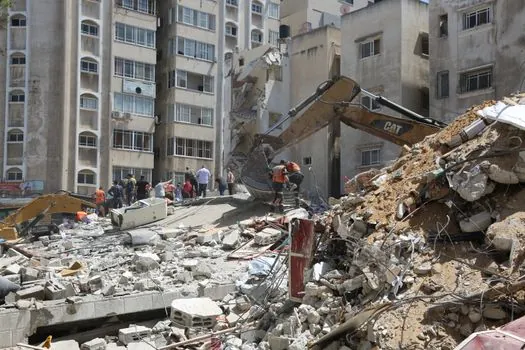
Mobile and compact batching plants in the 25-60 m³/h range are right for demolition contractors running 3-12 month remediation or strip-out projects, recycled-aggregate backfill operations, and slab reinstatement where the work face moves every few weeks. They are the wrong pick for greenfield high-rise or dam work where a 120+ m³/h stationary stand on engineered foundations is the lower unit-cost option over a 2-3 year build [S2].
Two failure modes to spec against: first, an undersized drum-mixer portable will not deliver structural-grade wet-mix, and the temptation to use it for slab pours should be resisted; second, a mobile chassis with insufficient silo capacity (1×50 t) will stall on truck-fill cycle time if the demolition pour rate spikes, and the 2×100 t or 3×100 t silo option should be the default on anything beyond a single small project [S4].
For procurement, the trackable signals over the next quarter are: 2026 catalog updates to AJY 25-100 m³/h twin-shaft chassis with shorter redeploy cycles, and any new portable RCA-specific weighing tolerance certifications beyond the existing ±2% aggregate and ±1% cement bands. For broader selection context on road and mining concrete duty cycles, the mining batching plant spec gate and the road construction batching spec map cover adjacent output bands and mixer classes. For the concrete itself, the cement and concrete reference and the concrete admixture selection entry are the relevant upstream spec nodes.
Component reference pages worth checking: concrete batching plant.