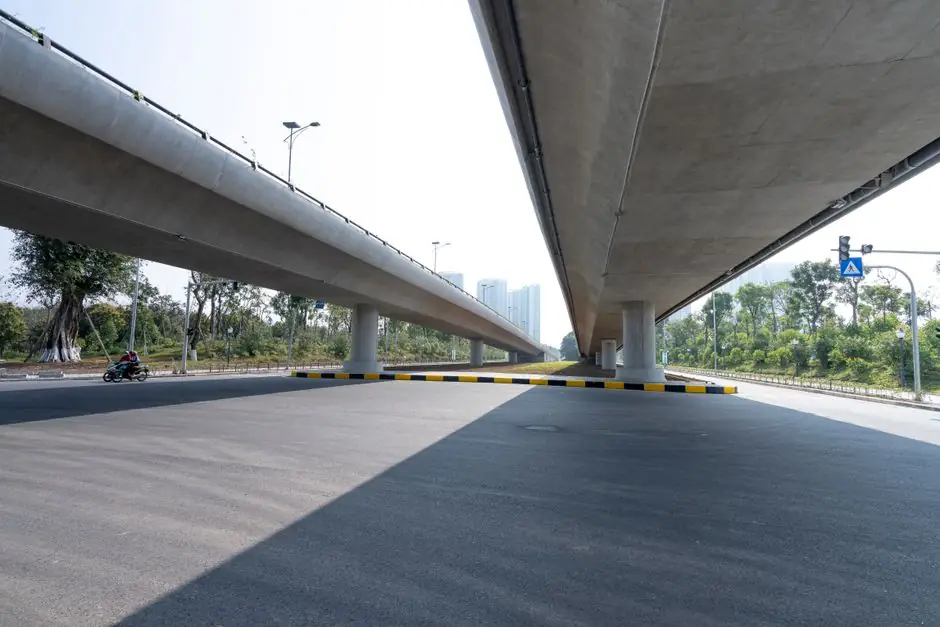
Road projects in the 25–240 m³/h output band should be matched against three vectors: rated m³/h, project duration, and site civil-work tolerance, with HZS60–HZS180 dominating the stationary tier quoted by Chinese OEM lines [S1][S4].
The HZS75 frame at 60–75 m³/h, the HZS90 at 75–90 m³/h, the HZS120 at 100–120 m³/h, and the HZS180 at 150–180 m³/h are the four reference models that recurs across global supplier catalogs for highway, bridge, and industrial-park pours [S2][S5]. A typical mid-tier HZS100 plant pairs a JS2000 twin-shaft mixer (2,000 L nominal, 2×37 kW motors) with a PL3200 aggregate batcher (3×15 m³ bins, ±2% weighing tolerance) and 50–200 t powder silos [S1]. For the broader equipment context around a batching plant, the construction machinery and equipment overview covers how a plant fits into a road-paving fleet.
Output Band vs Plant Class: The 2026 Selection Ladder
Plant class in current 2026 catalogs is set by theoretical output, not by footprint, and the HZS designation is the ISO/CE-rated shorthand carried by Chinese OEM lines covering HZS25/50/60/75/90/120/180/240 frames [S1]. The HLS-series commercial tower plant with standing aggregate metering discharges at 3.8 m and lifts plant productivity by roughly one third at equivalent model size, so an HLS90 floor plant matches an HZS120 stand and an HLS180 floor plant equals an HZS240 [S1]. Stationary plants in the 60–180 m³/h band are routinely quoted at USD 17,500–285,000 per set ex-works, before civil works, silos, generators, and erection labour [S4]. For sub-200 m³/day rural paving, foundation-free skip-hoist quick-install plants sit at the entry tier at roughly US$12,450–40,000 per set [S1].
Mobile concrete batching plants overlap the HZS60–HZS90 territory at 20–60 m³/h and are designed for quick setup and relocation between sites, which makes them suited to projects in Tier 2 and Tier 3 cities and rural road corridors [S3]. Mobile batching plants now account for nearly 45% of global batching plant share, driven by demand for flexible on-site production, a trend mirrored in India’s infrastructure corridors [S3]. Compact concrete batching plants in the 50–100 m³/h band cut civil cost and installation time versus full stationary builds and split the difference between mobile and stationary [S2].
Mixer, Power, and Weigh Specs That Gate the Decision
Twin-shaft non-gravity mixers are the workhorse for 60 m³/h and above, with JS-series models JS1000, JS1500, JS2000, and JS3000 dominating plastic and structural mixes at 60–240 m³/h plants [S1]. HZS60 delivers 45–60 m³/h on a JS1000 mixer at 1 m³ per cycle and 130 kW total installed power, HZS75 reaches 60–75 m³/h on a JS1500 at 0.75 m³ per cycle and 165 kW with 80 mm max aggregate, and HZS180 climbs to 150–180 m³/h on a JS3000 with 3 m³ per cycle at 280 kW, paired with a 700 t/h inclined-belt aggregate conveyor [S4]. Planetary mixers and single-shaft paddle mixers are used where dry-mix, mortar, or low-slump architectural mixes are required rather than high-output wet structural concrete [S1].
Weigh accuracy is data, not slogan: aggregate weighing tolerance sits at ±2% across the HZS60–HZS180 band, while cement, water, and admixture scales hold ±1% per cycle, and the AJQ70 quick-setup plant claims intelligent weighing and automatic compensation up to ±1% [S5][S7]. Power draw scales roughly linearly with output, so a 130 kW HZS60 and a 165 kW HZS75 frame define the lower bound, while the HZS100 baseline is 140 kW excluding the screw conveyor and cement silo [S1]. Aggregate bin count is a real spec: HZS100 ships with 4 aggregate types and 3×15 m³ bins, while HZS60 supports 3 aggregate types, and the HZS100 powder silo is selectable at 50, 100, or 200 t, a 4× swing that drives both footprint and truck-fill cycle [S1]. The underlying cement and concrete chemistry is what these tolerances protect, especially the w/c ratio a plant must hold.
Criteria-Based Comparison: Stationary vs Mobile vs Foundation-Free

Three vectors decide the class: rated m³/h, project duration, and site civil-work tolerance, and the next table lines them up against four decision criteria drawn from the 2026 supplier range [S1][S2][S4].
On output, stationary HZS60–HZS180 frames cover 45–180 m³/h, mobile HZS60–HZS90 frames overlap at 20–90 m³/h, and foundation-free skip-hoist plants sit at the low end, typically below 60 m³/h [S1][S2][S3]. On installation time, stationary belt-conveyor plants need engineered foundations, conveyor trusses, and aggregate pre-bin pits, while foundation-free plants need only a flat hardstand and can be relocated in days, and the AJQ70 fast-setup stationary variant claims a 24-hour modular foundation-free installation [S1][S5]. On capex, foundation-free plants at US$12,450–40,000 per set undercut the USD 17,500–285,000 ex-works stationary band, with mobile plants priced between the two depending on frame size [S1][S4]. On best-fit project profile, stationary frames win long-corridor highway and bridge pours exceeding 600 m³/day, mobile frames win 200–600 m³/day short corridors, and foundation-free frames win sub-200 m³/day rural paving and temporary detours [S1][S3][S4].
Admixtures, Fibres, and Downstream Mix Design
Modern batching plants increasingly incorporate silos for fly ash, GGBS (Ground Granulated Blast-furnace Slag), or silica fume as supplementary cementitious materials, and admixture dosing is treated as a standard weigh head alongside water and cement [S3]. Where fibre-reinforced concrete is in scope, the same weigh head can dose concrete fibre alongside the standard inputs, and a properly specified plant should expose PLC channels for admixture type, dose, and timing per batch [S4]. For a deeper dive into the chemical side, the concrete admixture page covers the w/c-ratio behaviour the plant must hold. Aggregate grading, ensuring the right particle size distribution across coarse and fine bins, is the foundation of every quality concrete mix, and bin count of 3–4 is the practical range across the HZS60–HZS180 band [S1][S3].
Ready-mix concrete (RMC) demand signals the plant sizing: high-volume projects exceeding 1,000 m³/day justify 120–240 m³/h frames, mid-volume 500–1,000 m³/day projects fit 90–120 m³/h, and small/mobile 100–500 m³/day pours fit 25–90 m³/h [S10]. The RMC market in India stood at 249 million cubic metres in 2025 and is forecast to reach 371 million cubic metres by 2031, signalling a sustained pull on plant capacity in road and bridge corridors [S3]. The road roller downstream of a batching plant inherits the plant’s w/c stability; if the plant drifts, the roller cannot compensate.
Limitations, Failure Modes, and Sourcing Risk
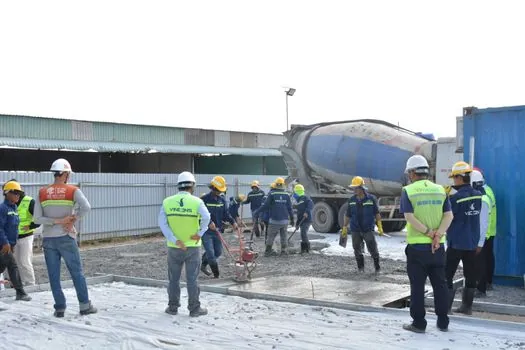
Capex is the dominant drawback: payback depends on a sustained 2–5 year pour programme, and site preparation is non-trivial, with aggregate stockpiles, cement silos, and a 4.1 m discharge-height foundation required before erection [S4]. Powder silo capacity, generator sizing, and screw-conveyor choice are configuration-dependent, and HZS100 dimensions and weight (around 65 t without screw conveyor and cement silo) shift with each accessory chosen, so layout drawings must come from the OEM rather than from generic catalog data [S1]. The 2026 China B2B catalog shows twin-shaft mixers grouped as standard product lines by Henan-based OEMs alongside asphalt and self-loading concrete mixer offerings, which means sourcing risk concentrates in mixer after-sales and wear-part availability, not in the frame itself [S1].
Standard product lines from batch plant solution [S2] and similar suppliers ship with the spec bands quoted here, and concrete batching plant reference data on mixer type, power, and weigh tolerance is the single best cross-check during RFQ evaluation [S7]. For the broader tool side of a paving spread, the construction tools index covers hand tools and small plant that complement a batching setup. Engineers comparing frame sizes should also weigh the helical gear reducer behind each mixer; for cement-plant duty cycles the helical gear reducer selection map lines reducer sizes against mixer kW draw, and the material-handling variant covers the inclined-belt conveyor on HZS180. For crews laying pavements after the plant, scaffolding and shoring props are the next link in the chain.
Who This Plant Class Is For, and Who It Is Not For
Stationary HZS60–HZS180 plants are FOR mainline highway, expressway, and bridge pours exceeding 600 m³/day with a 2–5 year programme, where the USD 17,500–285,000 ex-works capex is amortised against in-house supply [S4][S10]. Mobile HZS60–HZS90 plants are FOR 200–600 m³/day short corridors, Tier 2/3 city municipal paving, and Bharatmala-style highway packages where relocation between sites is required [S3]. Foundation-free skip-hoist plants at 25–60 m³/h are FOR sub-200 m³/day rural paving, temporary detours, and small bridge decks where civil-work tolerance is the binding constraint [S1].
These plant classes are NOT FOR projects shorter than 6 months unless a mobile or foundation-free frame is selected, since stationary capex will not amortise; they are NOT FOR sites without reliable grid power unless a generator is budgeted alongside the kW draw of 130–280 kW per frame; and they are NOT FOR architectural dry-mix or low-slump mortar work, where a planetary or single-shaft paddle mixer is the correct specification, not a JS-series twin-shaft [S1][S4]. Projects using mechanised batching plants report up to 30% fewer concrete quality rejections compared to sites relying on manual mixing, a direct and measurable improvement in both safety and cost efficiency that applies only when the plant class is matched to the pour profile [S3].
Trackable signals for the next planning cycle: confirm the HLS120 vs HZS120 productivity delta (roughly one third at equivalent model size) on a tender-by-tender basis, and validate the AJQ70 modular 24-hour installation claim on at least one live road project before locking it into a multi-site framework [S1][S5].